Trip Report: Athens and a Mediterranean Cruise
Lounge Reviews: The Club CLT and Centurion Lounge Charlotte Airport
Flight Review: Lufthansa A340-600 Charlotte-Munich
Lodging Review: Academias Hotel, Autograph Collection, Athens
Our Time in Athens, Part I (Acropolis and Museum)
Our Time in Athens, Part II (Roman Agora, Hadrian’s Library, Ancient Agora)
Our Time in Athens, Part III (Kerameikos, Temple of Zeus, Panathenaic Stadium)
Our Time in Athens, Part IV (Restaurants and Observations)
Ship Review: Viking Neptune
Our Time in Ancient Olympia (Katakalon, Greece)
Our Time in Corfu, Greece
Our Time in Kotor, Montenegro
Our Time in Dubrovnik, Croatia
Our Time in Zadar, Croatia
Our Time in Venice, Italy
Flight Review: Iberia A330-300 Madrid-Chicago
After having lunch at the Acropolis Museum we spent the afternoon at three other sites that were close to the Acropolis.
Roman Agora
The Roman Agora, or marketplace, was built around 27-17 BC using funds donated by Gaius Julius Caesar Augustus, known as Octavian, the founder of the Roman empire to fulfill a promise made by Julius Caesar in 51 BC. While the area has not been fully excavated it’s easy to see it followed a common basic layout of a large open plaza surrounded by colonnades on three sides.

Roman Agora
The Gate of Athena Archegetis is at the western end and today is the entrance.
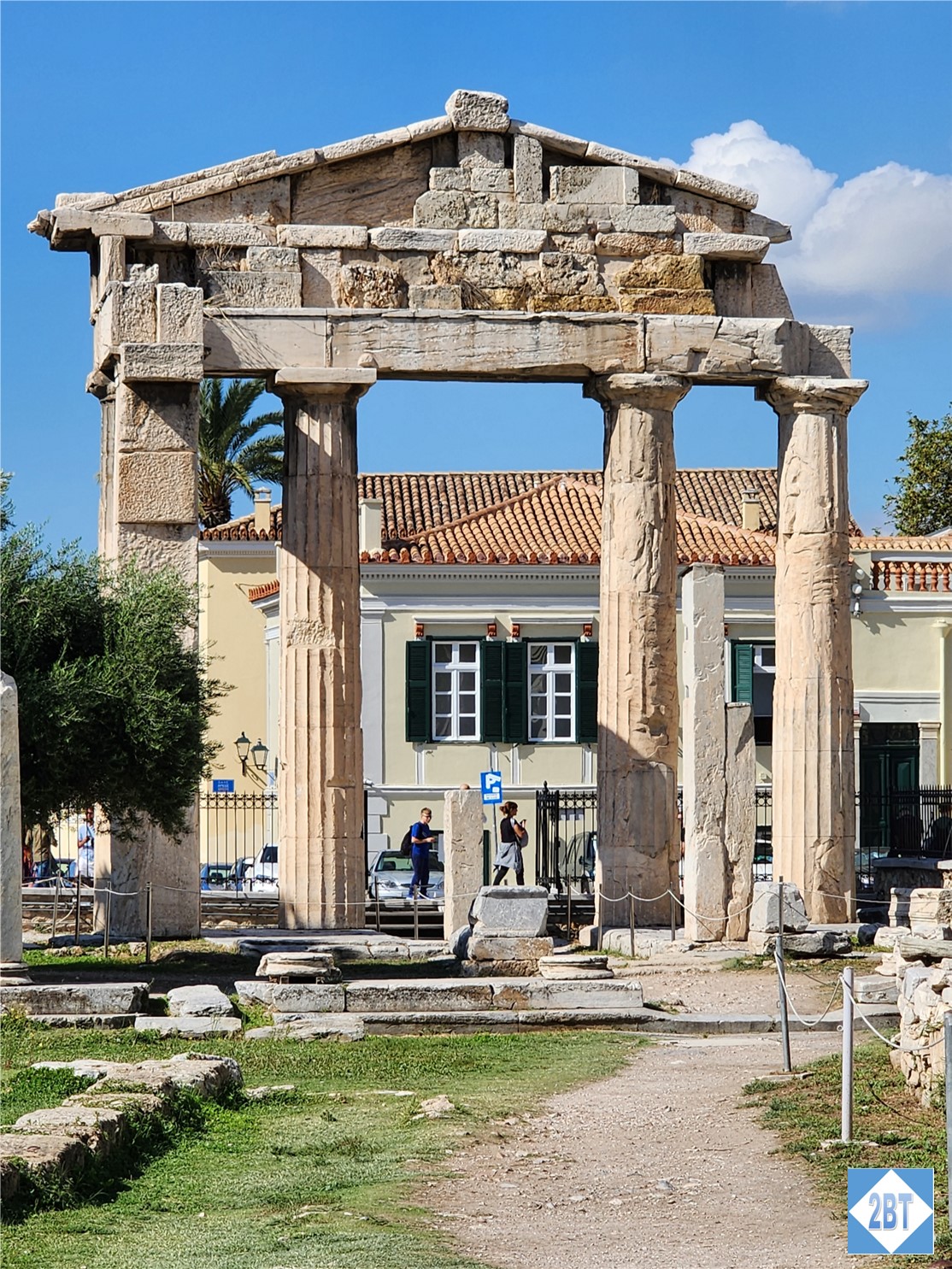
Gate of Athena Archegetis
At the eastern end was another gate though it’s not used today.

The East Gate
The East Propylon led to this other gate and to the octagonal Tower of the Winds, named for the eight reliefs of wind gods around the top. This structure was completed by at least 50 BC. It had an art installation in it while we were there.

Propylea and Tower of the Winds
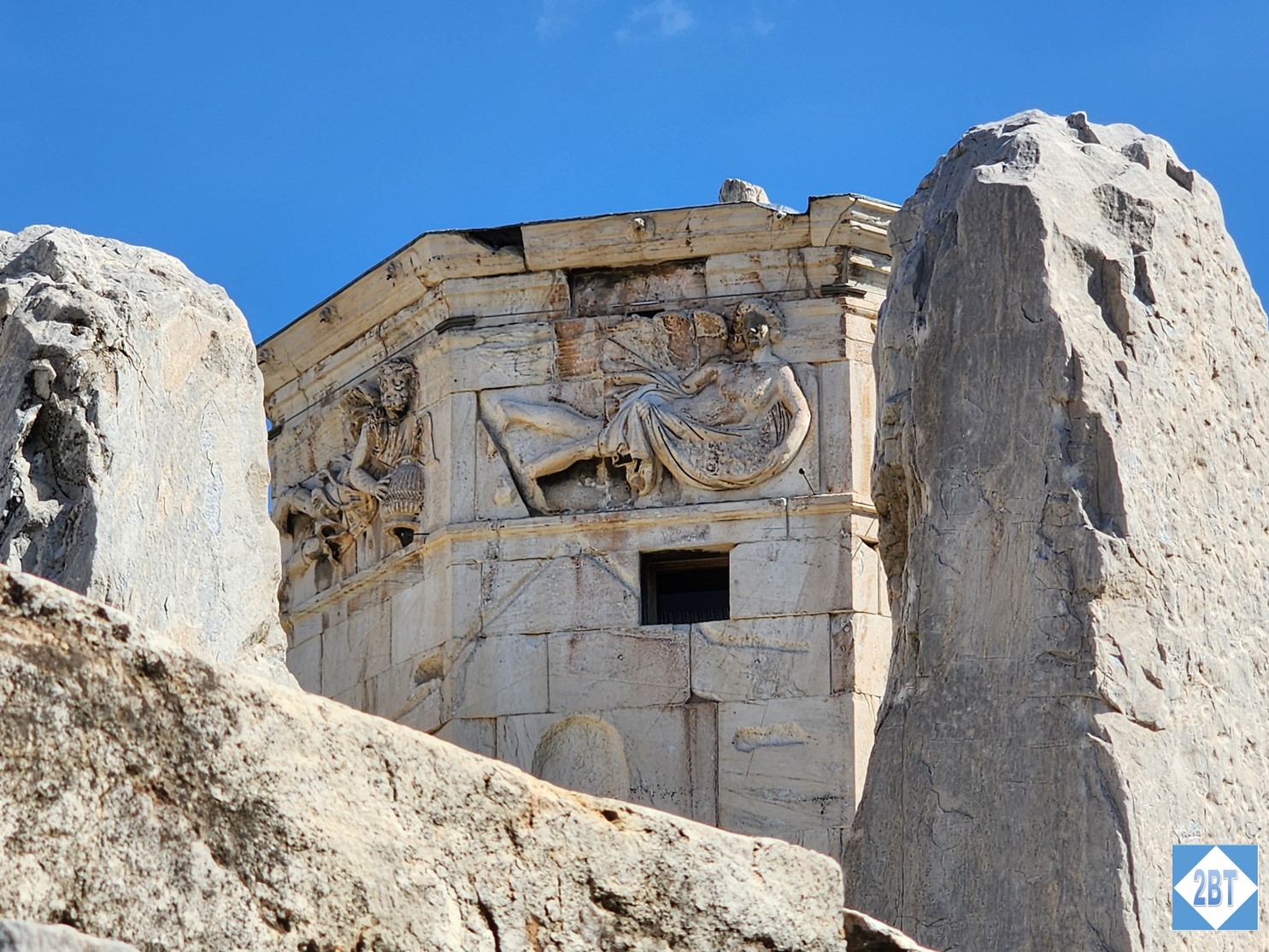
Detail of the Tower of the Winds
Hadrian’s Library
Our next stop was Hadrian’s Library, created by the namesake Roman Emperor in 132 AD. It was laid out in the typical Roman Forum style with a propylon surrounded by Corinthian columns and an inner courtyard with a decorative pool in the middle and columns along the sides.


Along the back (east) wall is where the rolls of papyrus, the “books”, would have been kept. On either side would have been reading rooms or niches and in the corner were lecture halls.

East Wall Scroll Storage
The library was seriously damaged in 267 AD by the Herulian Invasion, a Germanic group who took over much of the Balkans. Later, during Byzantine times, three churches were built on this site and the remains of some of them are preserved.

Northern Wall
These columns are part of the tetraconch (“four shells”) design that was built in the court of the library.

Columns of the Tetraconch
Ancient Agora and Museum
In comparison to the Roman Agora, the Ancient Agora of Athens is huge. It was not only a marketplace but was also used as a place of assembly and a residential gathering place. There’s a small museum here in the reconstructed Stoa of Attalos and the remains, mostly footprints, of many ancient structures.

Ancient Agora of Athens
If it’s a hot day while you’re visiting Athens, this is one place you can find lots of greenery to cool off. The porch area of the museum has benches right next to ancient statues and you can look out over the place that was a bustling hive of activity over 2000 years ago.
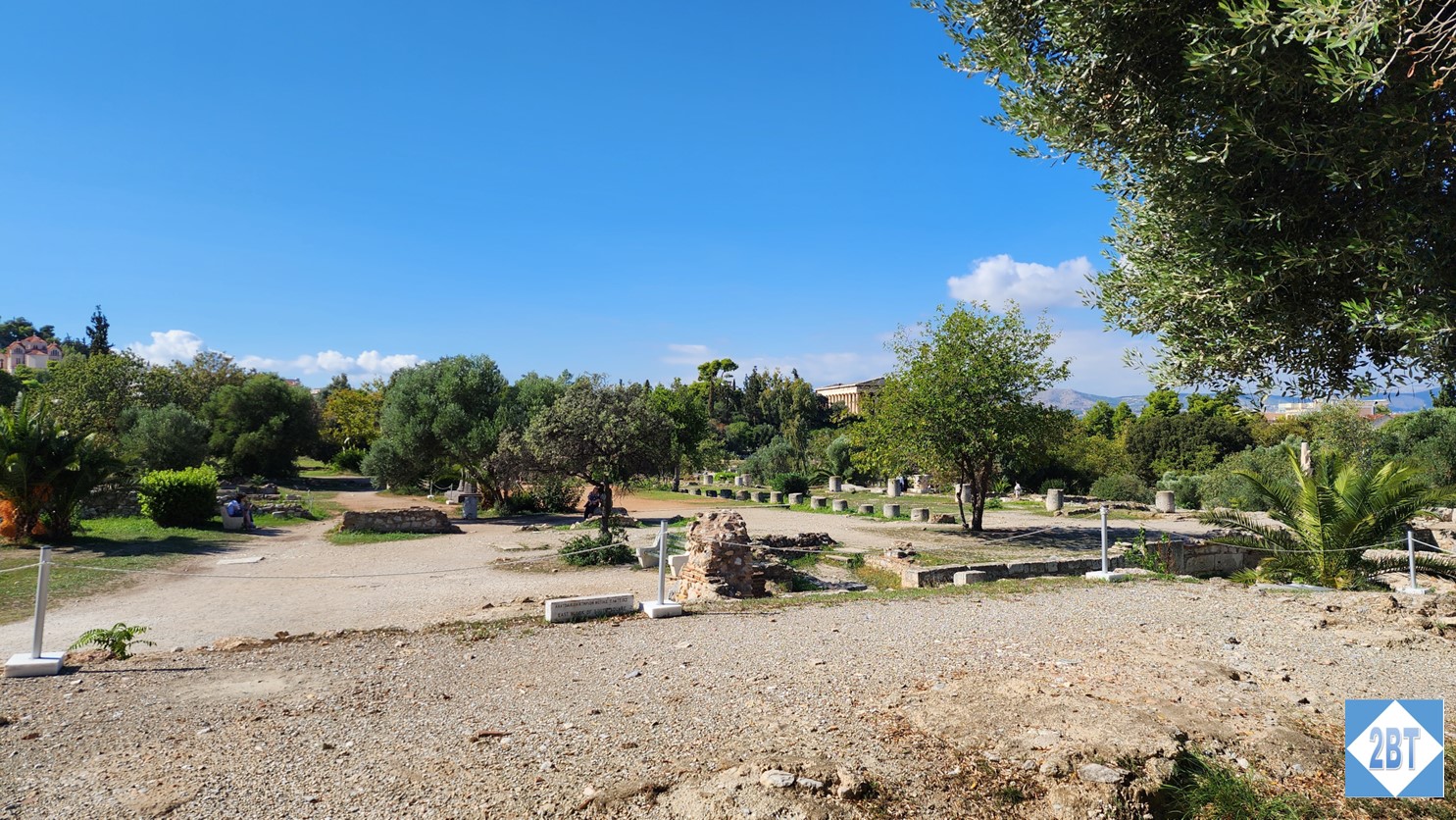
Ancient Agora of Athens
2021 was a year of Greek-Chinese Culture and Tourism. To celebrate, this statue of Socrates and Confucius was unveiled. The two men are credited with forming the basis of Western and Eastern philosophy, respectively. Confucius lived in the late 6th and early 5th centuries BC and Socrates lived in the late 5th century BC so they never met but they are certainly two giants whose influences are still felt today.

Socrates and Confucius
The best-preserved structure in the Agora is the Temple of Hephaestus, the Greek god of tradesmen like blacksmiths, carpenters, metalworkers, etc. and there were many shops of these craftsmen in the area of the temple. The temple looks a good bit like a “mini-Parthenon” and is made of marble. Like the Parthenon it had friezes and metopes though some of the metopes may have been painted instead of carved.


The temple dates to the 5th century BC and once housed status of both Athena and Hephaestus. But during the persecution of pagans in the 4th century AD it would have been closed. Around 700 AD the building was converted into a church dedicated to St. George. It remained a church until 1833, after the Greek war of independence and the first King of Greece, Otto I, declared it to be a museum. It remained that way until 1934 when it once again became a simple historical site. But being in near-constant use for thousands of years helped to preserve the structure more than others of its vintage.


In the end
Combining this busy afternoon with the very full morning at the Acropolis and its museum was a very full day. We did stop for an ice cream between sites but as tourists more used to a sedentary existence we’d put in 27,000 steps for the day and were exhausted. We went to the nearby Monstiraki Metro station, bought a 24-hour pass for about $4.30 and headed back to the hotel.

 2B Traveling
Recent Comments