Trip Report: Athens and a Mediterranean Cruise
Lounge Reviews: The Club CLT and Centurion Lounge Charlotte Airport
Flight Review: Lufthansa A340-600 Charlotte-Munich
Lodging Review: Academias Hotel, Autograph Collection, Athens
Our Time in Athens, Part I (Acropolis and Museum)
Our Time in Athens, Part II (Roman Agora, Hadrian’s Library, Ancient Agora)
Our Time in Athens, Part III (Kerameikos, Temple of Zeus, Panathenaic Stadium)
Our Time in Athens, Part IV (Restaurants and Observations)
Ship Review: Viking Neptune
Our Time in Ancient Olympia (Katakalon, Greece)
Our Time in Corfu, Greece
Our Time in Kotor, Montenegro
Our Time in Dubrovnik, Croatia
Our Time in Zadar, Croatia
Our Time in Venice, Italy
Flight Review: Iberia A330-300 Madrid-Chicago
We slept in just a little the next day as we did not have to be anywhere at a certain time but we were still out before 9 AM to try to beat the heat. We still had our 24-hour Metro pass and this is when we learned the closest stop to our hotel was actually only a 4-minute walk away. Crossing Akadimias street we walked down the hill to the next major street and took a right. From there it was just a block-and-a-half to the Panepistimo Metro station, which is on the Blue line. On our side of the street, just in front of the National and Kapodistrian University of Athens (pictured below) there’s an entrance with steps going down and an escalator coming up. If you need to take the elevator down, cross Panepistimo to the plaza area and you’ll find the elevator there.
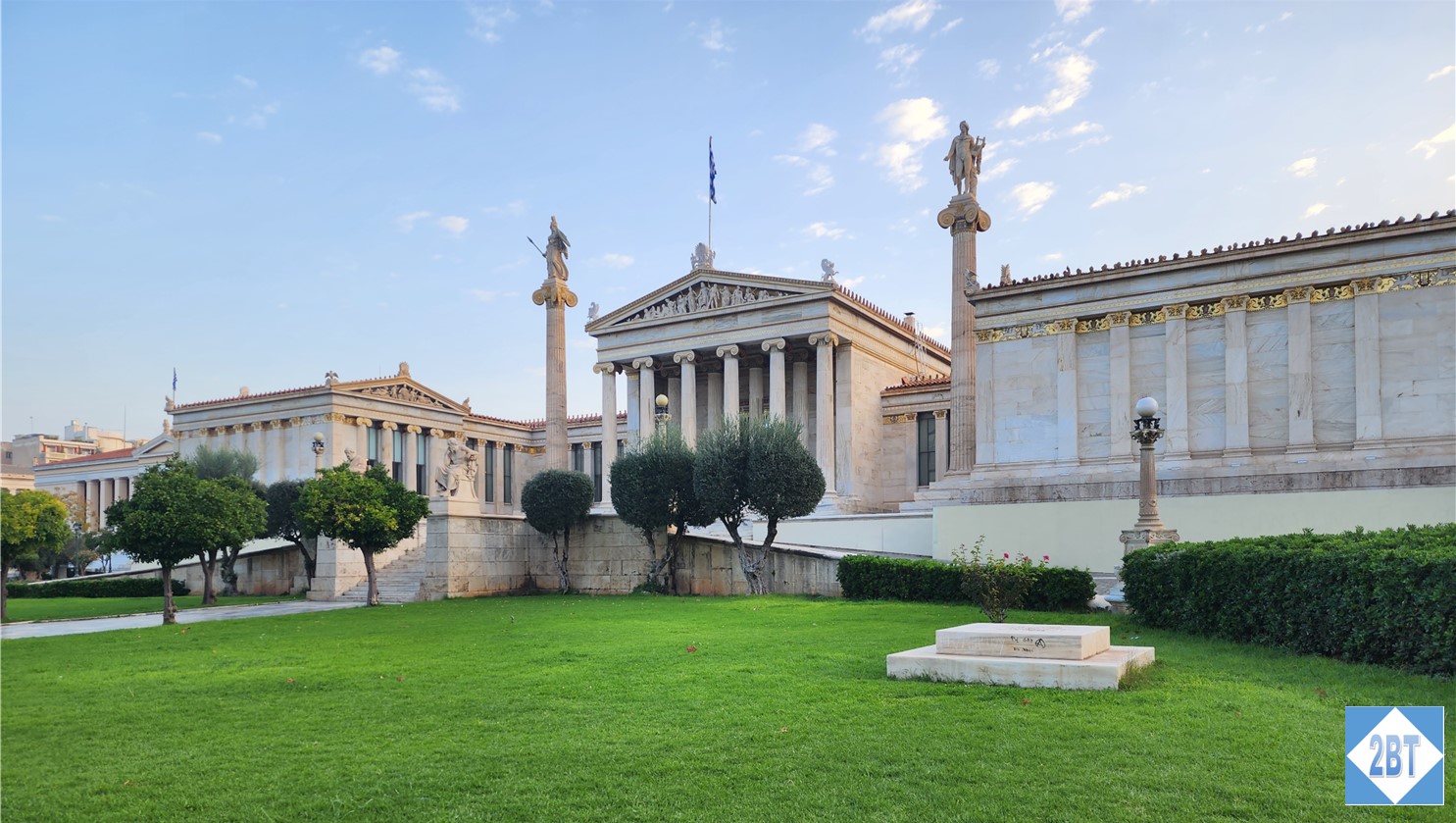
The National and Kapodistrian University of Athens
We took the train to the Kerameikos Archaeological Site and Museum. It may not have been much faster than walking but our feet were still aching from the previous day and we were in no hurry so that was fine by us.
Kerameikos Archaeological Site and Museum
This is a site we likely never would have visited had it not been for the combo ticket we’d purchased but it was interesting not only for its size but that it has on-going archaeological digs. The area gets its name because it was the city square of the Keramis, or potters. The base for this word is where we get the English word “ceramic”.
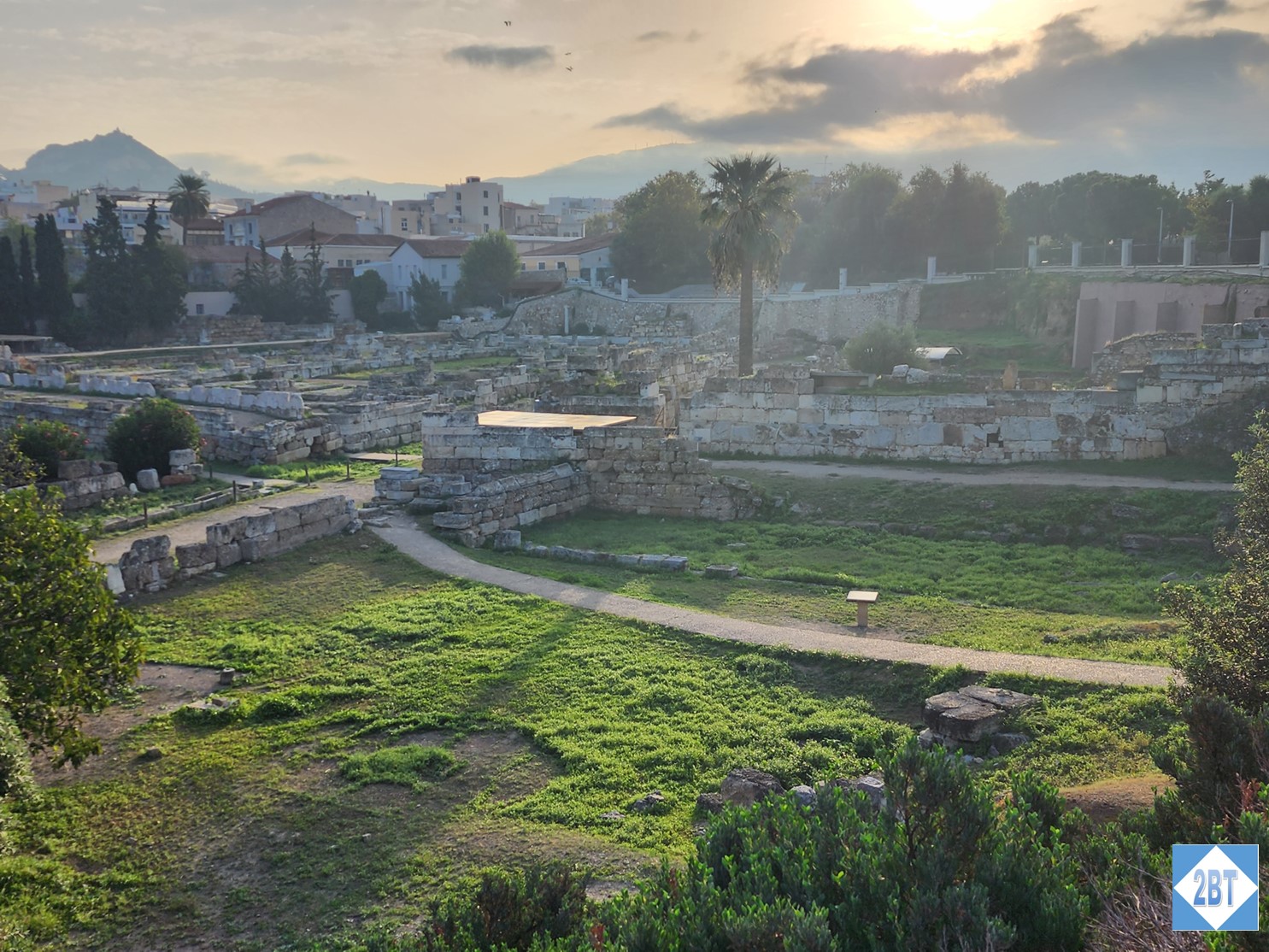
Kerameikos Archaeological Site
What started as an area for potters soon grew and a new city wall was installed in 478 BC, following Persia’s sack of Athens in 480 BC, and this fundamentally changed the appearance of the area. Funerary sculptures were built into the city wall and two large city gates were erected.


The Street of Tombs ran alongside the graveyard and has imposing (reproductions of) monuments that testify to the wealth of the rich Athenian families buried there. These type of large mausoleums were banned in 317 BC so there are quite a few smaller ones as well.


Many of the buildings here were razed when Rome sacked Athens in 86 BC. The ruins brought back the potters who stayed until about 500 AD but then the city was destroyed again in raids at the end of the 6th century. It was not until a Greek worker dug up a stele in April 1863 that interest in the site was renewed. While the Greek Archaeological Society took the lead in uncovering the site in 1870, since 1913 it has been guided by the German Archaeological Institute at Athens. There are large areas adjacent to the current site that are ripe for investigation but, as always, has to wait for funding.
The on-site museum is not large but it houses the most extensive collection of burial-related artifacts in Greece, including original burial monument sculptures.
Temple of Olympian Zeus and Hadrian’s Arch
This site is sometimes called the Olympeion as it is dedicated to Olympian Zeus, which denotes his position as head of the Olympian gods. Construction began in the 6th century BC but was not completed until the reign of Roman Emperor Hadrian in the 2nd century AD, a period of over 630 years from the time work began. At its zenith it had 104 of the massive columns and was the largest temple in Greece, housing one of the largest cult statues in the ancient world.

Temple of the Olympian Zeus
It was pillaged during a barbarian invasion in 267 AD, just about a century after it was completed and was never really repaired after that. Sixteen of the giant columns remain (many under scaffolding, of course!) and it is still considered an important archaeological site.
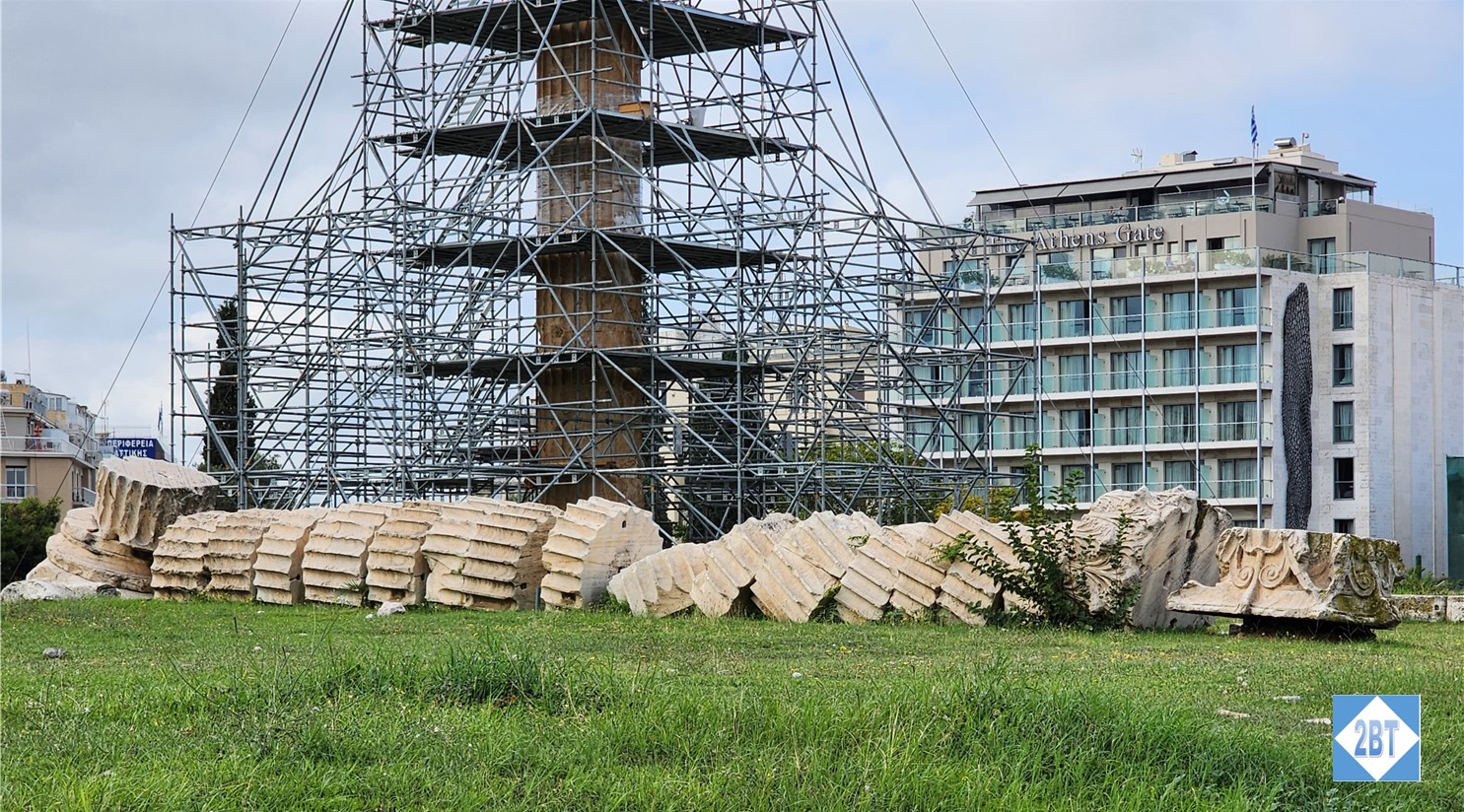
Temple columns to be reconstructed
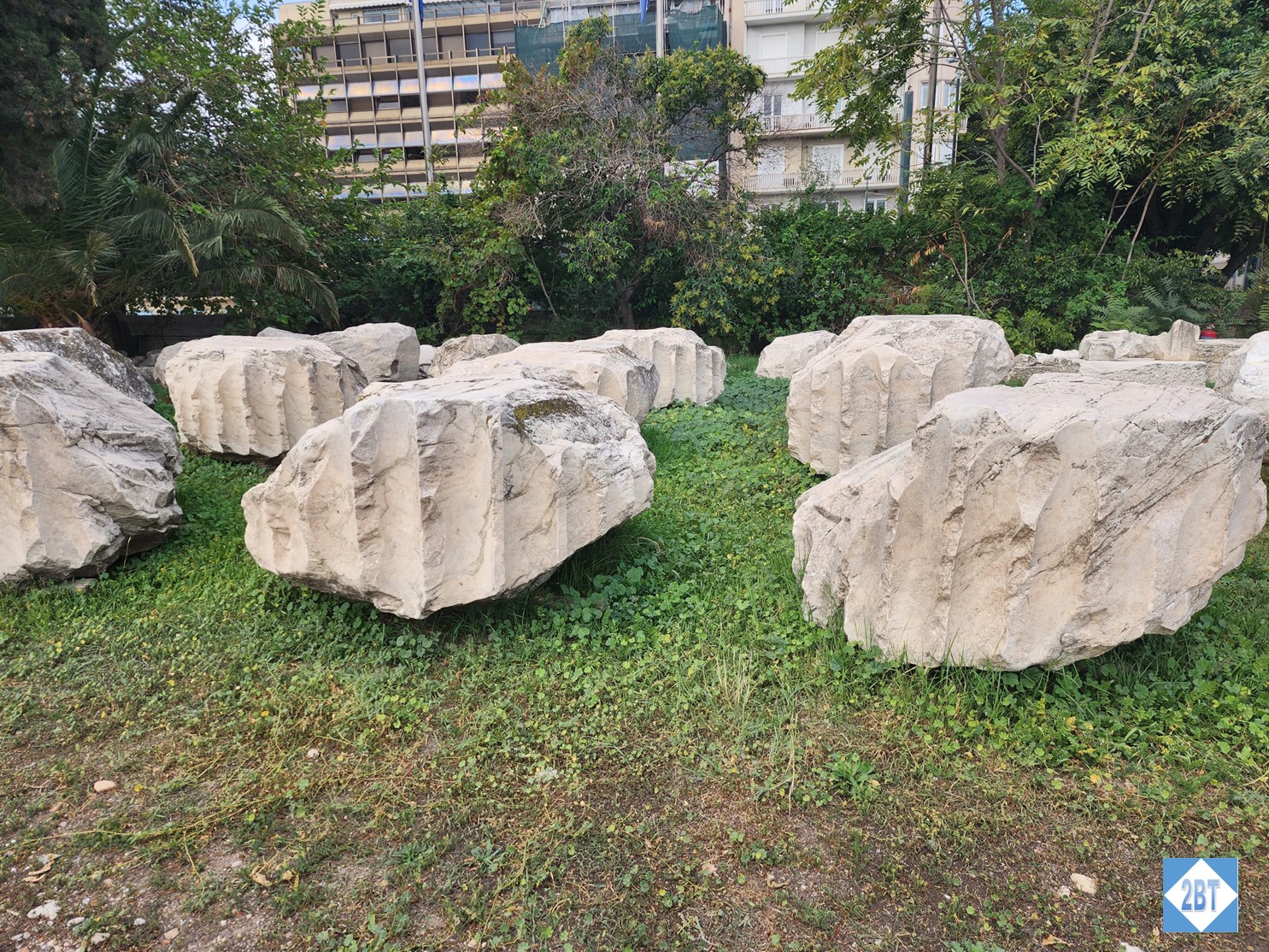
Temple column pieces

One free-standing column
Hadrian’s Arch stands just outside the Olympeion. It is a gateway that somewhat resembles a Roman triumphal arch and it spanned an ancient road from the center of town (toward the Acropolis) toward the Temple of Zeus. It was dedicated in 131 or 132 AD and, like many ancient structures, is made of Pentelic marble.
On the street side of the arch, which is also the side of the Acropolis, the inscription reads “This is Athens, the ancient city of Theseus”. On the Olympeion side the inscription reads “This is the city of Hadrian, and not of Theseus”. Theseus was the mythological founder of Athens and it’s thought that the location of the arch indicated an area formerly outside the city that was now being annexed as part of Athens.


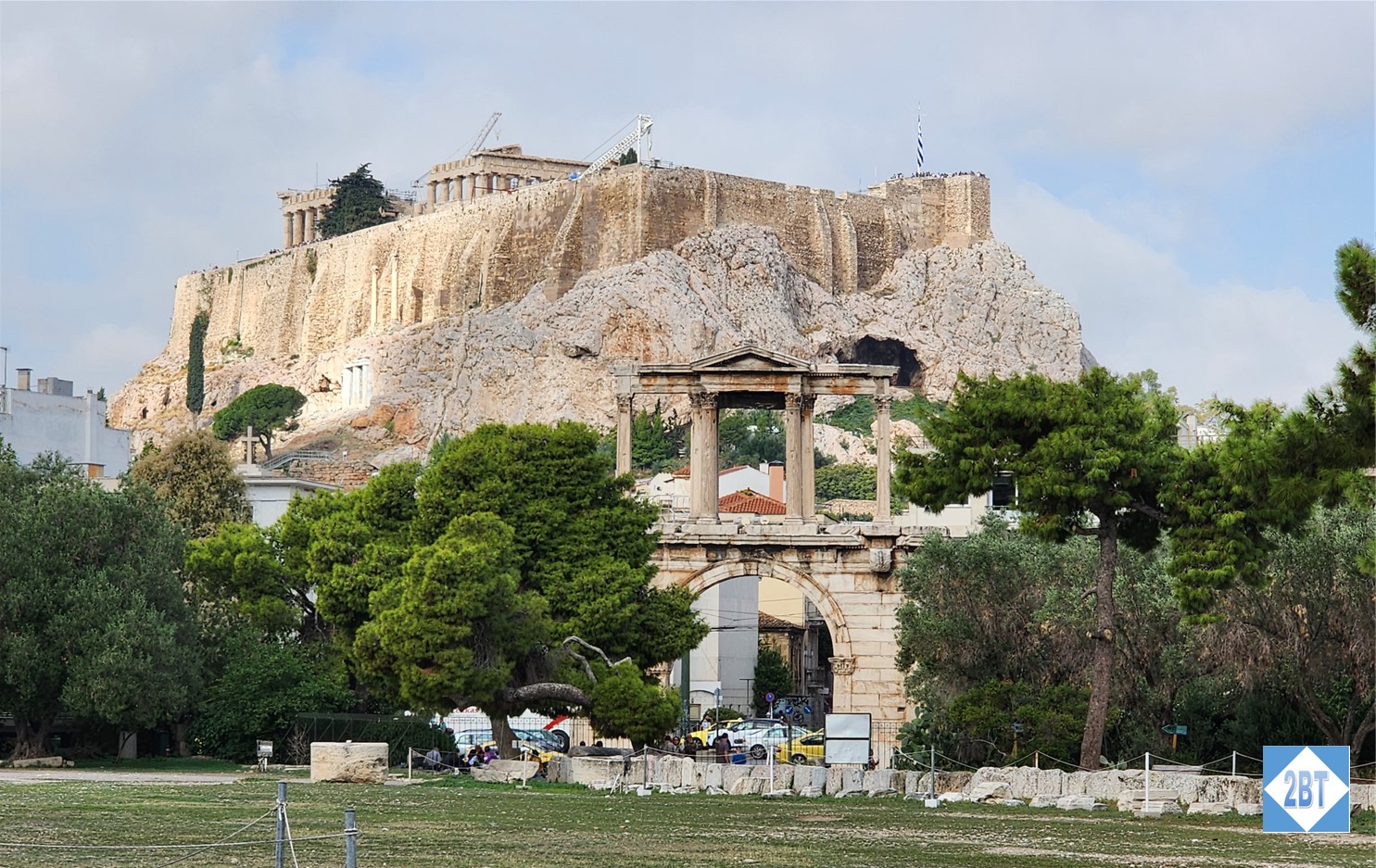
Hadrian’s Arch and the Acropolis
It is considered to be in remarkable condition for a structure nearly 1900 years old. Much of that is attributed to the fact that it was never covered by earth to a depth of more than 3 feet or so. Other than the loss of columns at the lower level, the worst damage is discoloration from air pollution.
Panathenaic Stadium
Our final stop for the day was the Panathenaic Stadium, the only stadium in the world built entirely of marble. As an Olympics geek I didn’t care that this attraction was not on our combo ticket so it cost us an extra €10 (which included an audio guide), I was just thrilled to get to look around the place. On my previous visit to Athens we had driven by the horseshoe-shaped stadium and paused for a few photos from inside the bus but had not gotten to visit the site.
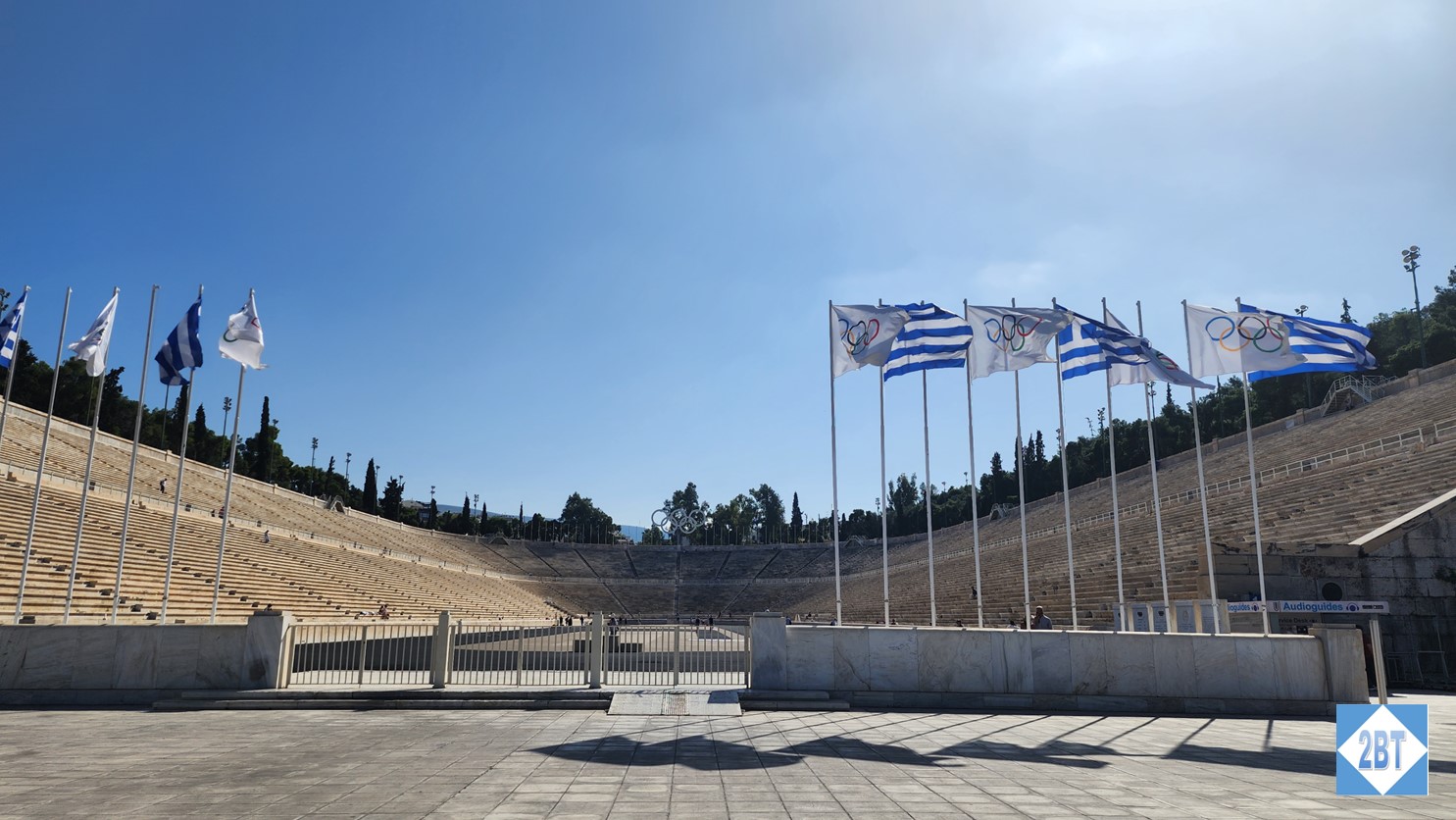
The plaza outside the stadium
This site had originally hosted a simple race course and the first stadium was built here in 330 BC. In 144 AD it was rebuilt in marble and could seat 50,000 spectators. It was excavated in 1869 and hosted the opening and closing ceremonies of the first modern Olympics in 1896 and was the venue for 4 of the 9 sports in those Games. When Athens again hosted the Olympics in 2004 it hosted archery events and was the finish line for the marathons.
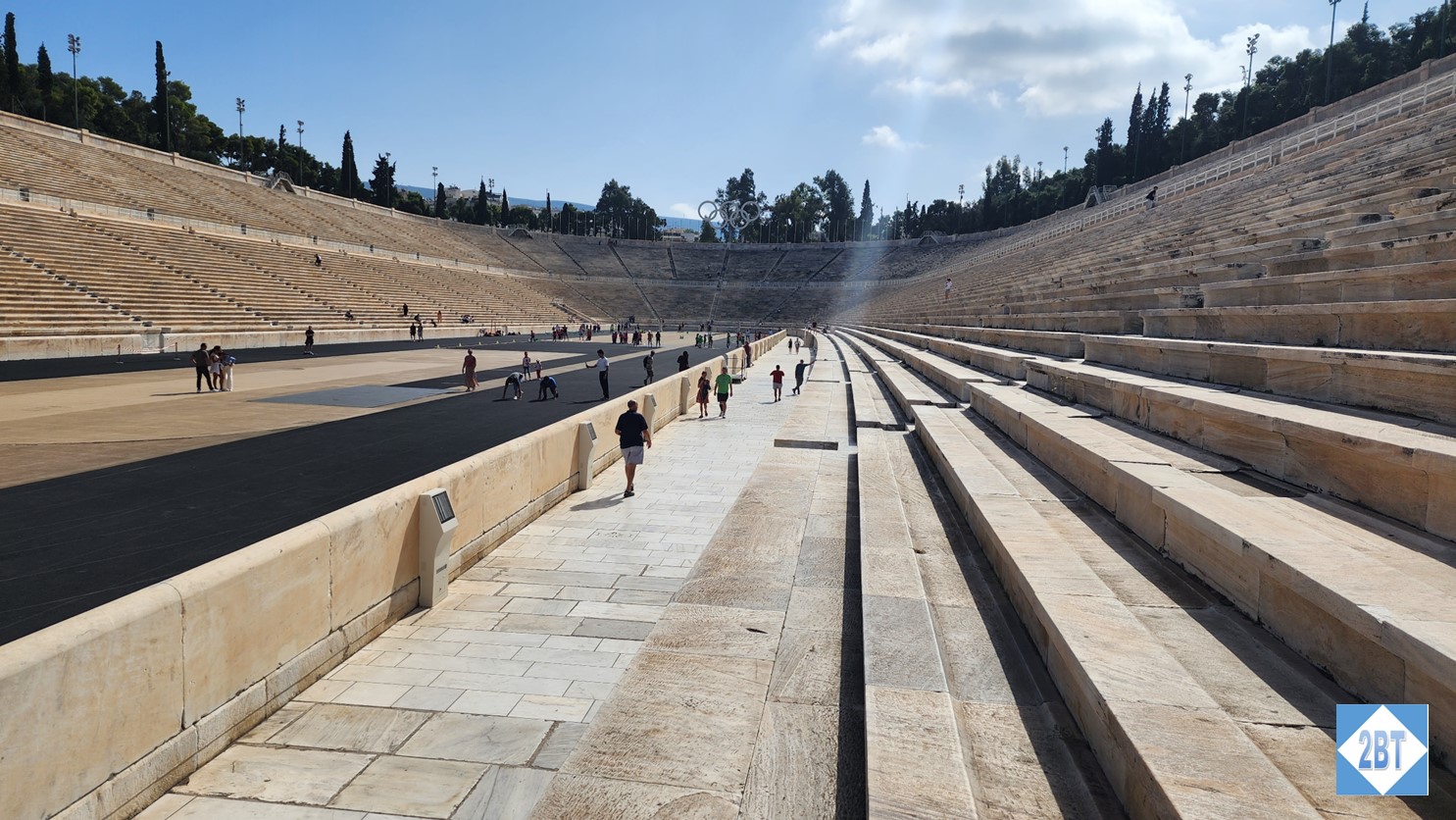
Stepping inside the stadium
The infield has been covered in a rubbery surface much like is found now on playgrounds. On the day we were there pre-school children were having a field day with lots of fun little races around cones, etc.

The infield
While there are special seats reserved for royalty

Seats for royalty
There is also an inscription saluting both the first modern games and one for Avery Brundage, the American who was chairman of the International Olympic Committee from 1952 to 1972.
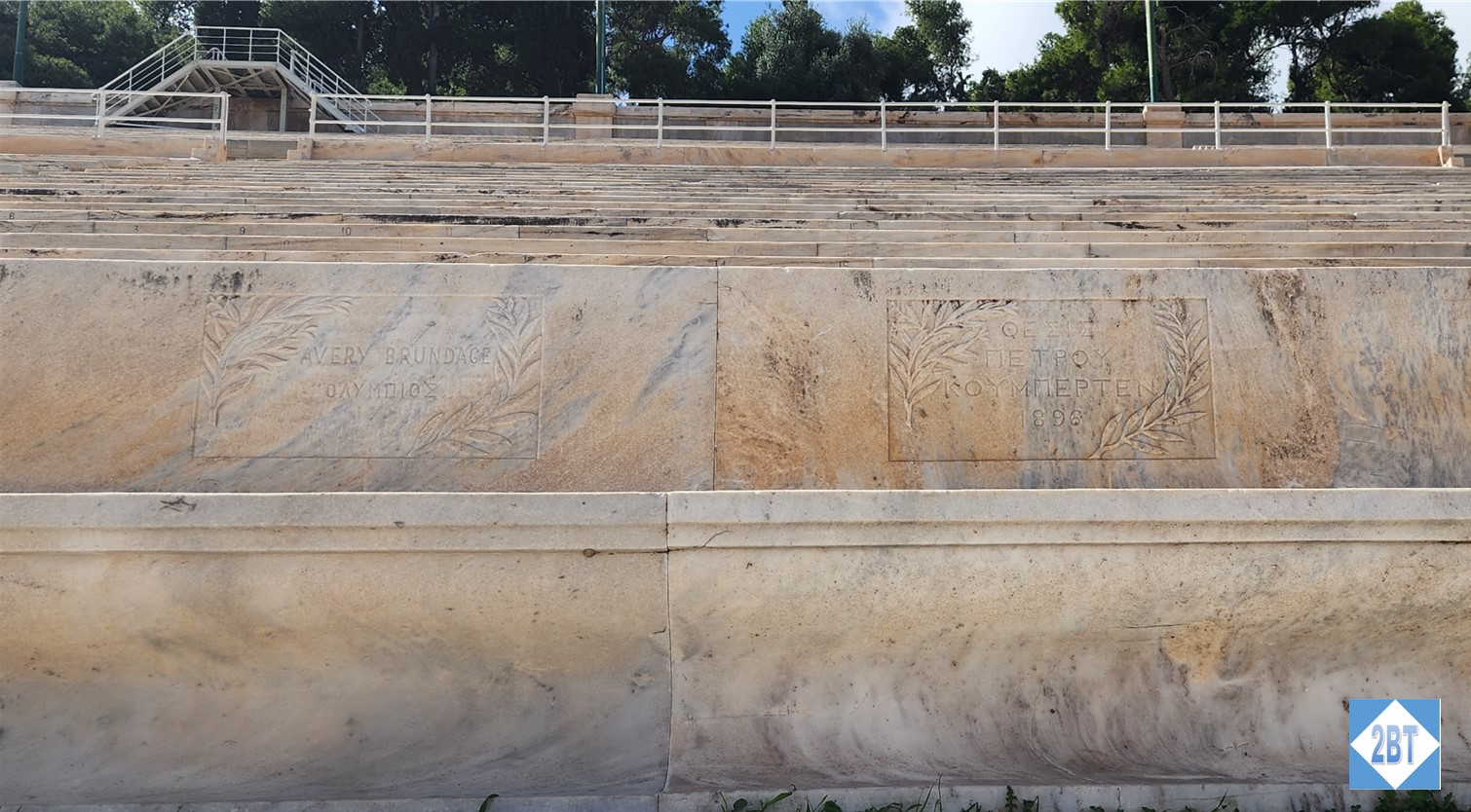
Inscription honoring Avery Brundage and the first modern Olympic Games in 1896
While much of the wall around the track has been restored, a few blocks were purposely left virtually untouched to illustrate the wear of time.
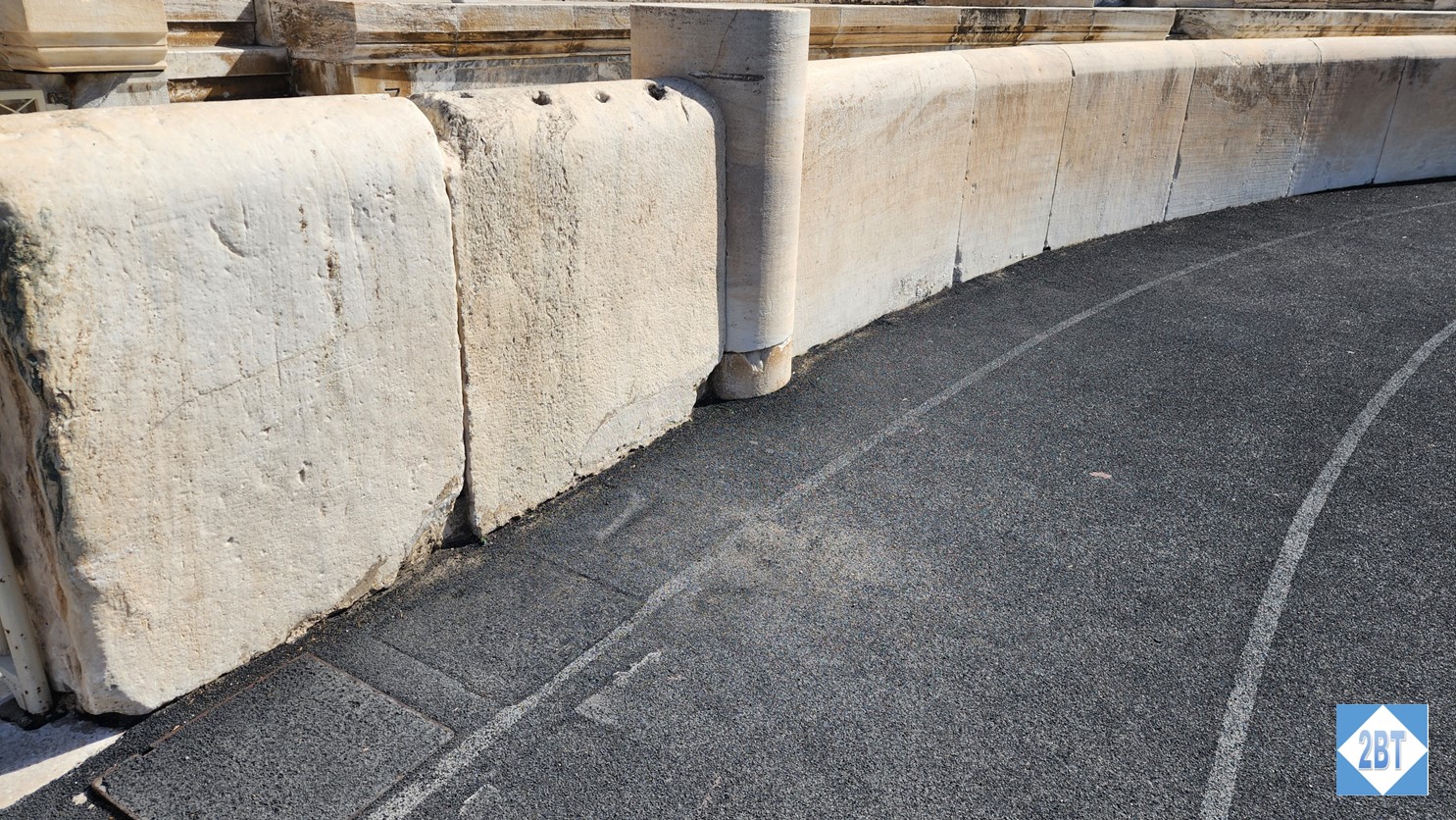
Ancient side walls beside ones that have been restored
The Olympic Rings have a permanent place at the far end of the stadium.
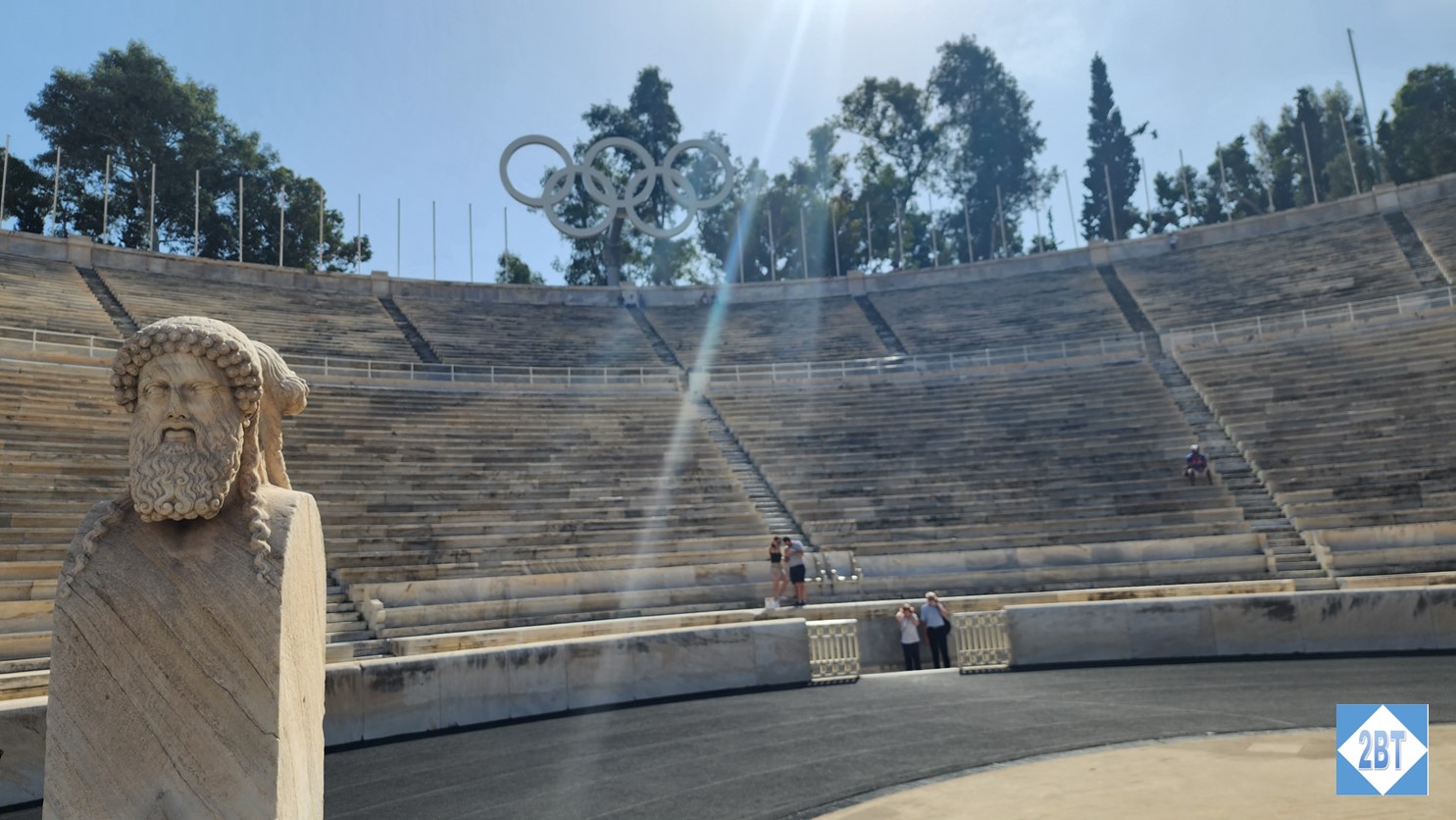
The Olympic Rings at the closed end of the horseshoe
While at the open end of the horseshoe the Olympic Flag and the Greek flag alternate as they face the Acropolis.

Olympic Flags and the Acropolis
Under the bleachers on one side is a small museum and a gift shop. The museum features posters and torches from most of the Games of the last 50+ years. I loved seeing them all in one place.
In the end
We had one site left on our combo ticket but were so tired after two very full days of walking that we decided to skip Aristotle’s School. We knew that by the time we made it back to the hotel and had dinner we’d be done for the night so we did the sensible thing and headed back. In the next post I’ll touch on what we did with our final morning as well as a quick word about the restaurants we visited.
 2B Traveling
Recent Comments