Trip Report: Athens and a Mediterranean Cruise
Lounge Reviews: The Club CLT and Centurion Lounge Charlotte Airport
Flight Review: Lufthansa A340-600 Charlotte-Munich
Lodging Review: Academias Hotel, Autograph Collection, Athens
Our Time in Athens, Part I (Acropolis and Museum)
Our Time in Athens, Part II (Roman Agora, Hadrian’s Library, Ancient Agora)
Our Time in Athens, Part III (Kerameikos, Temple of Zeus, Panathenaic Stadium)
Our Time in Athens, Part IV (Restaurants and Observations)
Ship Review: Viking Neptune
Our Time in Ancient Olympia (Katakalon, Greece)
Our Time in Corfu, Greece
Our Time in Kotor, Montenegro
Our Time in Dubrovnik, Croatia
Our Time in Zadar, Croatia
Our Time in Venice, Italy
Flight Review: Iberia A330-300 Madrid-Chicago
Our ship departed Athens at 6 PM on Saturday evening and it took us the rest of the night and all of Sunday morning to reach our first port of call, Katakolon, Greece as we had to sail around the Greek peninsula.
The included tour at this port was called Ancient Olympia and there were optional tours that included not only Ancient Olympia but a visit to the Magna Grecia olive estate, another where you can learn Greek folk dancing and a Flavors of the Greek Countryside tour. We stuck with the included tour but because we were in the cheaper staterooms we had to settle for the last tour of the day, which didn’t leave until 2:15 PM.

Port of Katakolo(n)
That wasn’t all bad. In Katakolon, the dock is not far at all from a tourist area with several restaurants and loads of souvenir shops. So after our ship docked at 12:30 PM we had time to go into this area and get our souvenirs purchased before the tour. I find it interesting that Viking refers to the port as Katakolon when all the local signage (and even Wikipedia) refer to the port name without the final N. From what I can see online the names appear to refer to the same place, it just seems odd!

Town of Katakolon as viewed from our ship
At the appointed time we boarded our bus and drove about a half-hour east to the site of Ancient Olympia. If you’ve never seen olive trees, you will see more than your fair share on the ride to Ancient Olympia (and yes, it’s always known as Ancient Olympia), which is a UNESCO World Heritage Site. We were told stories about how even non-farming families will have olive trees in the back yard and will sell the olives to make extra money. It is definitely a cultural thing in Greece.
Ancient Olympia
When we arrived at the site there was still a bit of a walk from the parking lot before we reached the entrance. This is about where the pavement ends as well. If you’re mobility-challenged be aware that there may be some places in this area that are more difficult to navigate. While it is, in general, a fairly flat area, the pathways are mostly loose gravel. I would do further research if this is an area that concerns you.
Upon entering the site we first passed the Ancient Gymnasium, where competitors trained.
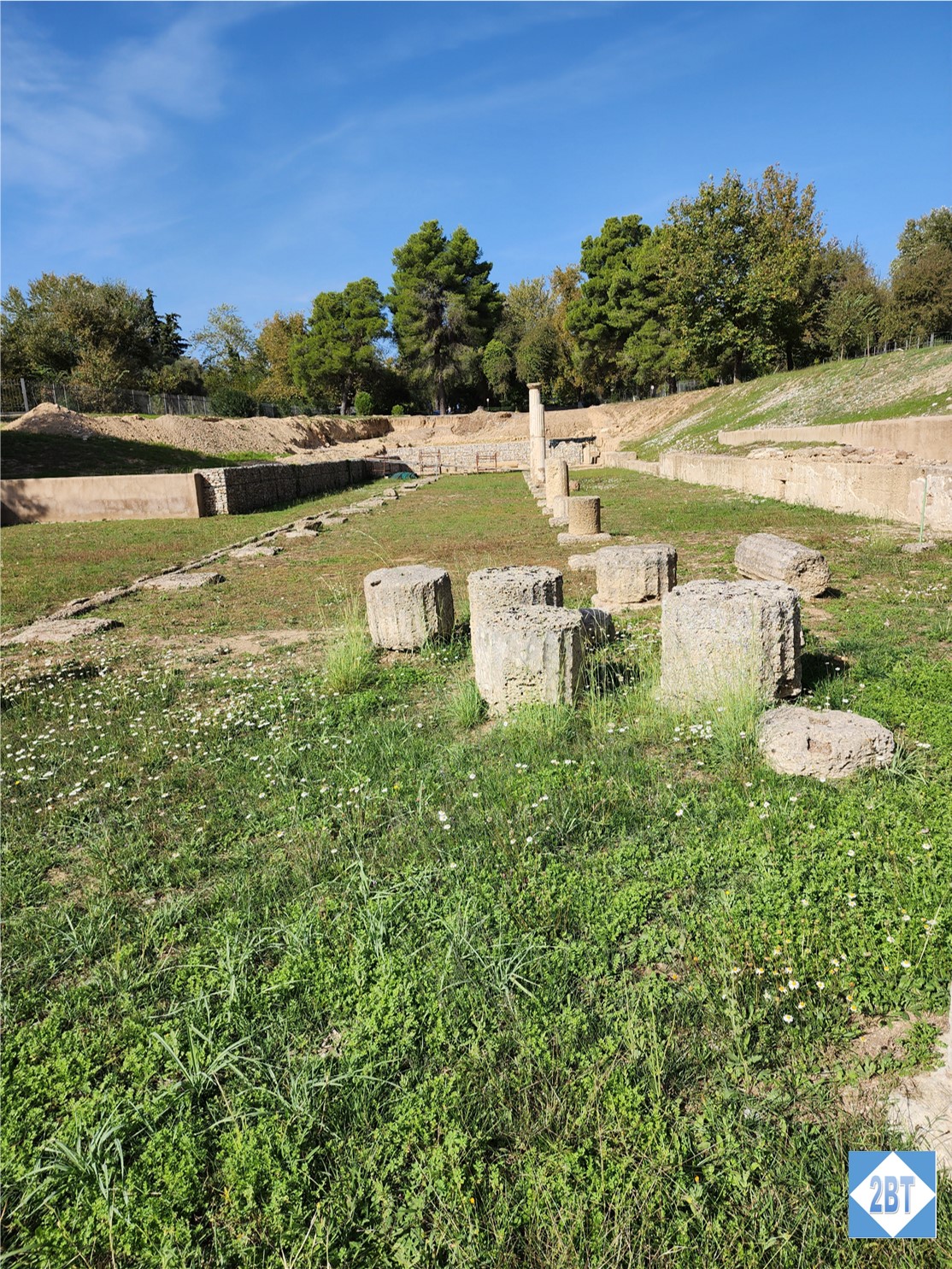
Gymnasium
Next up was the Palaestra, which is where wrestling and martial arts were taught.
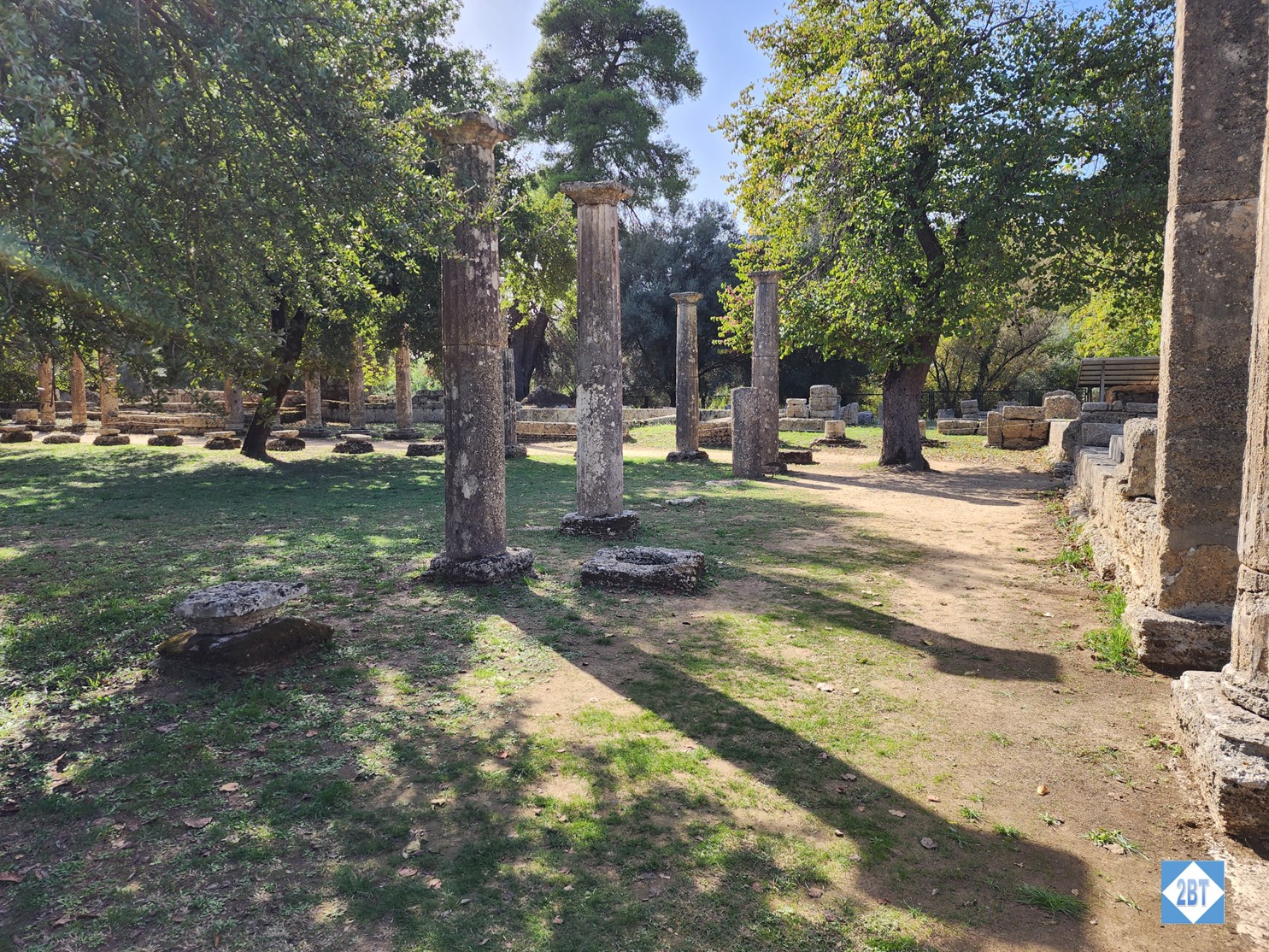
Palaestra

Palaestra
From afar we could see the remains of the workshop of Phidias, the famous sculptor, painter and architect responsible for both the Athena statues on the Acropolis (one inside the Parthenon and a giant bronze one between the Parthenon and the Propylea) as well as the Statue of Zeus at Olympia which was one of the Seven Wonders of the Ancient World.
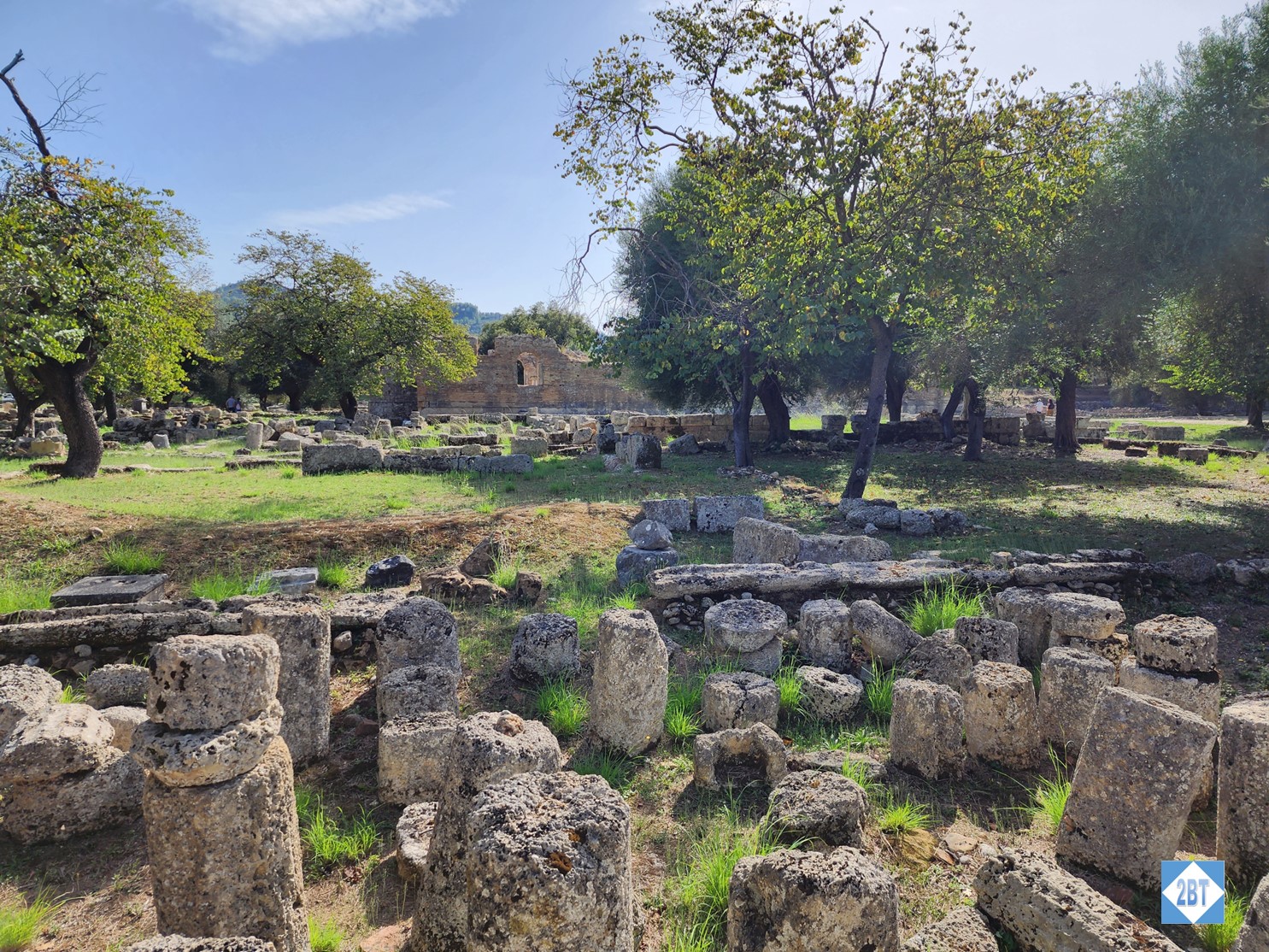
Workshop of Phidias
In the center of the site are the remains of the Temple of Zeus. Even today it’s easy to tell that it was elevated above all the other buildings.
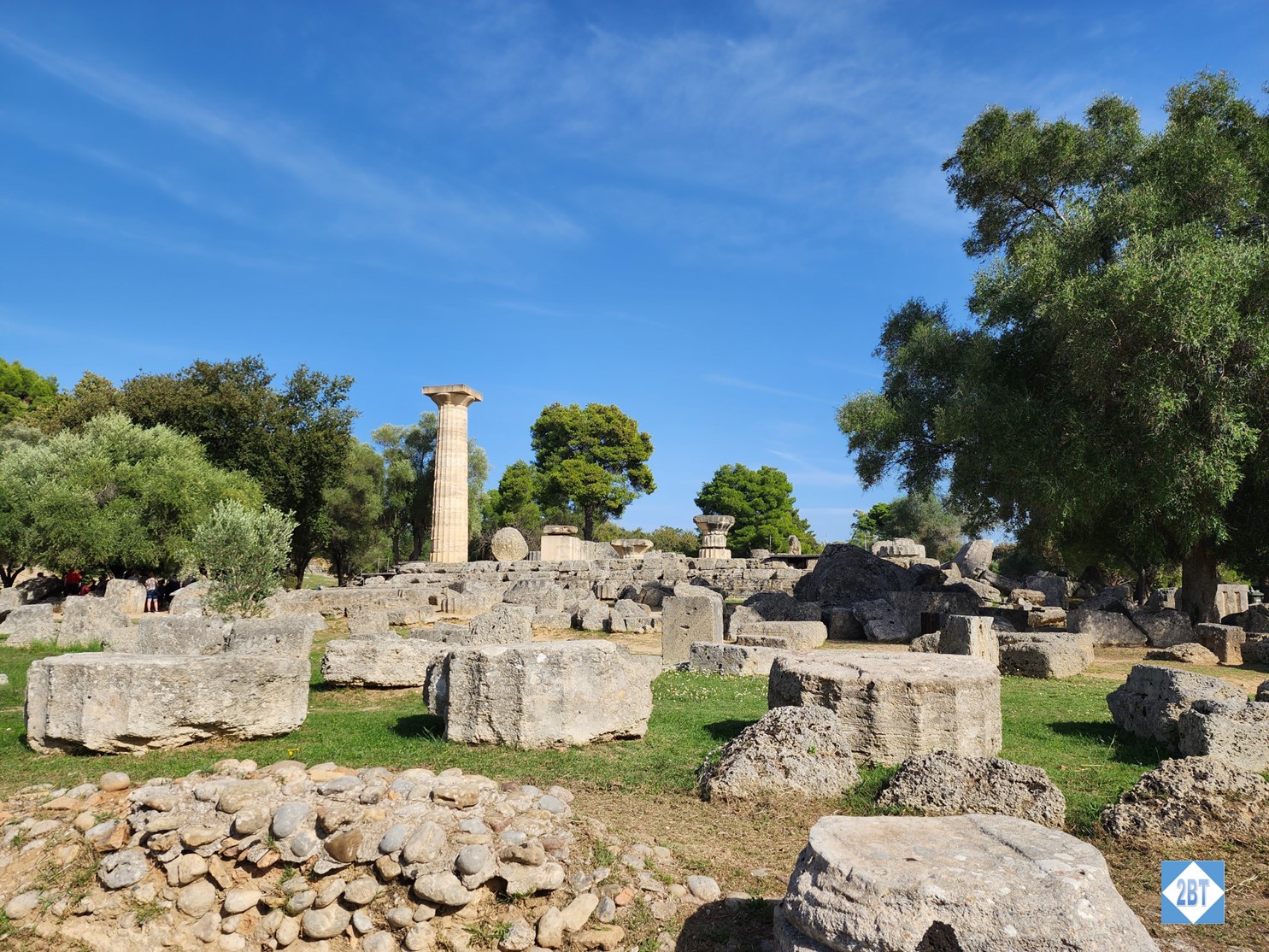
Temple of Zeus
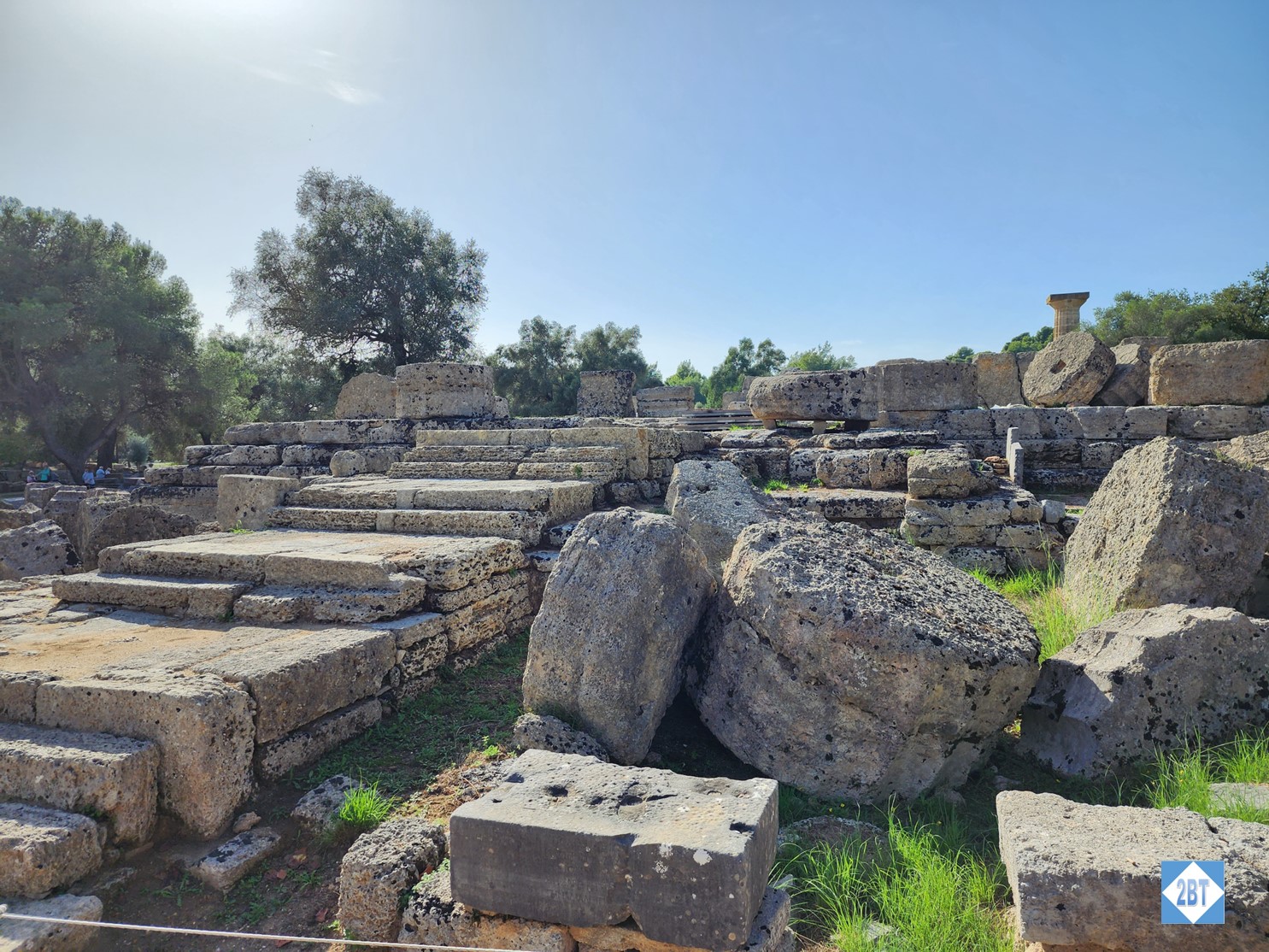
Temple of Zeus
The oldest temple on the site is actually dedicated to Hera, the queen of the Greek gods.
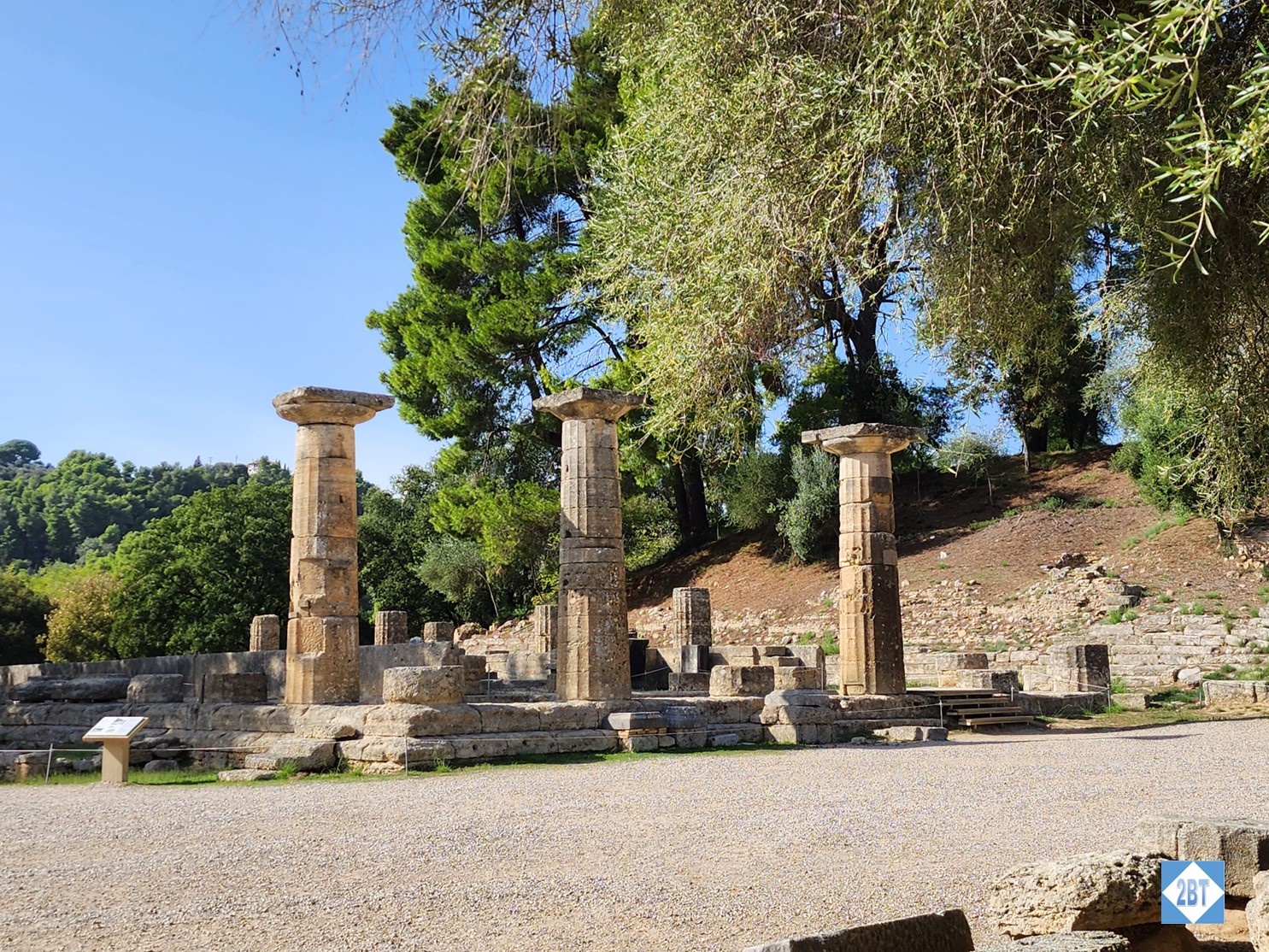
Temple of Hera
In front of the temple was an altar and it is at this site that the Olympic flame is lit before it begins its journey to the host country. It is lit by using a parabolic mirror to concentrate a beam of sunlight into lighting the first torch. I had not realized that the torch relay is actually a Nazi invention as the first one was for the Berlin Games in 1936. But I am glad that its origins don’t really matter as I find it a nice tradition and enjoyed going to view it when the relay came through Memphis for the 2002 Olympic Winter Games in Salt Lake City. I hope to view it again for the 2028 Games in Los Angeles and when the Winter Games return to Salt Lake in 2034.
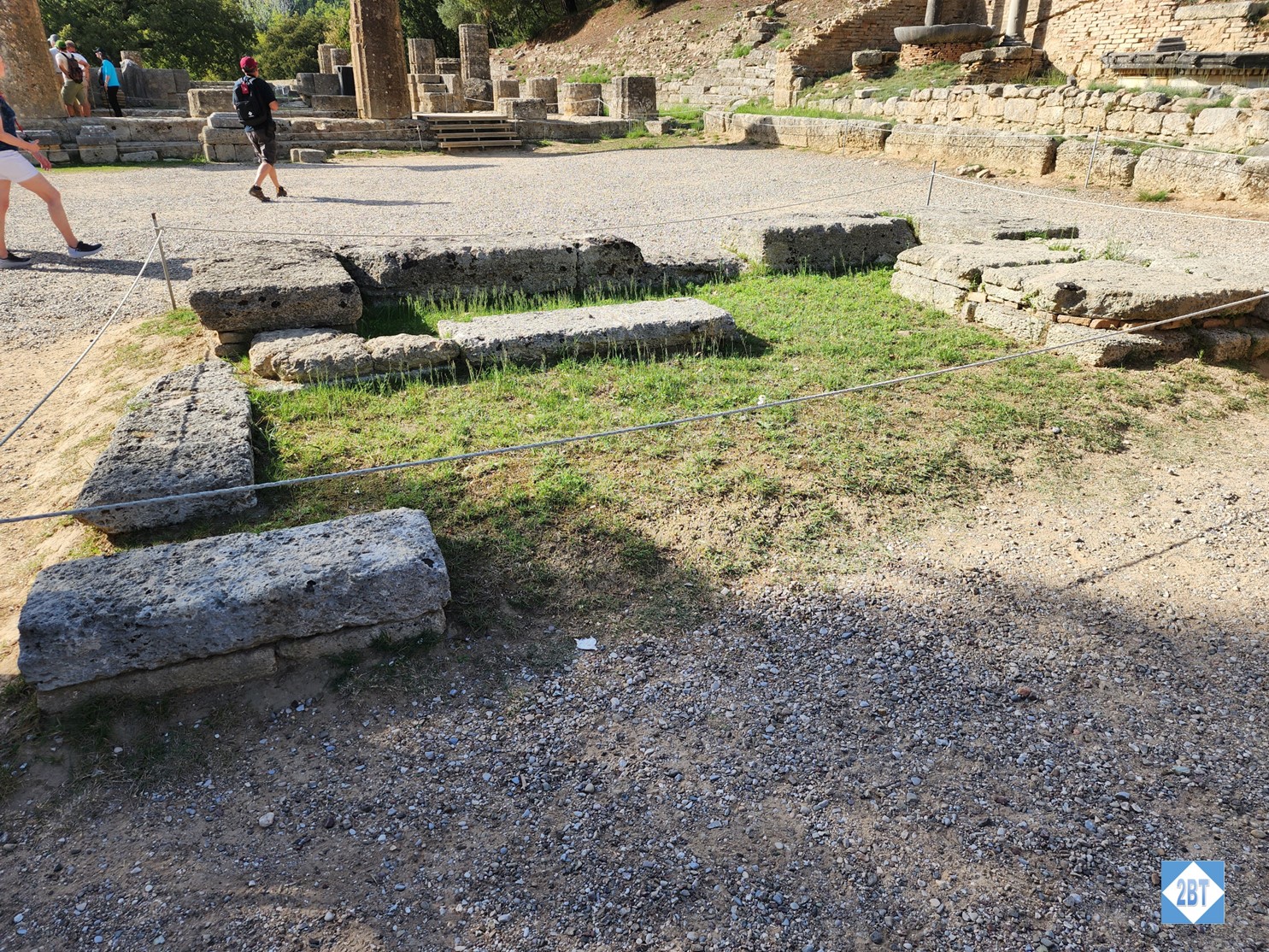
The Olympic flame is lit here.
Built into the hill beside the altar is the Nymphaeum, which was a water-distribution structure. Basically it’s the end of an aqueduct and this one was set up so the spectators had drinking water. This was a late addition to Olympia, only constructed in the 2nd century AD whereas the Games had been held on this site since the 8th century BC.
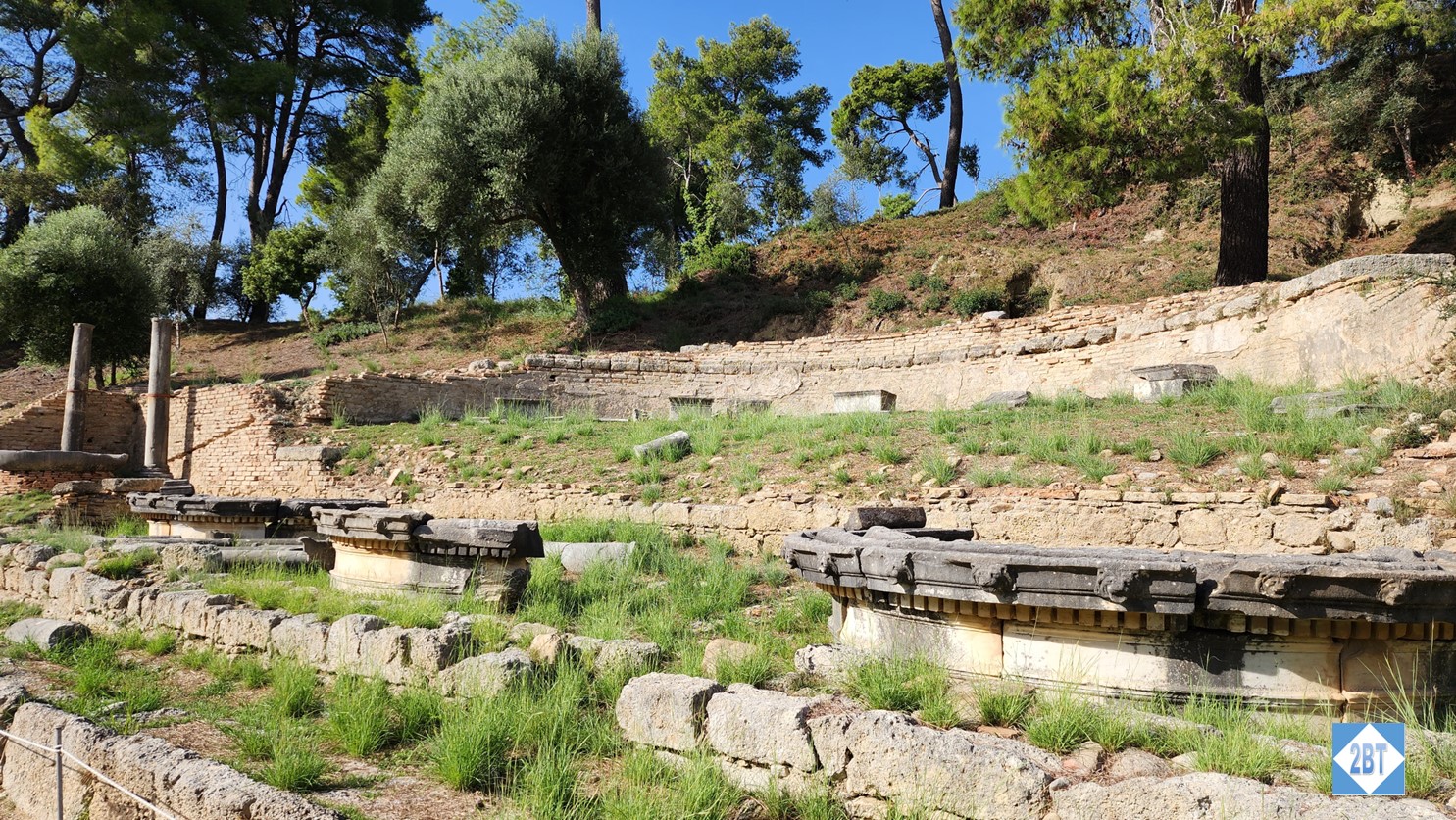
Nymphaeum
On the east side of the site we walked through this narrow path under the archway, called a crypt although it reminds me more of a cattle chute!, and into the original Olympic Stadium. While we could see the remains of seating on the small hillsides adjacent, there’s nowhere to sit now.


The starting lines, however, are still in place! The lines were so that the athletes could dig their toes in between the sections and thus have a better start.
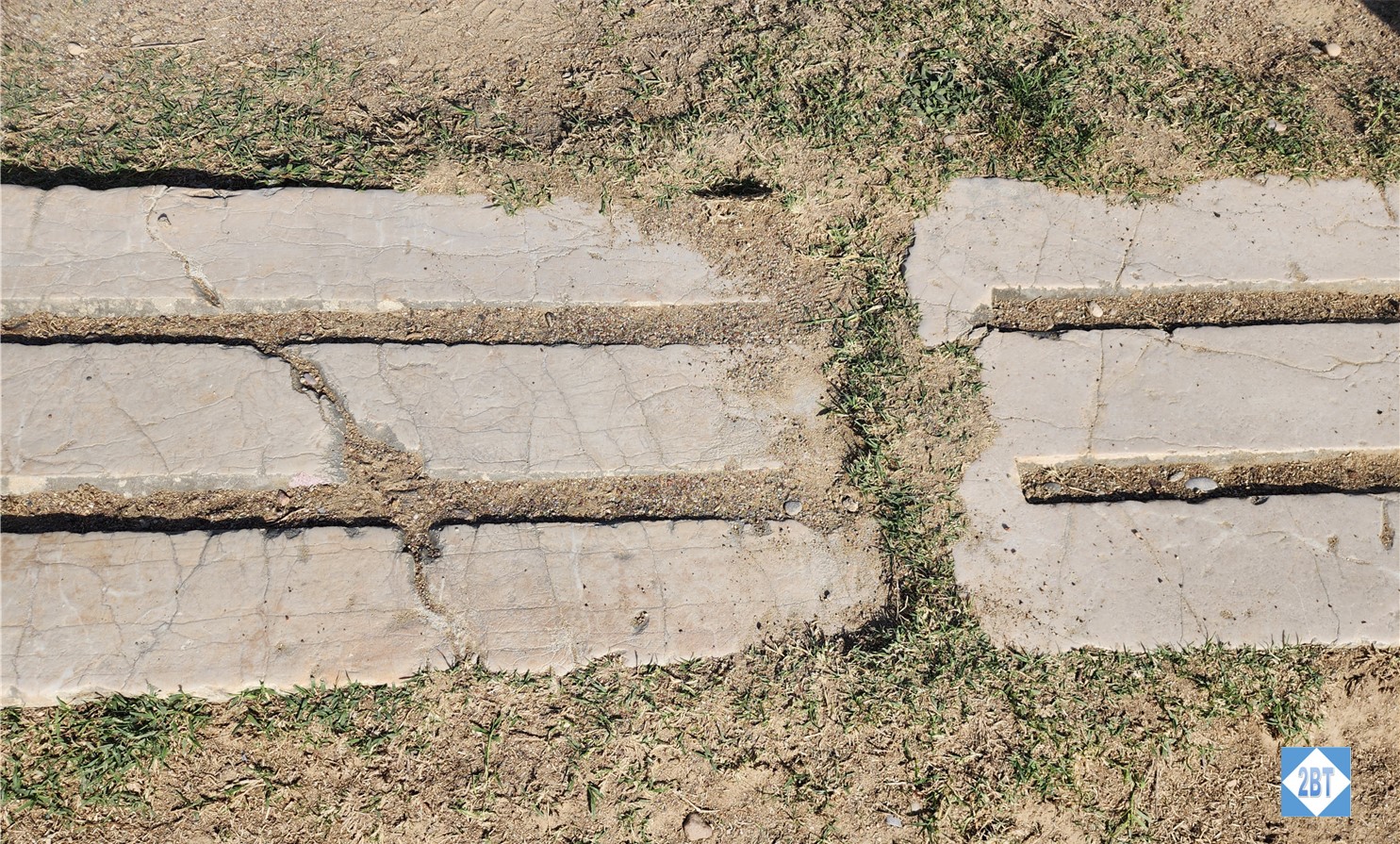
The ancient starting lines
On our way out we passed the Philppeion, a circular memorial dedicated to Philip’s family. Inside were statues of Philip, Alexander the Great, Olympias, Amyntas III and Eurydice I. It was made in celebration of Philip’s victory at the battle of Chaeronea in 338 BC and is the only structure on the site dedicated to a human.
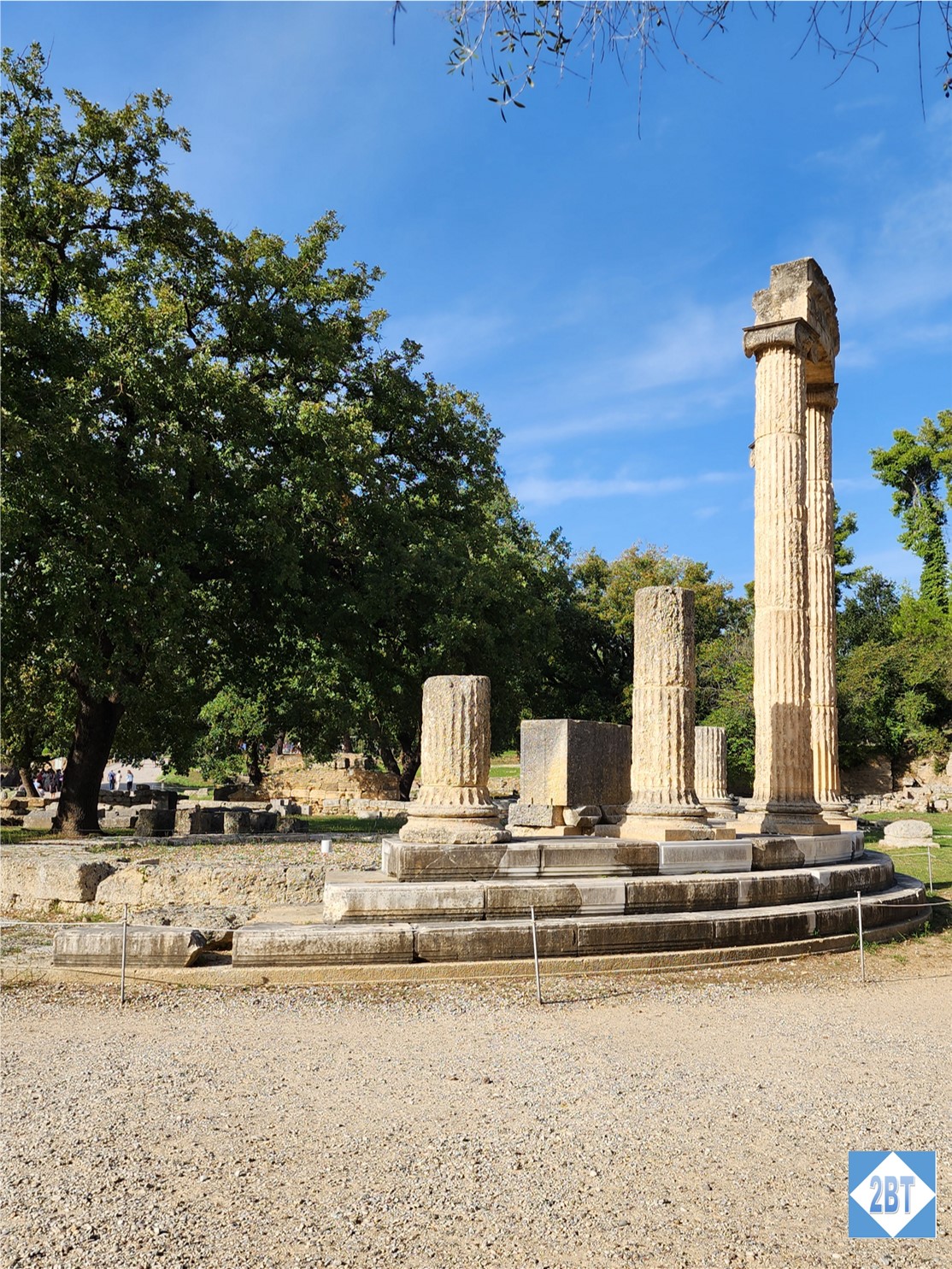
Philppeion
Facilities
Within the site itself there are restrooms. In the parking lot area there is a restaurant as well as a drinks stand and a few souvenir shops. Restrooms are available in this area too.
In the end
As a bit of an Olympics geek I thoroughly enjoyed seeing the place where the Games originated. I would love to come here some day for the torch lighting ceremony.


 2B Traveling
Obrigada por toda esta informação, consegui colocar legendas nas minhas fotos.
De nada!