Trip Report: Athens and a Mediterranean Cruise
Lounge Reviews: The Club CLT and Centurion Lounge Charlotte Airport
Flight Review: Lufthansa A340-600 Charlotte-Munich
Lodging Review: Academias Hotel, Autograph Collection, Athens
Our Time in Athens, Part I (Acropolis and Museum)
Our Time in Athens, Part II (Roman Agora, Hadrian’s Library, Ancient Agora)
Our Time in Athens, Part III (Kerameikos, Temple of Zeus, Panathenaic Stadium)
Our Time in Athens, Part IV (Restaurants and Observations)
Ship Review: Viking Neptune
Our Time in Ancient Olympia (Katakalon, Greece)
Our Time in Corfu, Greece
Our Time in Kotor, Montenegro
Our Time in Dubrovnik, Croatia
Our Time in Zadar, Croatia
Our Time in Venice, Italy
Flight Review: Iberia A330-300 Madrid-Chicago
On the Tuesday of our cruise we checked off a new country, Montenegro. The country’s name comes from the Venetians mangling the Serbian words “Crna Gora” for “black mountain”. The mountain in question is Mount Lovćen which was covered in dense evergreen forests. Over the centuries this area has been controlled by the Illyrians, the Slavs, the Serbs, the Venetians, the Ottomans, an independent country, occupied by Austria-Hungary during WWI, part of the Kingdom of Yugoslavia then after WWII one of the republics of the Socialist Federal Republic of Yugoslavia, then the smaller Federal Republic of Yugoslavia along with Serbia and finally regaining its independence in 2006.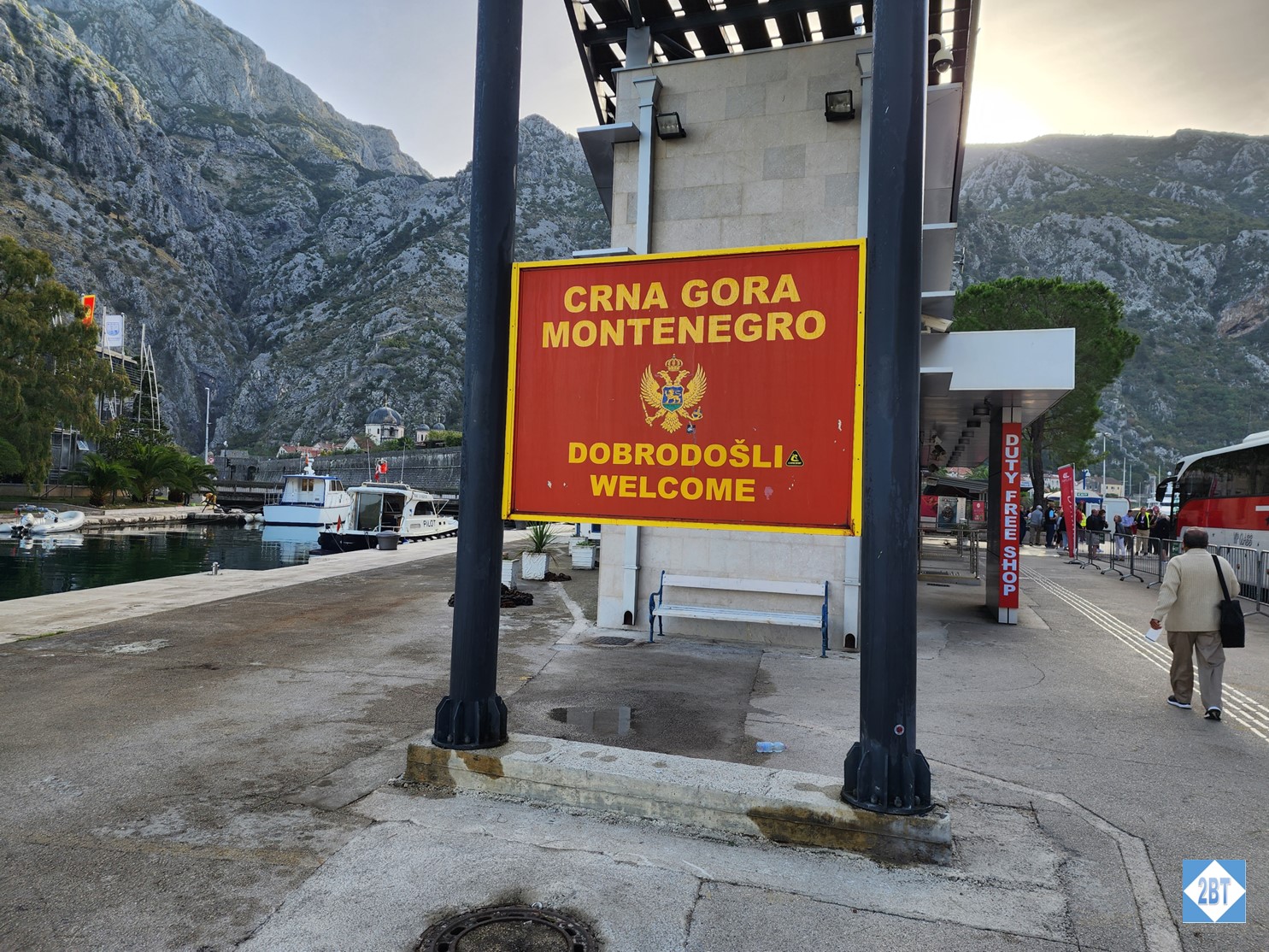
Reaching Kotor
We didn’t reach the dock until just after 8 AM and so we got to view a little bit of our final approach.

Approaching Kotor

Approaching Kotor

View of Bay of Kotor from our stateroom
What I hadn’t realized was just how tricky it was to reach the port from the Adriatic!

You have to really want to reach Kotor!
Of course once we docked we were *right* beside the coastal road! Hopefully there were no very tall vehicles that needed to pass – they might run right into the bow of our ship!
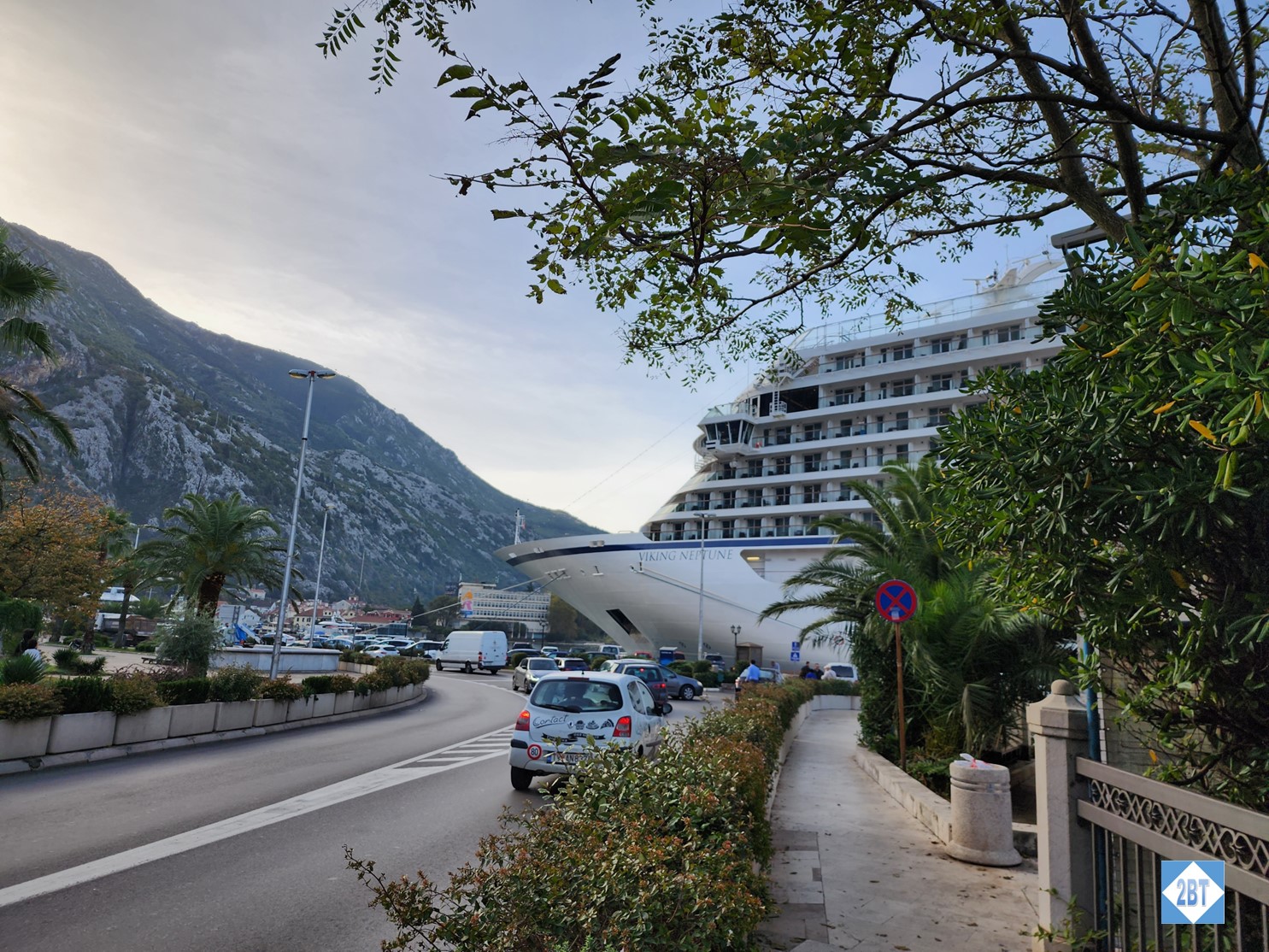
We docked up close and personal to the road in Kotor
Currency exchange adventures
There were several half-day tours out into the surrounding area but we opted to skip those and do the included walking tour and one of the evening concert performances. All the morning walking tours were sold out but we were able to sign up for the one at 12:30, so we had the morning to ourselves. While Guest Services aboard the ship can break down larger Euro bills for smaller ones, they cannot exchange currency. My friend needed to convert USD to Euros so we set off to find a bank to do so. We found two right next to each other down a side street that was about a half-mile away.
Once we reached the first one, we could not even get the door open. These were both very small buildings and we’ve since learned that the issue was likely that there were already the maximum number of customers inside and had we waited until someone came out we could have then entered. We did manage to get into the second bank but had to wait in the foyer with 1-2 other folks until one of the tellers was free. When it was our turn we then learned my friend should have brought her passport as they would not exchange the cash without it. So we had to trudge back to the ship and back to the bank where it was then no problem to do so. I had gotten my Euros via an ATM in Greece and use a bank card that reimburses out-of-network ATMs. That’s definitely the way to go, in my book.
St. John Mountain
It’s impossible to miss St. John mountain which rises directly behind the old town. The fortified city walls continue up the hill and halfway up is the Our Lady of Remedy church, built in 1518.

St. John Mountain

Our Lady of Remedy Church halfway up the mountain
Up on top of the mountain is the San Giovanni castle. While we agreed that the view would be spectacular from the castle, neither of us was willing to make the hike up!

San Giovanni Castle
Old Town Kotor Tour
Though it is unknown when the city was founded, it was settled by at least 168 BC when it was known as Ascrivium, a Roman settlement. The Emperor Justinian built a fortress above the city in 535 AD and like the country itself, ownership of the city changed hands many times over the century. It was part of the Venetian Republic from 1420 to 1797 and the old town reflects the architecture of this time and is one reason it is a UNESCO World Heritage Site. During the Venetian rule the city became known as Cattaro and this remained its name until the end of World War I when it became Kotor, Yugoslavia.
The old town is one of the best-preserved in the Adriatic and is actually quite small as it is sandwiched between the Bay of Kotor and the mountain. The city walls are quite impressive with the archways from the city gates still in place. This one is known as the Sea Gate and is considered the city’s main gate.

Sea Gate
The city reminded me of Dubrovnik, just on a smaller scale. I guess that’s not surprising as they’re both Dalmatian cities just a couple of hours (by car) apart!

Old Town Kotor
Clock Tower
Like a lot of old cities, the clock tower is one of the town’s symbols. This one sits opposite the main city gate. It is said that construction on it began in 1602 but that it had not been finished by the time of 1667 earthquake because that event caused it to begin leaning toward the sea. At some later time there were efforts to restore it to an upright position but that the 1979 earthquake once again caused it to lean.


Palata Pima
The palace of the Pima family was built during the late 17th century in a mixture of Baroque and Renaissance styles. It’s thought that it may have replaced an earlier structure (possibly destroyed in the 1667 earthquake) because some of the windows at the back are in Romanesque style. Today it houses the Gallery Solidarity, a museum featuring works of artists from the former Yugoslavian countries and others including the US, Poland and Romania.

Palata Pima
Kotor Cathedral
The Cathedral of Saint Tryphon is one of only two cathedrals in Montenegro, which has a much higher population of Orthodox Christians than Catholics. Consecrated in 1166, the building was severely damaged in the earthquakes of 1667 and 1979. Note that the bell tower on the left remains unfinished.

Kotor Cathedral, the Church of St. Tryphon
The screen over the altar is considered one of Kotor’s most valuable treasures. St. Tryphon is the patron saint of gardeners and winegrowers.

Altar in St. Tryphon
Upstairs is the Sacral Art Museum which contains some beautiful artifacts as well as the head of St. Tryphon!
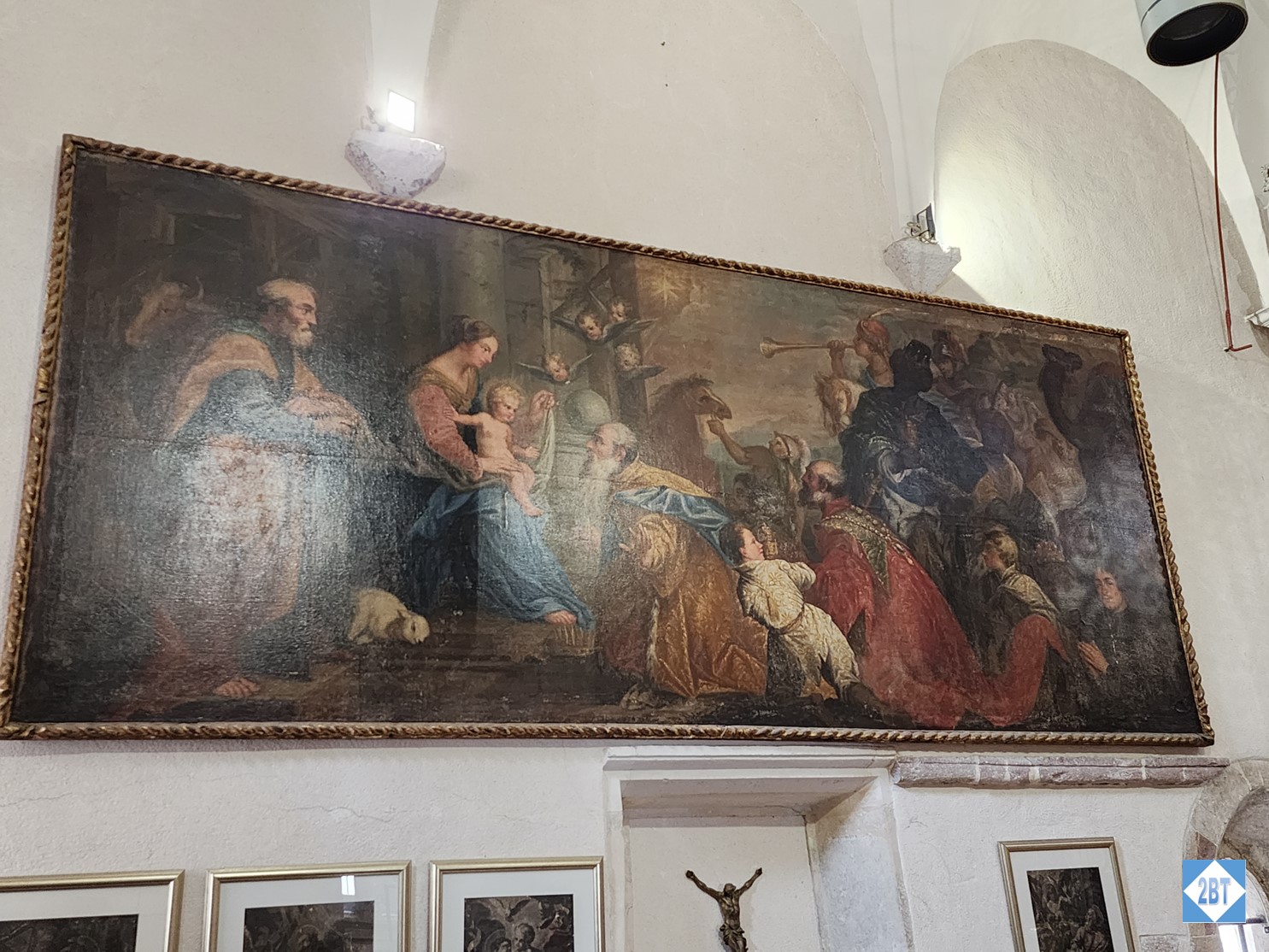
Painting in St Tryphon Museum

A Pontifical, or early song book
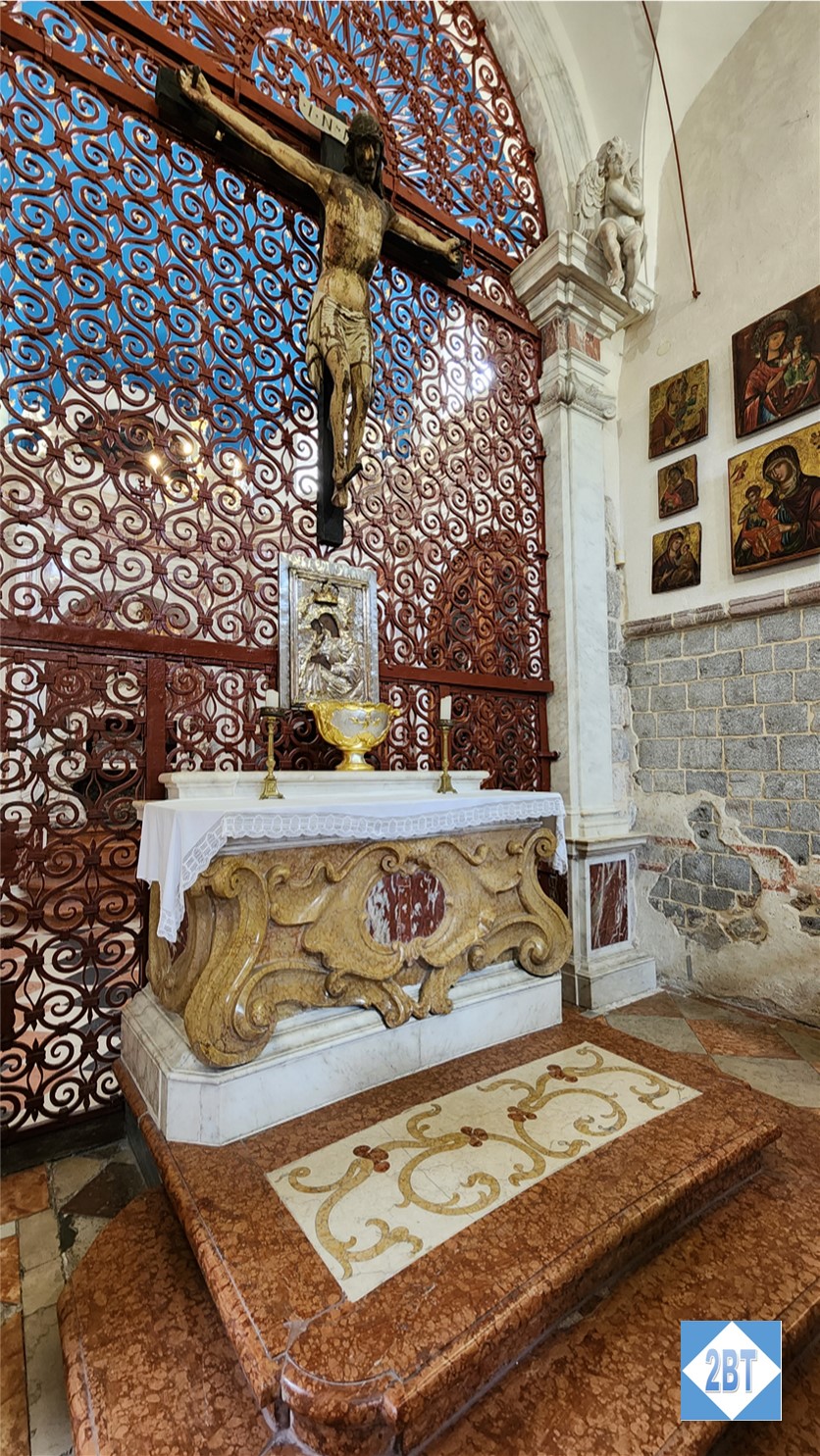
An altar on the stairs up to the museum
Maritime Museum
Our next stop was the Maritime Museum, founded in 1880 and opened to the public in 1900. It moved to its current location in 1938. The building itself was once the palace of the Grgurina family and today a couple of the rooms are decorated as the drawing rooms of some famous 19th century sailors.
This is where I first paid attention to the geography of the Bay of Kotor and realized the circuitous path our ship had sailed to reach Kotor.
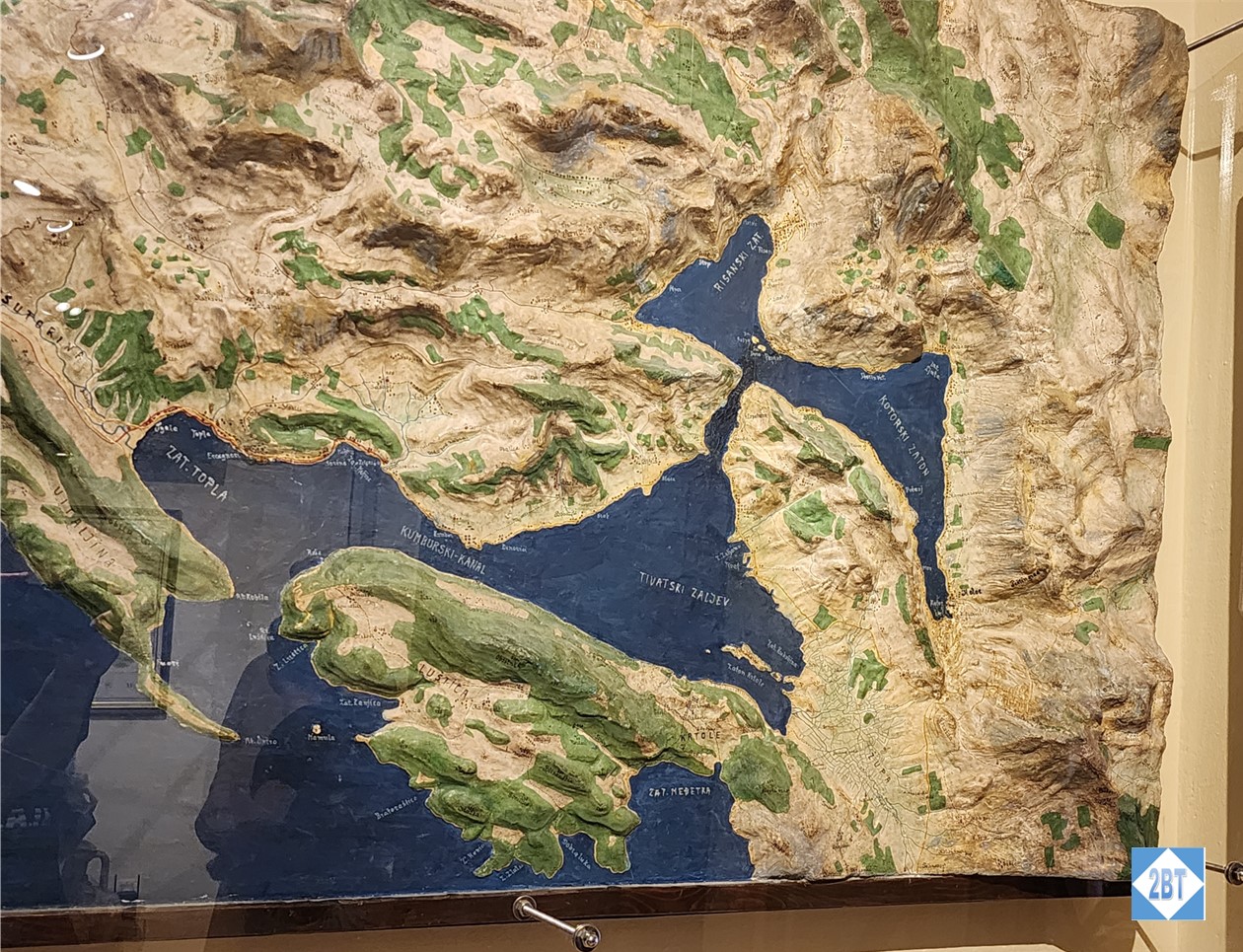
Bay of Kotor Map
There were several cases featuring guns ornately decorated with mother-of-pearl.

Beautiful mother-of-pearl inlay on the gunstock
This silver pistolet was intricately carved as well.
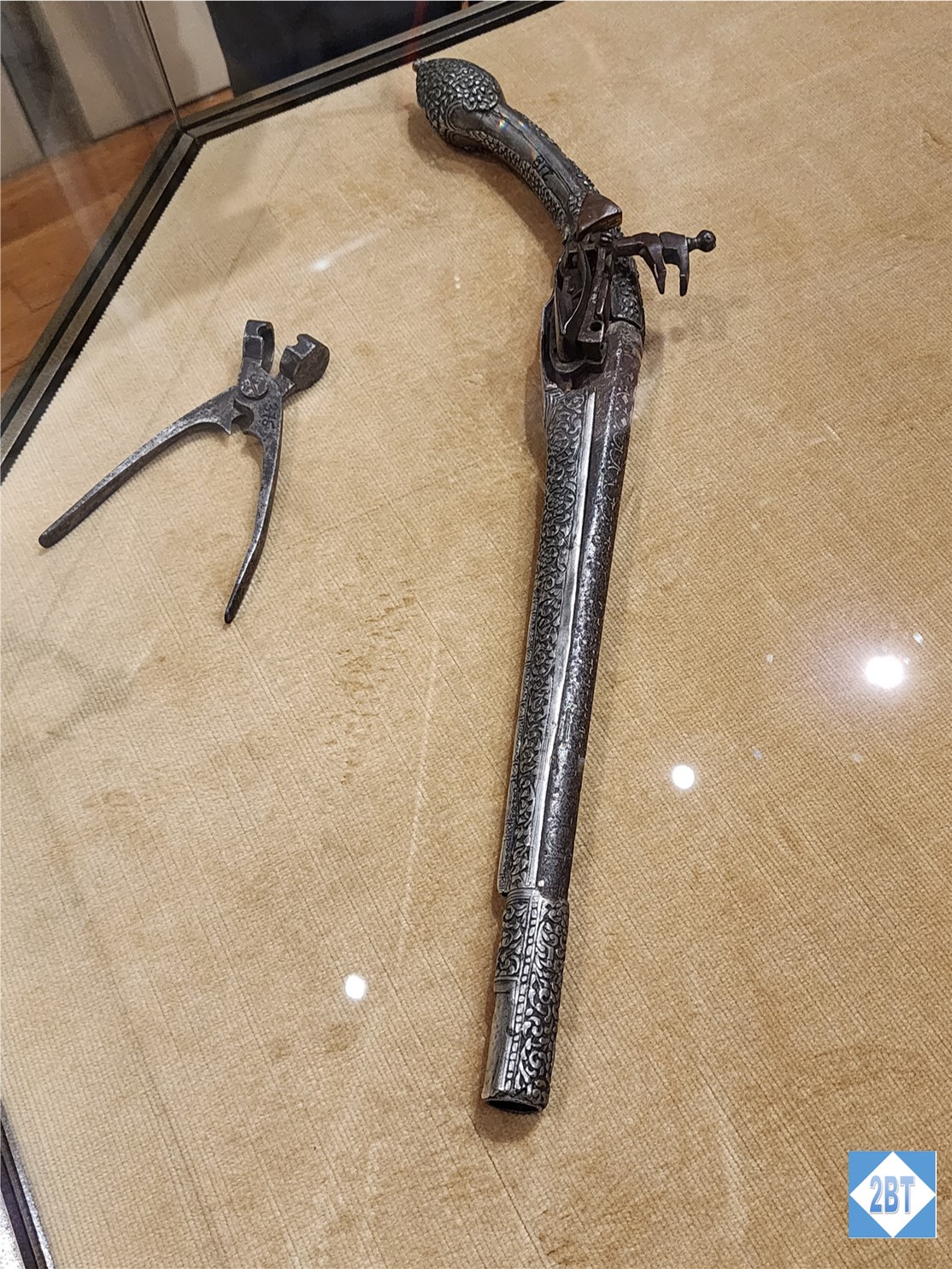
Intricate work on the pistol barrel
This was from a late 19th-century sailboat called Giurko.

Head from a sailboat
Church of St. Nicholas
A Serbian Orthodox church dedicated to St. Nicholas is along the northern wall of the old town. It dates to the early 20th century, built on the site of a prior 19th century church that burned down in 1896.

St. Nicholas Church
Church of St. Luke
Right in front of the Church of St. Nicholas is the Church of St. Luke, a Byzantine and Gothic church built in 1195. It was built as a Catholic church but later became an Orthodox one so it has two altars, one for each. It was the only building in town that did not suffer significant damage in the 1979 earthquake. The floor was made of tomb panels because until the 1930s burials were done within the church itself.

St. Luke Church
Cats
We saw quite a number of cats in old town Kotor and it turns out they have become a symbol of the city. Water and food is left out for them as well as boxes for them to sleep in. There is a charity to help care for them that includes spaying/neutering.
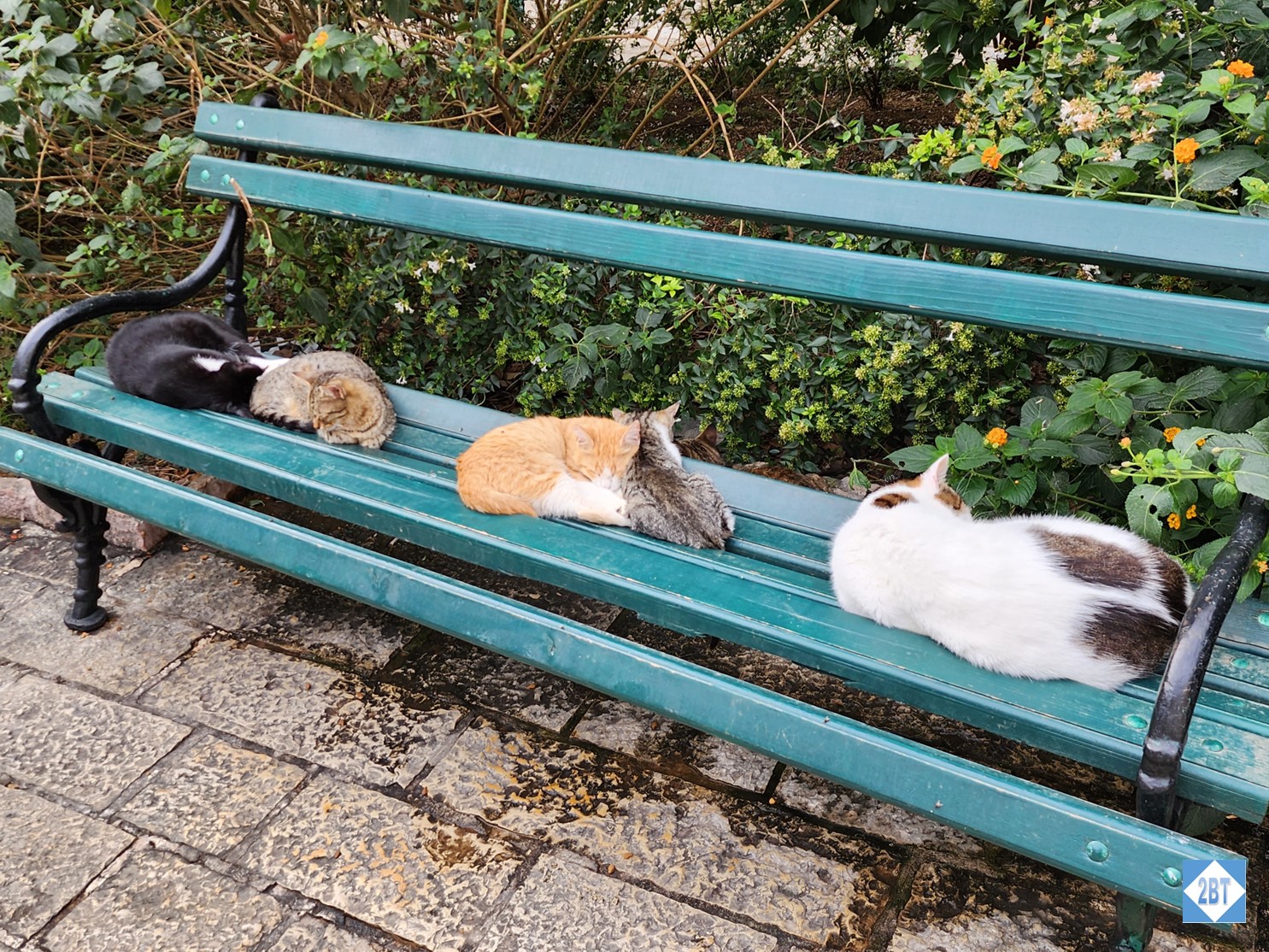
Just a few of the many cats in town
St. Mary’s Collegiate Church
These 20th century bronze doors reflect the life of St. Osanna who lived in the late 15th and early 16th centuries. The building dates to 1221 and is a Catholic church. Osanna’s body is in a glass coffin inside.

Bronze doors on St. Mary’s Collegiate Church
St. Nicholas Franciscan Monastery
Our evening excursion was to a concert in this former monastery located on the west coast of the small part of the bay where our ship was docked. Rather than transport us by a bus along the coastal road, Viking had arranged for us to be taken by boat. Until researching this article I’d thought we were on an island! Built in 1735 the last monks only left in 1908. Damaged in the 1979 earthquake, it wasn’t fully restored until 2011. The centerpiece is this Venetian-built high altar with a painting of St. Nicholas and flanked by statues of Peter and Paul.
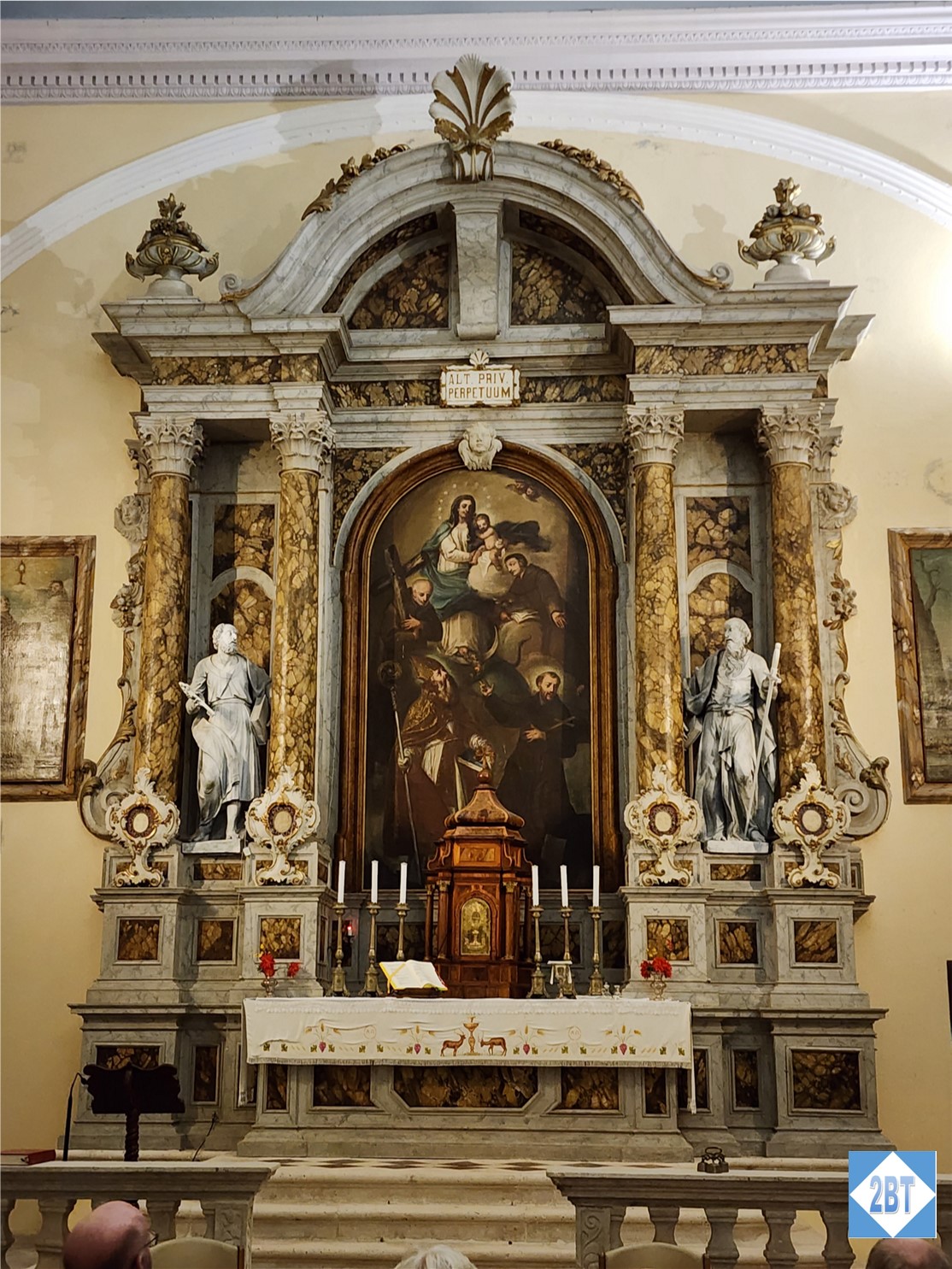
Altar at St. Nicholas Monastery
I wasn’t even sure what type of concert we’d signed up for but I assumed it was some sort of vocal group. But it was two classical guitarists, Srdan Bulatovic and Darko Nikcevic, and they were quite good.

Guitar concert
At the end of the evening it was cool to look across the bay to see the lights across the way.

Lights across the Bay of Kotor
In the end
I still have a lot to learn about the country of Montenegro and I’d love to get out in the countryside to see some more things. It has quite the history yet Kotor remains a lovely small town.

Goodbye Montenegro! Hope to see you again!
 2B Traveling
Recent Comments