Trip Report: Athens and a Mediterranean Cruise
Lounge Reviews: The Club CLT and Centurion Lounge Charlotte Airport
Flight Review: Lufthansa A340-600 Charlotte-Munich
Lodging Review: Academias Hotel, Autograph Collection, Athens
Our Time in Athens, Part I (Acropolis and Museum)
Our Time in Athens, Part II (Roman Agora, Hadrian’s Library, Ancient Agora)
Our Time in Athens, Part III (Kerameikos, Temple of Zeus, Panathenaic Stadium)
Our Time in Athens, Part IV (Restaurants and Observations)
Ship Review: Viking Neptune
Our Time in Ancient Olympia (Katakalon, Greece)
Our Time in Corfu, Greece
Our Time in Kotor, Montenegro
Our Time in Dubrovnik, Croatia
Our Time in Zadar, Croatia
Our Time in Venice, Italy
Flight Review: Iberia A330-300 Madrid-Chicago
On our prior Mediterranean cruise in 2008 we’d also had a stop in Dubrovnik so this was our second visit. My friend enjoys gardens and such so we’d signed up for the included city tour in the morning and the afternoon tour called A Renaissance Garden & Views. Apparently not many people signed up for either the morning or afternoon session of this optional tour because they combined us into a single morning tour and swapped out our city tour tickets for one in the afternoon.
A Renaissance Garden and Views Tour
Slano
We drove about 45 minutes northwest from the port, on a road bordering the Adriatic, until we reached the small town of Slano. Here the terrain slopes down from the hills above to the sea.
Beginning in the 14th century this area became a significant commercial port with two shipyards, salt warehouses and markets for salt, livestock and grain. The name “Slano” means “salt”.

It’s hard to get lost in Slano
Rector’s Palace
This area was governed by a Count, who was elected by the nobility, for a limited term. Initially the terms were as brief as three months but by 1635 the Count’s term was for a year. The Count ruled over the government affairs, collecting administrative fees and taxes, and in judicial affairs for both civil and criminal proceedings.

The Rector’s Palace in Slano, Croatia
This palace was completed in 1447, as noted by the inscription above the door on the second floor.
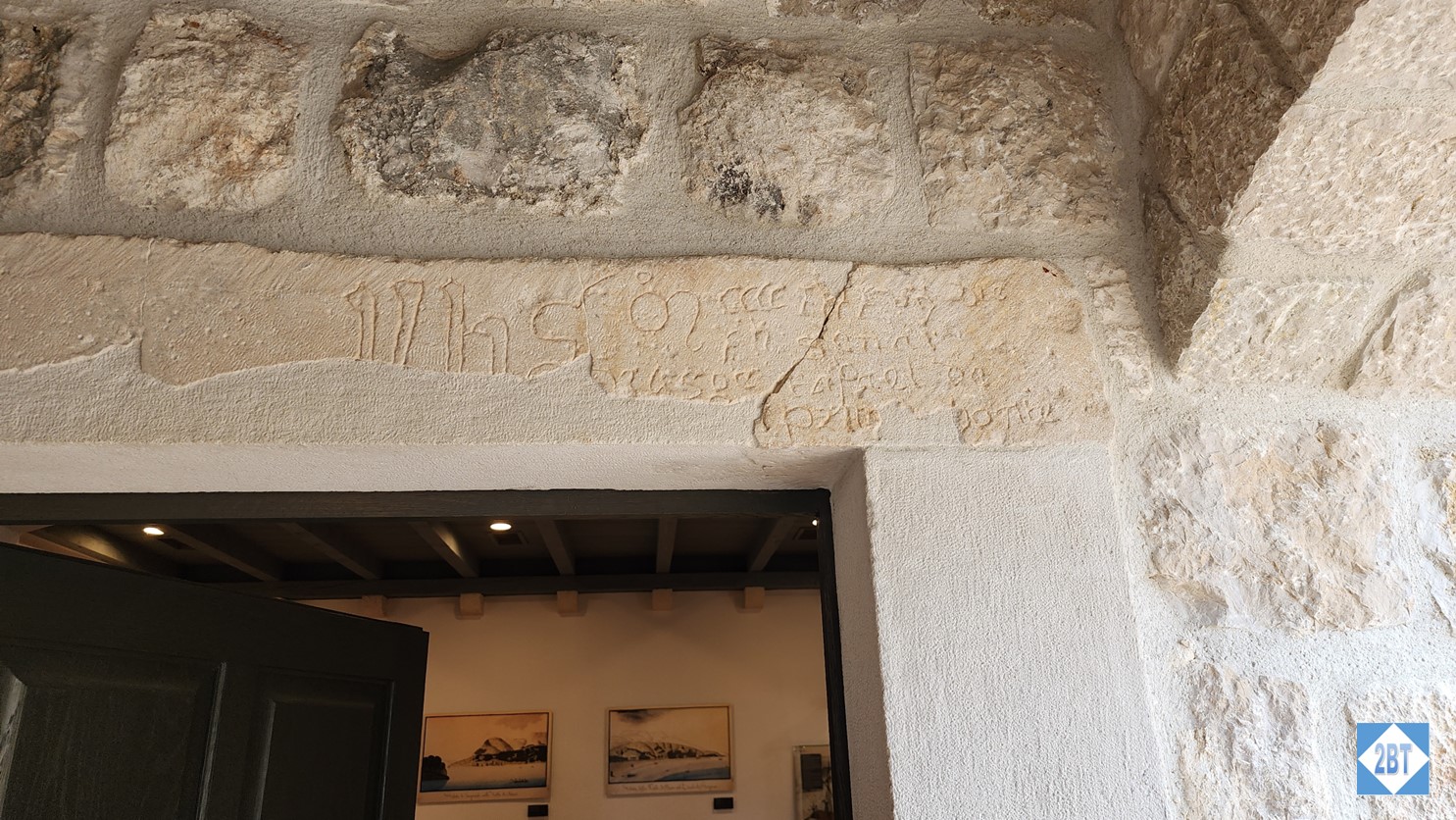
The inscription indicates that January 12, 1447 was the first day of use of the Rector’s Palace.
The purpose of the palace for fortification and administration as this area was the target of pirates in the 16th and 17th centuries. The building was heavily damaged in the 1667 earthquake that destroyed Dubrovnik and it was burned in 1806 by the Montenegrins. In 1831 it was converted to the pretorial administrator’s apartment, office, and prison. In the late 19th-early 20th century it was sold to a merchant who converted it to a residence. In the Serbian aggression of 1991 the Palace was burned, as were most buildings in Slano. The palace was reconstructed in 2017, respecting conservation guidelines and restoring it to the administrative-defensive function it had in 1808.
The palace also offers lovely views out to the sea.

The Adriatic as viewed from the Rector’s Palace
And there are lemon trees in the garden.

Lemon trees in the garden of the Rector’s Palace
Church of St. Jerome
On the road from the Rector’s Palace to the sea is the Church of St. Jerome, a Franciscan Catholic church.


Plaza
The plaza down at the waterfront also has beautiful views. During warmer months this area offers boat tours.
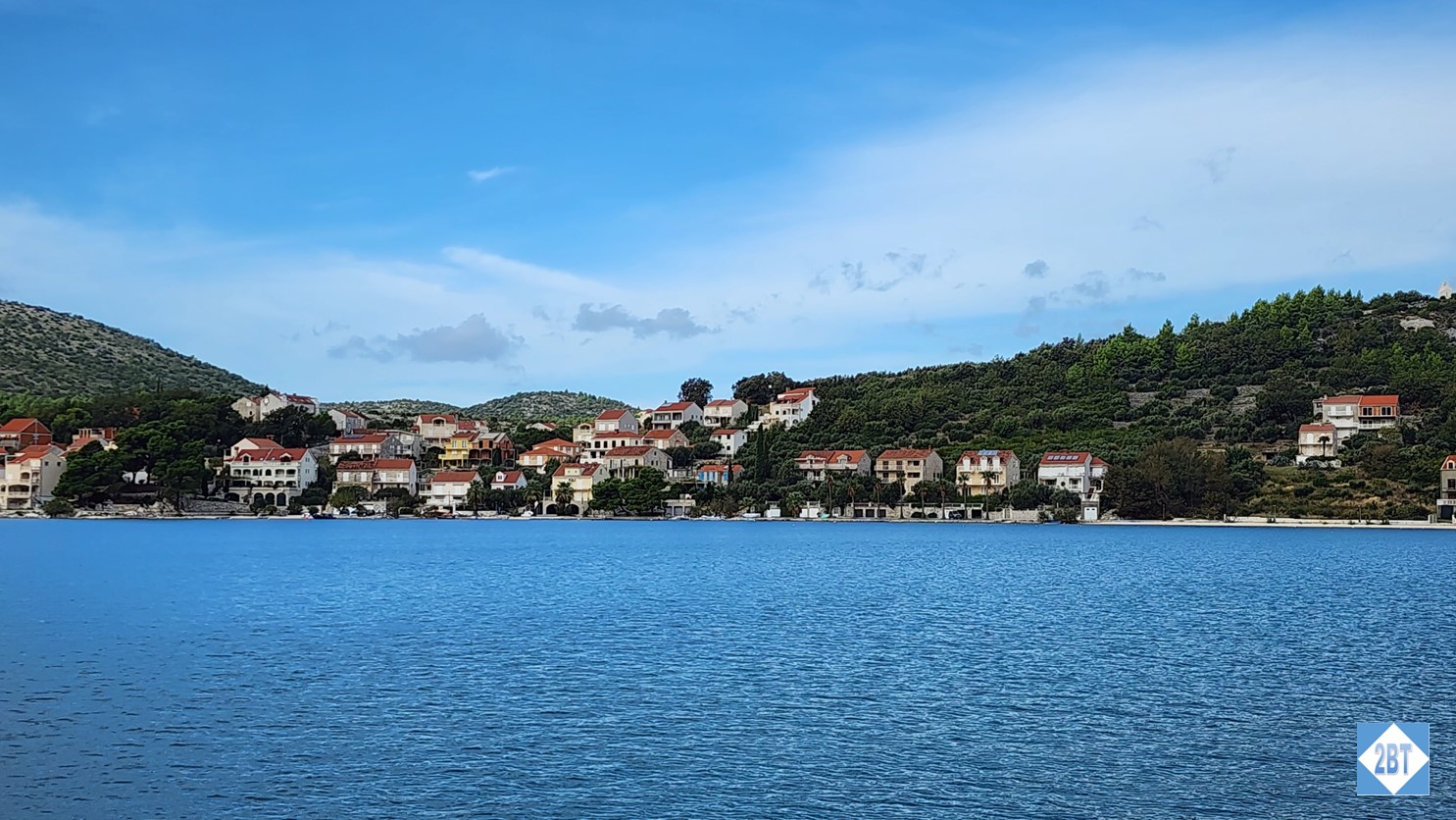
Lovely view from the seaside Plaza
In this area is a plaza with memorials to those killed in the Serbian-Montenegrin aggression of 1991-1995.

Monument to those killed in the 1991-1995 war

Monument to those killed in the 1991-1995 war
Overlook
As our bus headed back toward Dubrovnik, we took a road that went up the hillside for some panoramic views.
Trsteno Arboretum
Our final stop on the Renaissance Garden and Views tour was the Trsteno Arboretum. It was erected in the late 15th century by a local noble family who requested that sea captains bring back seeds and plants from their travels. A 15-meter span aqueduct was built in 1492 and is still in use today. The property covers 255,000 square meters or about 63 square acres.
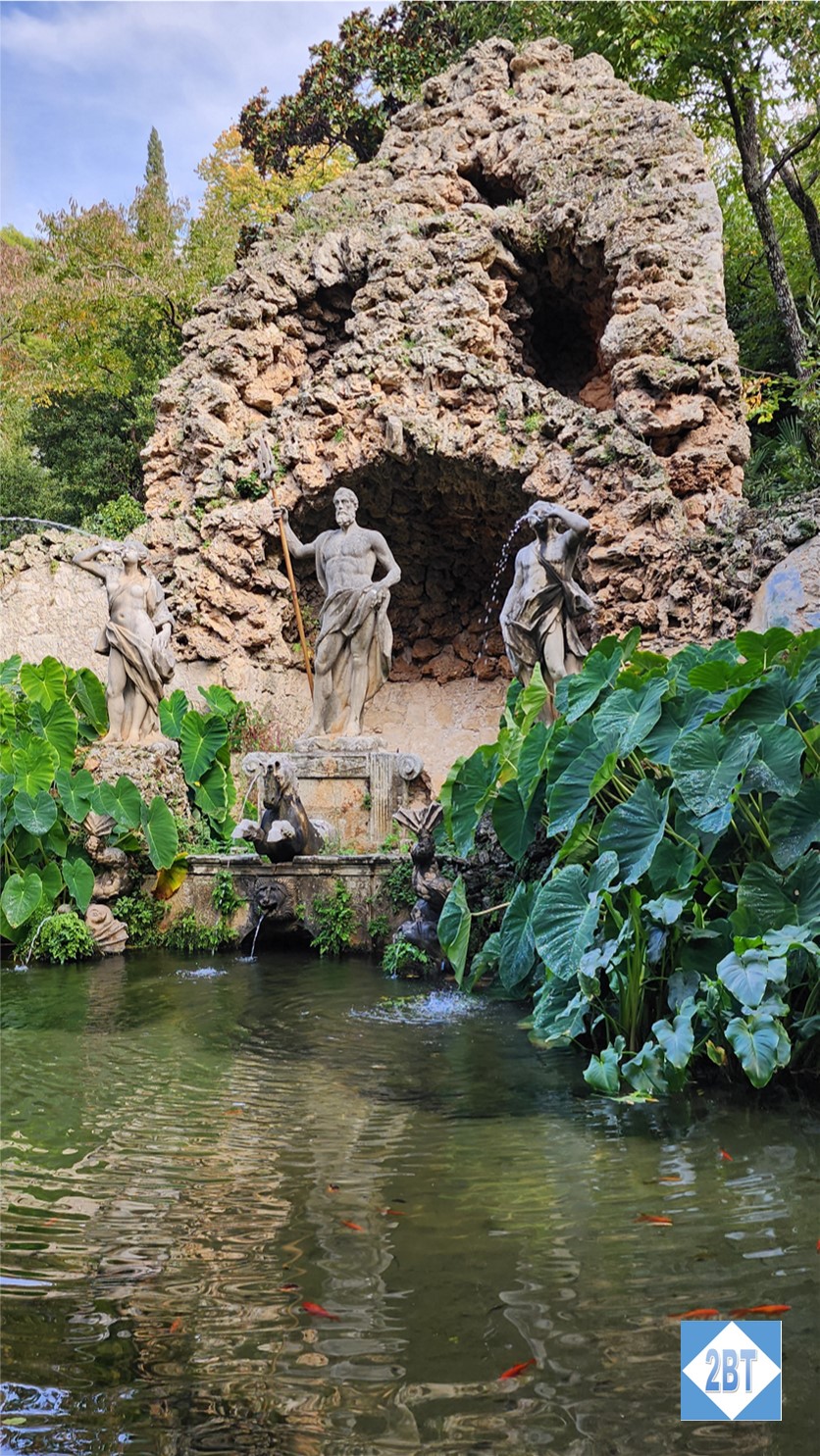
Grotto in the Arboretum
In 1991 the Yugoslav People’s Army’s gunboat and air attacks set the arboretum on fire, destroying a large part of it. There was further damage due to a forest fire in 2000 which caused the loss of about 120,000 square meters.

View from the summerhouse in the Arboretum
The pride of the arboretum are two Oriental Plane trees that are on the main road above the arboretum. These trees are over 500 years old and unique specimens in Europe. The trees are 150-200 feet tall and 16 feet in diameter.


This tree branch is so large it needs a column to hold it up!
The arboretum was used as palace gardens in two seasons of Game of Thrones.
After our tour we were driven back to the ship where we had about 30 minutes to eat lunch before re-boarding the bus and heading to Old Town Dubrovnik for our walking tour.
Old City of Dubrovnik Walking Tour
The walking tour begins on the plaza outside the Pile Gate where you can get a great view of how the fortified Old City appears from the water. It’s so intimidating you’d have to think that it would be difficult to attack. The city was likely founded in the 7th century and was called Ragusa at the time. Like most everywhere in this region it changed hands numerous times over the centuries before breaking free during the Croatian Ware of Independence (1991-95).

Fortified walls of Dubrovnik
Pile Gate
Today we can cross a stone bridge to access the Old City through its main entrance, the Pile Gate, but centuries ago this was a wooden drawbridge.

Pile Gate with a statue of St. Blaise above it
Big Onofrio’s Fountain
One of the first things you notice after entering the Old City is Big Onofrio’s Fountain, built in 1438. Sadly much of the sculptured parts of the fountain were lost in the 1667 earthquake that virtually destroyed the city.
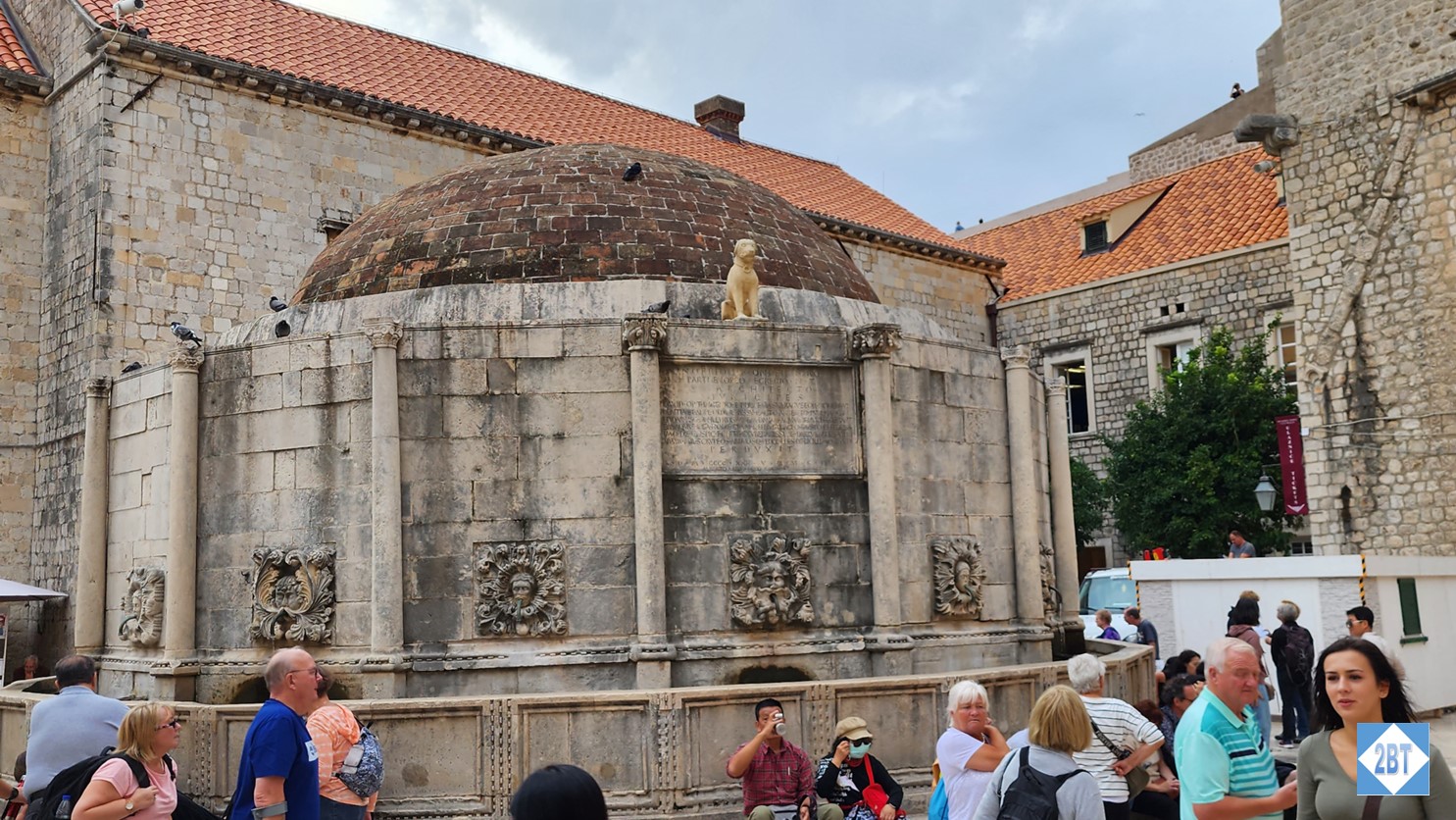
Big Onofrio’s Fountain
Having narrow streets is a very helpful thing when you’re concerned with invading armies. So even the main thoroughfares seem narrow but when you get to the side streets you can tell just how much narrower they are!


Bell Tower
The 102-foot bell tower was built in 1444 and rebuilt in 1929 after centuries of earthquakes took their toll.

Dubrovnik Bell Tower
St. Blaise’s Church
A relative newcomer, this Catholic church was built in the 18th century in honor of Dubrovnik’s patron saint. He was a physician and is the patron saint of wool combers and the wool trade.

St Blaise’s Church
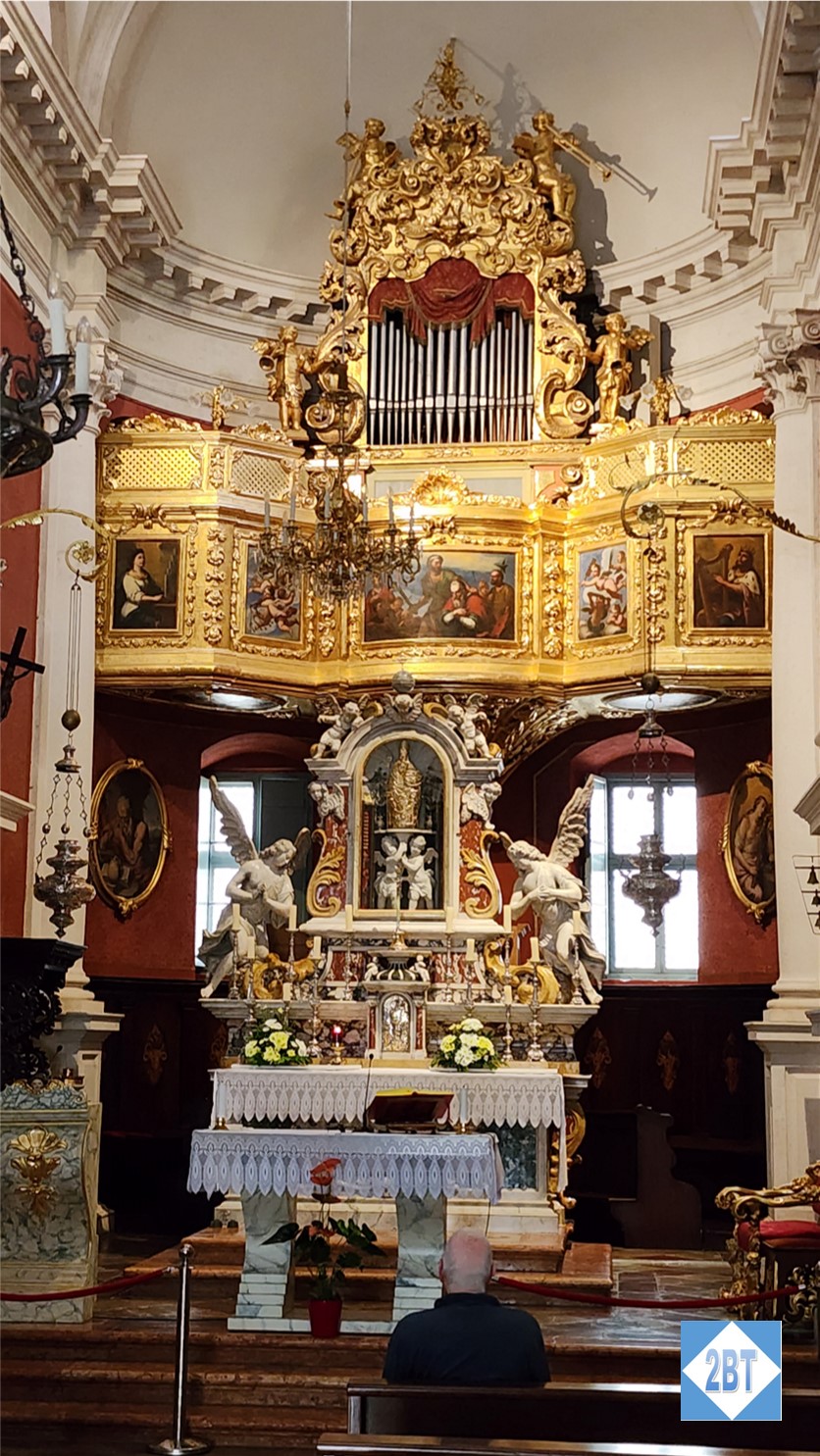
Inside St. Blaise’s Church
Rector’s Palace
The Rector’s Palace was the seat of the Rector of the Republic of Ragusa between the 14th century and 1808 and was the state administration building. It also housed the armory, the powder magazine, the watch house and a prison. The History Department of the Museum of Dubrovnik has operated in this building since 1872.

Dubrovnik Rector’s Palace, now a museum
Dominican Monastery
While the Dominican Monastery may look like a fortress on the outside, inside it is quite lovely and contains an art museum and a Gothic-Romanesque church. Its library is known for numerous illustrated manuscripts.

The Dominican Monastery is right on the harbor

The courtyard of the monastery is a soothing place

The interior now houses an art museum
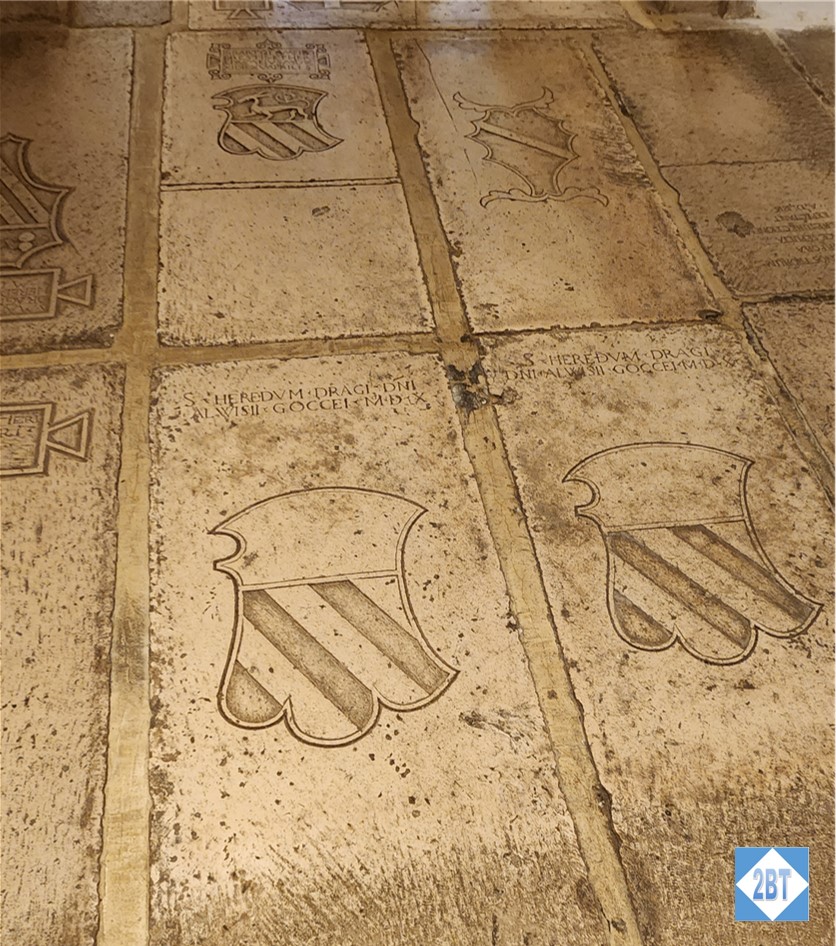
And the floor reflects a bygone era
In the end
It was nice to get out and away from the bustle of the Old City in the morning and to revisit it in the afternoon. Croatia is a fascinating place and I’d love to spend some more time here.

 2B Traveling
Recent Comments