Introduction: Late Summer in Scandinavia
Flight Review: American Airlines B737-800 First Class, MEM-DFW
Flight Review: Finnair A350-900 Business Class, DFW-HEL
Flight Review: Finnair E190 Business Class, HEL-CPH
Lodging Review: Fairfield by Marriott Copenhagen Nordhavn
Our Time in Copenhagen
Lodging Review: Best Western Hotel Hebron, Copenhagen
Lodging Review: Next House, Copenhagen
Lodging Review: Story Hotel Studio Malmö
Our Time in Malmö and Ystad, Sweden
Lodging Review: IKEA Hotell, Älmhult, Sweden
Our Time in Älmhult, Sweden and High-Speed Train to Stockholm
Lodging Review: Motel L Älvsjö, Stockholm
Our Time in Stockholm
Flight Review: SAS A320neo Economy Class, ARN-OSL
Lodging Review: Comfort Hotel Grand Central, Oslo
Our Time in Oslo
Lounge Review: SAS Lounge, Oslo airport
Flight Review: Lufthansa A320-200 Business Class, OSL-FRA
Flight Review: Lufthansa 787-9 Business Class, FRA-MSP
Flight Review: Delta B737-800 First Class, MSP-MEM
I really enjoyed Oslo. The weather was ever so slightly cooler than at our other stops but it was still warm enough that locals were enjoying dips in the fjord – though they were happy to have the huts to pop into once they got out of the water! I would enjoy going back some time with a car so we could get out from the city center a bit.
How we got around the city
While the city does have good public transportation, we bought a 48-hour ticket for the hop-on/hop-off bus to use as our primary transport. That’s because some of the places we wanted to see were either not very close to public transport or would have taken a combination of trams and buses to get there and the tourist bus basically hit all the things we wanted to see.


There was a major tram and city bus stop just outside our hotel, which itself was attached to the train station. While there is a hop-on/hop-off bus stop near the opera house, which we could see from the hotel, it was one of the later stops in the loop, so it was nearly lunch time before the bus made it to that stop.
All the hop-on/hop-off bus lines begin on Karl Johan’s Gate at the northwest end near the Royal Palace and the University of Oslo.


Near our hotel
Opera House
The new opera house was completed in 2007, amazingly ahead of schedule and $52 million under budget! It is said to resemble an iceberg floating in the fjord. It has won several awards for its design and with all the sloping walkways – that extend even to the roof – it is a very inviting place for people to gather to enjoy views of the city and the fjord.


She Lies
Out in the fjord is a sculpture called She Lies by Monica Bonvicini. Made of stainless steel and glass, it floats on a platform and can turn with the tides. It is intended to be a three-dimensional interpretation of Caspar David Friedrich’s painting The Sea of Ice.

She Lies
Munch Museum
A large museum honoring the work of artist Edvard Munch, best-known for The Scream, is just beside the Opera House. While we didn’t go in the museum itself, the gift shop takes up nearly the entire ground floor and we spent several minutes just browsing around there.
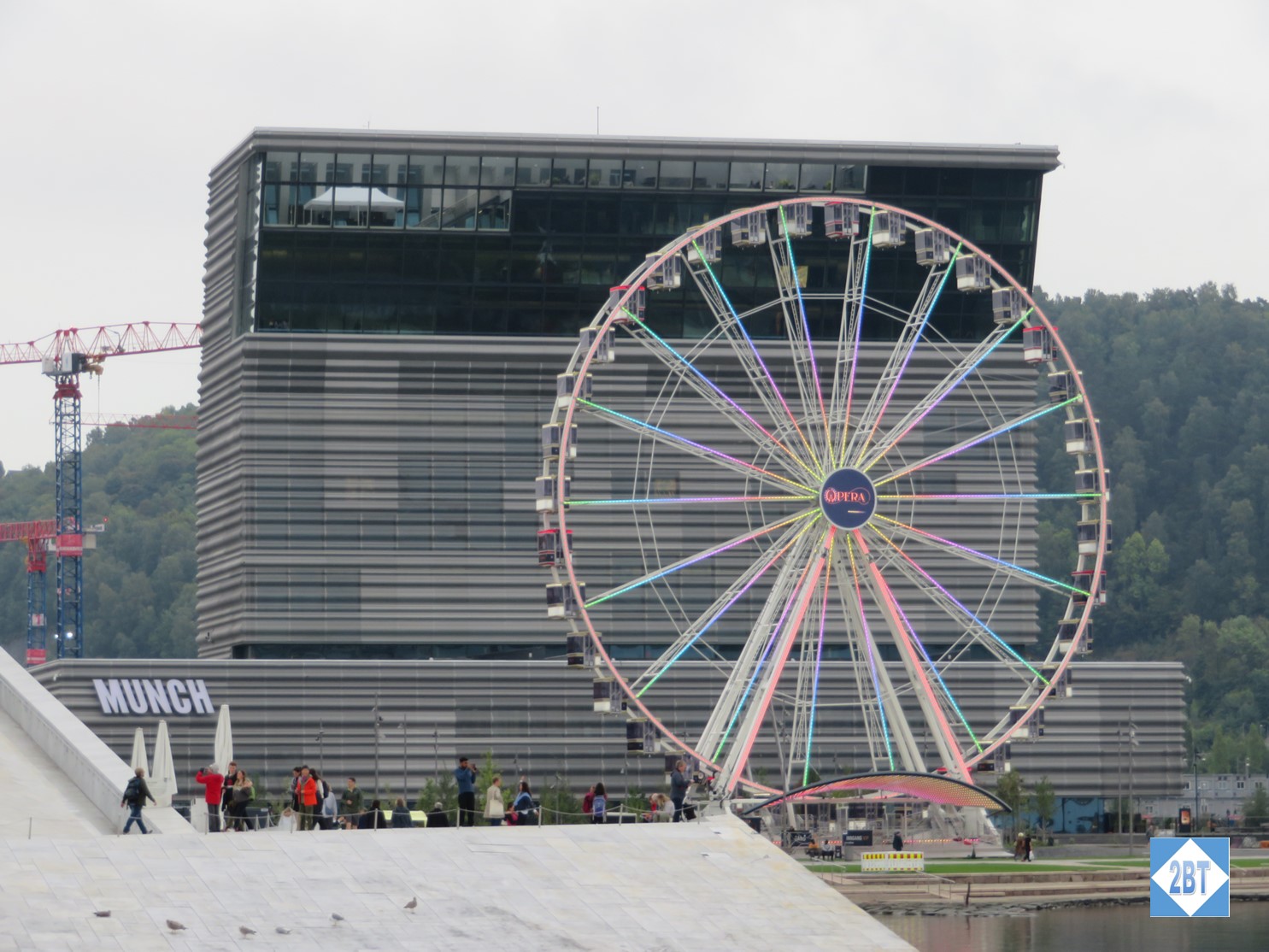
The Munch Museum
Sauna Huts
Across the fjord from the Opera House are a number of different sauna huts. It was warm enough in early September that we saw lots of folks using them both before and after taking a dip in the fjord itself.
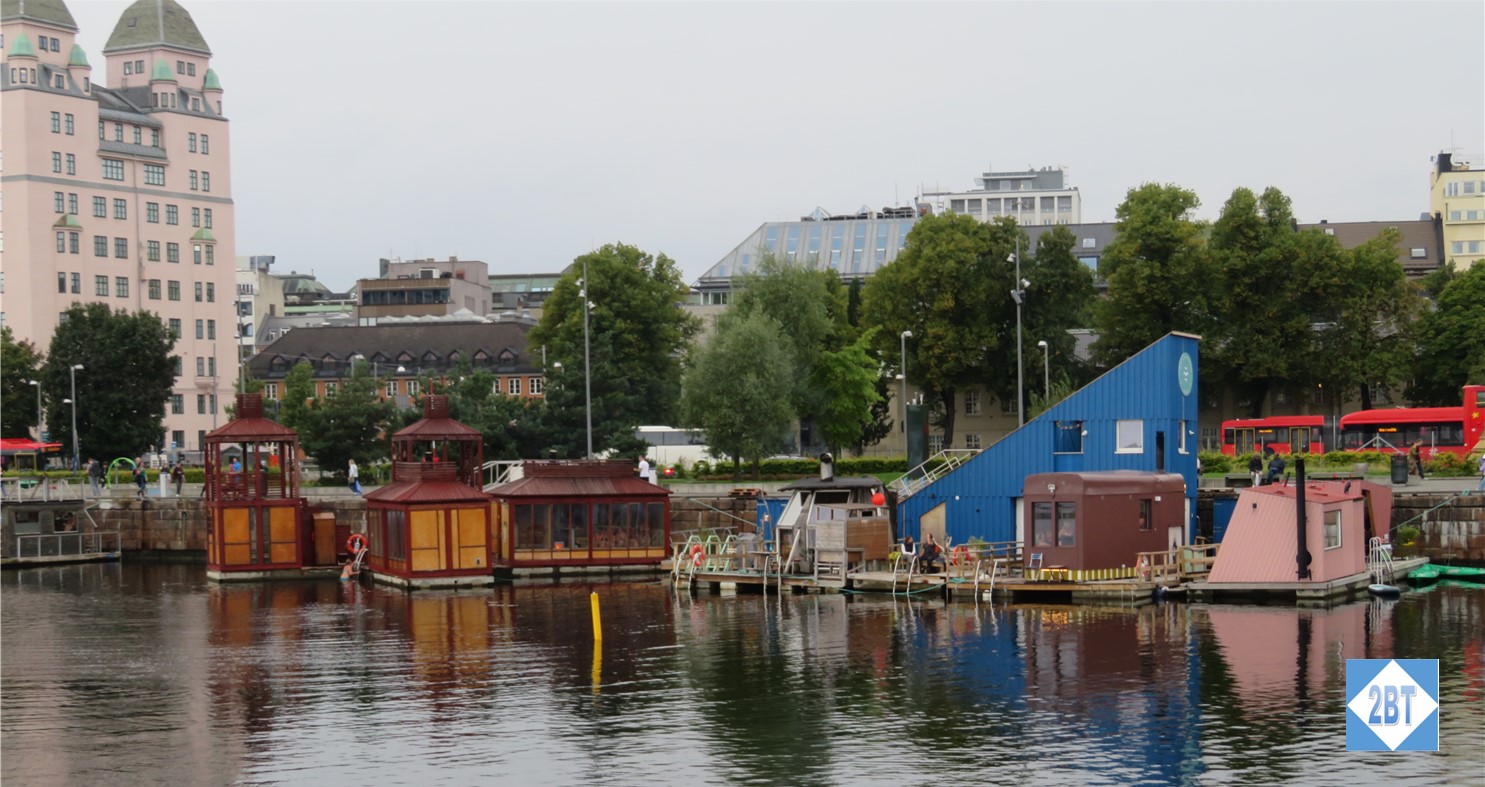
Sauna Huts
On the Hop-On/Hop-Off Loop
The areas in this section may be accessed by the hop-on/hop-off bus though not necessarily in this order! Another bonus of some of the hop-on/hop-off tours is that you also get discounts at some of the attractions so be sure to keep your ticket handy.
We had hoped to visit the Viking Ship Museum but it is closed for renovation until 2027.
Frogner Park and Vigeland Installation
Frogner is Oslo’s largest park though we only saw a fraction of it. When we arrived there were at least two tour buses there but eventually they left and while the park was still busy, it did not feel crowded. If you read author Jo Nesbø’s stories about detective Harry Hole you’ll feel right at home here.


We didn’t venture far into the park but visited the Vigeland Installation, a section dedicated to the works of sculptor Gustav Vigeland. The centerpiece is called The Monolith which is over 46 feet high and contains 121 human figures rising toward the sky. As its name suggests, it is a single stone weighing several hundred tons. Vigeland took ten months to design the sculpture and then cast a model in plaster. The plaster model was placed beside the stone for reference and it then took three masons 14 years to accomplish. It was unveiled to the public at Christmas 1944.
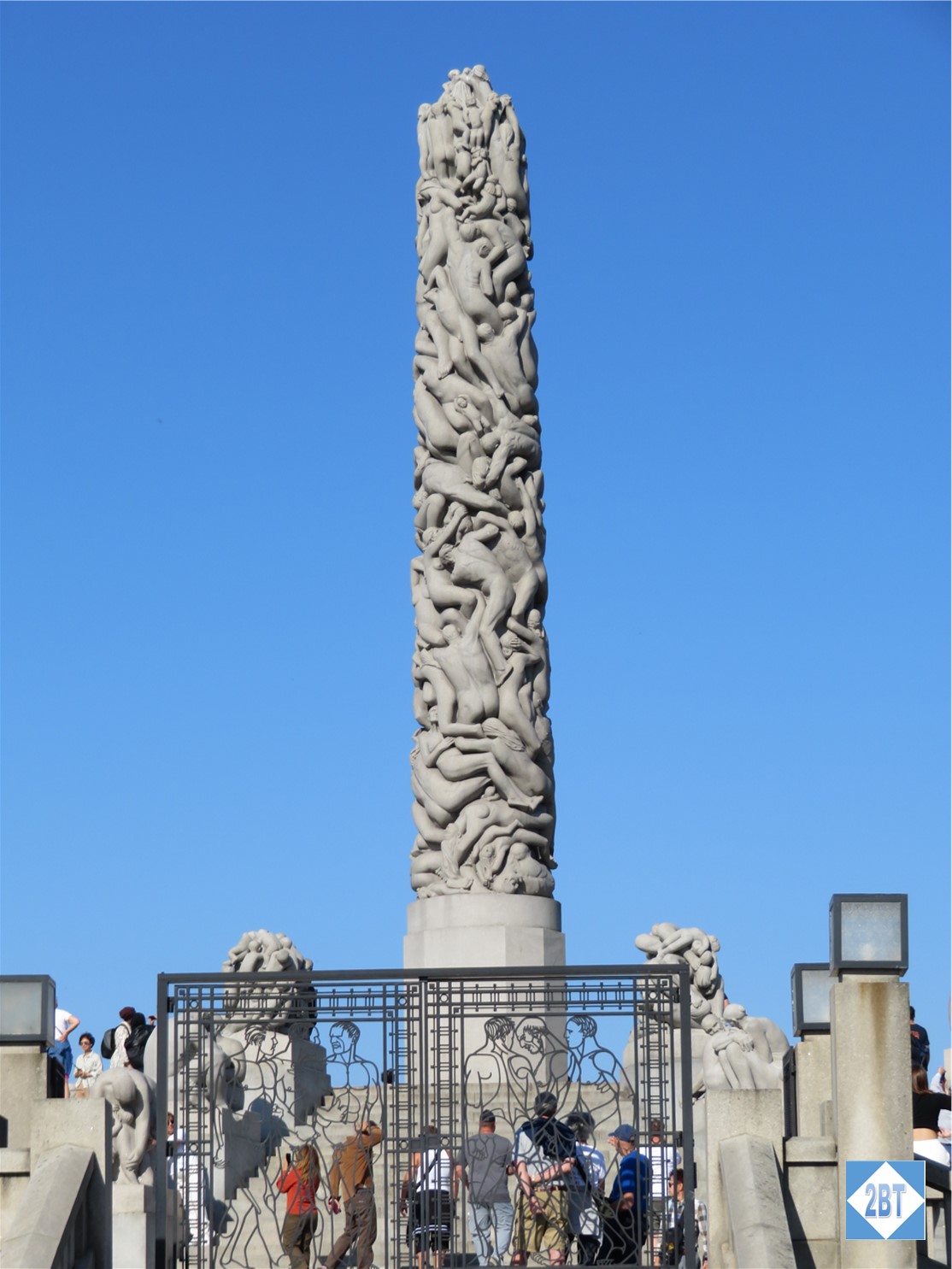
The Monolith
The Monolith Plateau is surrounded by 36 figure groups that represent the Circle of Life.

Figures surrounding the Monlith
The last sculpture in the installation is The Wheel of Life, depicted as “a rotating wreath of women, men and children holding onto each other for all eternity”.
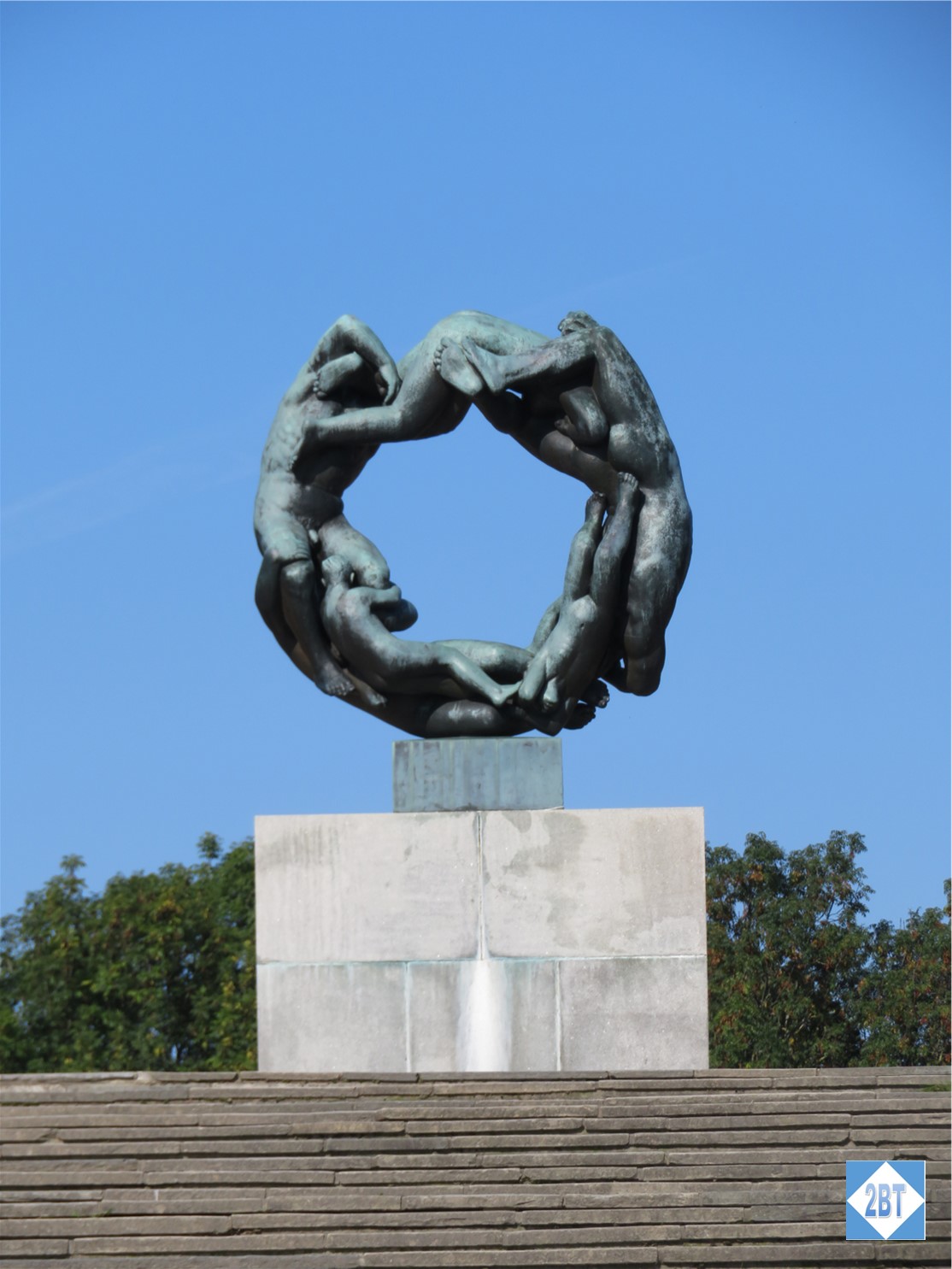
The Wheel of Life
Cultural Heritage Museum
The Norsk Folkemusum is an open-air museum where about 160 houses from a dozen or so regions of Norway have been moved to a common area to help to illustrate how people in different parts of the country have lived from the Middle Ages until the present day. It’s quite similar to the Skógasafn museum we saw in Iceland. Be sure to pick up the brochure that has not only a map but a guide to what you should see based on how much time you have to visit. I thought that was very clever and it kept us from wandering aimlessly.
Perhaps the most impressive building is the Gol Stave Church a 12th-century building originally from Hallingdal which is in the central portion of the “bulb” of Norway. It stood in place until the residents of Gol decided to build a new church in 1880 and a preservation society raised funds to have it moved to what was then the king’s private open-air museum and is now the Folkemuseum. The term “stave church” refers to post-and-lintel construction where the load-bearing ore-pine posts are called “stav” in Norwegian.


Here are some other things I found interesting.
Kon-Tiki Museum
I suppose I’d heard the name Kon-Tiki at some point in my life though I couldn’t tell you what it was but the more I learned, the more fascinating it became. Norwegian Thor Heyerdahl set out to prove that people from South America could reach Polynesia in pre-Columbian times using only the wind and currents to reach their destination. While many experts said there was no way a raft, held together by rope, could make the 4300-mile trip, Heyerdahl proved that by using balsa wood – a very soft wood that allowed the ropes to cut into it rather than the wood cutting the ropes – it was indeed very possible. He and his crew of five others (5 Norwegians, 1 Swede) survived 101 days before they crashed on the reef on an uninhabited islet off an atoll in French Polynesia. They spent several days there before men from a village on a nearby island, alerted by flotsam from the wreck, found them and they eventually were taken via ship to Tahiti with the remains of the Kon-Tiki in tow. If you want to read more about this expedition there are numerous books and films. I found the original documentary available free for streaming.
Fram Museum
Next door to the Kon-Tiki Museum is the Fram Museum, which tells the story of Norwegian polar exploration. (Pro tip: get a joint ticket for both museums to save a little money!) You can actually go aboard the Fram to see what life was like aboard.
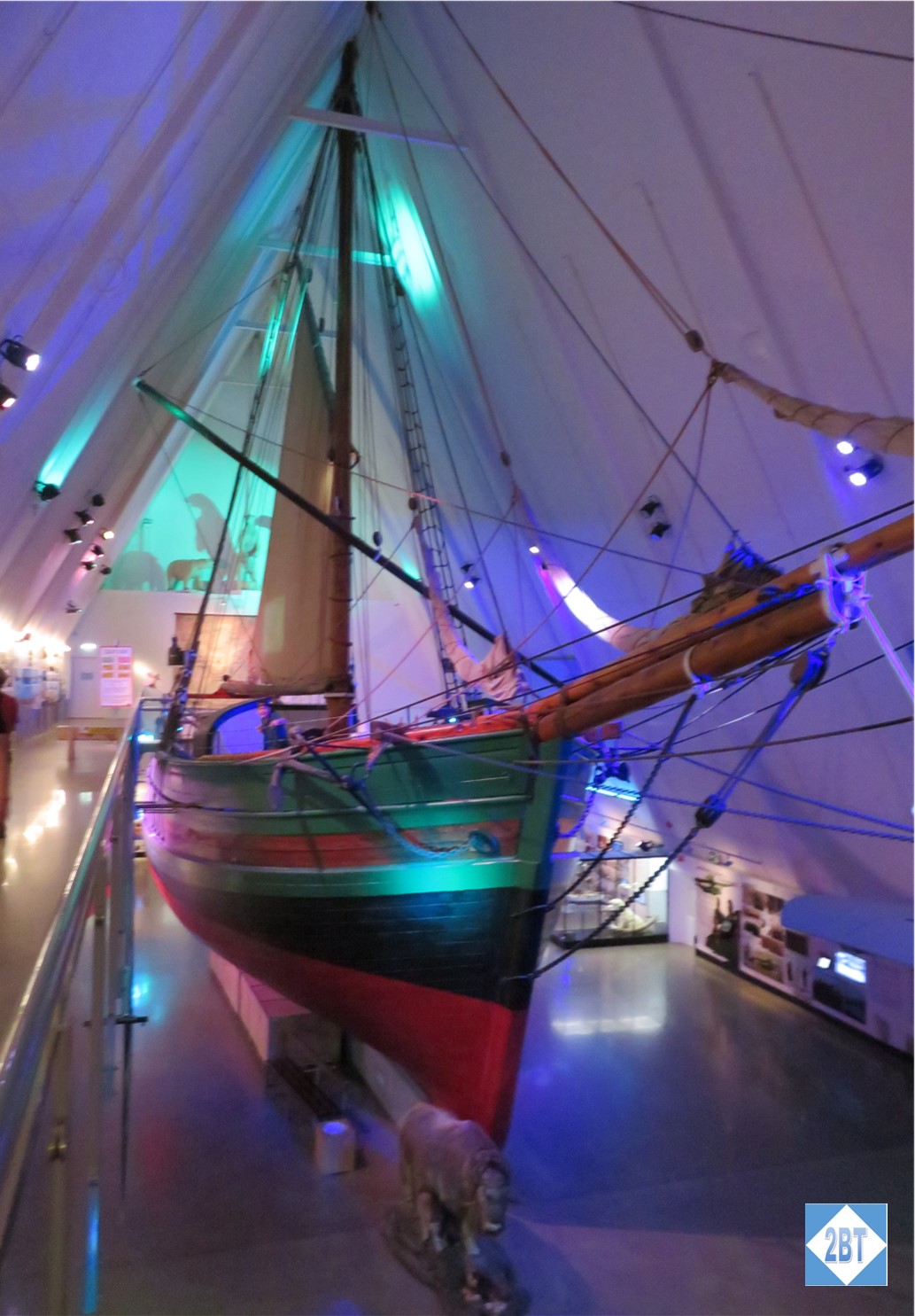
The Fram


Be sure to check out what I’ll call “the cold room”, a sealed chamber that helps illustrate how cold it was aboard the ship. I was not dressed for the cold and did not last very long at all! There’s also a tunnel leading to another building containing a small plane and a theater.
Akershus Fortress and Resistance Museum
The Akershus Fortress is a medieval castle that dates to the Middle Ages. While we don’t know exactly when construction began, it’s thought that it was in the late 1290s under King Haakon V. We didn’t get to spend as much time here as I’d have liked as not everyone in our party thought it was as interesting as I did. Entrance to the Fortress is free. The Resistance Museum, which tells the story of Norwegians who fought the Nazis, has a charge of about $10 USD but is well worth it, to my mind.
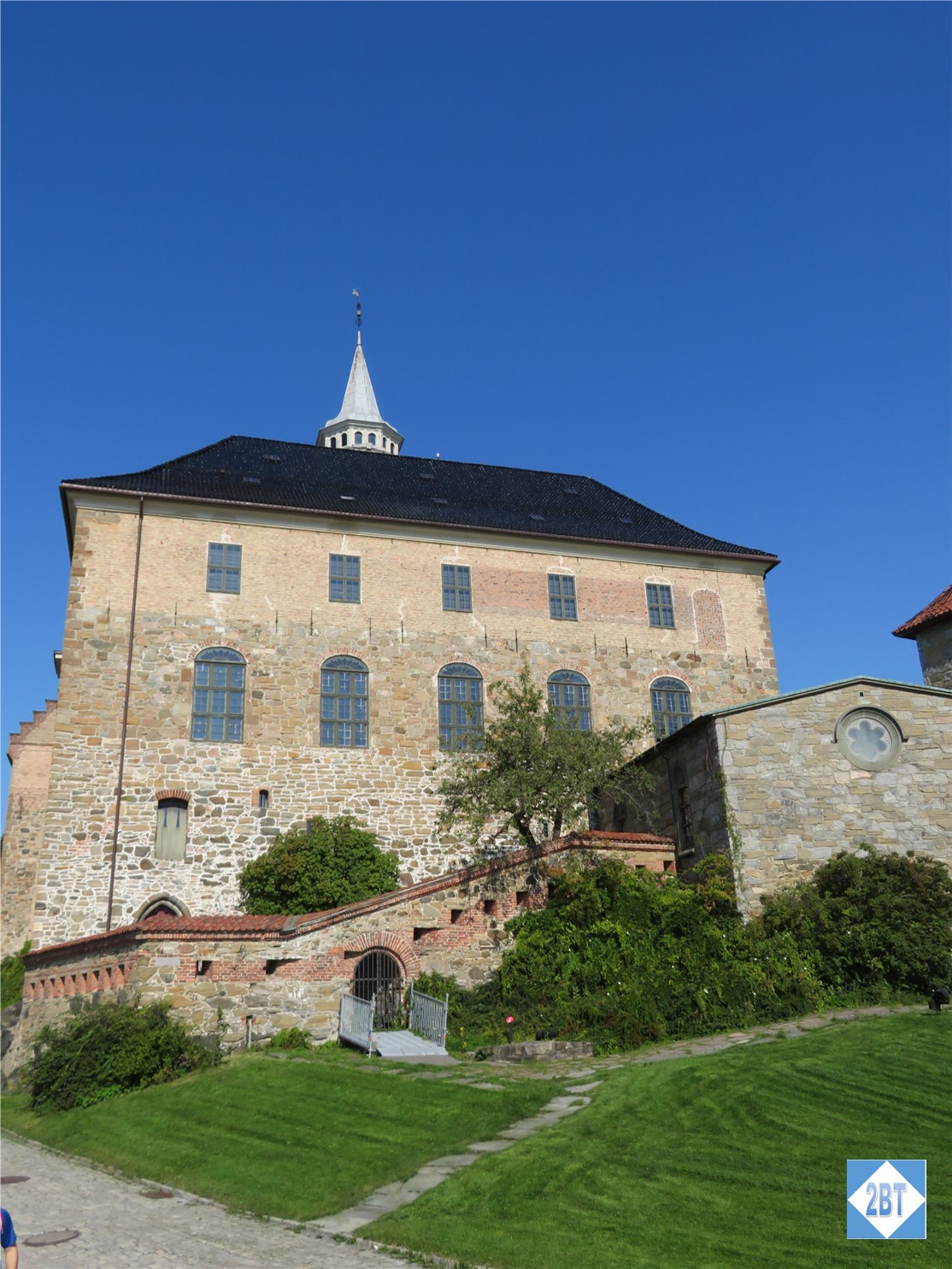
The Fortress entrance closest to hop-on/hop-off stop


A war memorial dedicated to patriots who were shot for resisting during World War II.
If you are mobility-challenged, you’ll want to carefully plan how you get to the fortress and the entrance you use. There are lots of cobblestones and if you’re on the hop-on/hop-off bus, the closest entrance not only has cobblestones but is very steep. (The fortress is at the top of a hill, after all!) But as we left we saw entrance areas that had been paved and would be far better for those who need a little extra help.
Elsewhere in the city
City Hall
On our final day we didn’t have much on our agenda and it was a gorgeous day so we spent a lot of time walking. Though it wasn’t planned we ended up near city hall which checked “a building with scaffolding” off on our to-do list!

Oslo City Hall
The Viking Planet
The Viking Planet is an immersive digital experience to see what life was like in the Viking Age. There are digital displays to help understand what things were like then as well as films and audio experiences. The best part is a virtual-reality theater where the seats are on a platform that moves, which enhances the experience of being on a Viking longship. Adult tickets are about $25 USD.
Fjord Harbour Tour
We spent our last afternoon on a tour of the fjord. The cruise line we chose was about $43 for adults and it lasts two hours. It is narrated and, unlike the cruise we took in Stockholm, we didn’t have to download an app or use our phones to get the narration, which we appreciated. Here are some of the thigs we saw while cruising. On the photo of the Akershus Fortress, note the boxy gray building at the bottom. This is the hop-on/hop-off stop for Akershus and is also a very large gift shop with quite a range of items. While we were there the food service area was not in use. (I later realized our hop-on/hop-off ticket might have also provided a harbour tour portion. D’oh!)
Dining
Keep in mind that many businesses, not just restaurants, will not accept cash. So make sure you’ve got a credit card or two on you and at least one in the safe in the hotel.
Cafe Cathedral – not far from our hotel, we stopped here after settling into the hotel. It was a rainy day, warm enough to sit outside but cool enough that our waiter turned on the heater near our table. My pizza and a soft drink cost about $30 USD. 
Barcode Street Food – also close to the hotel – basically an indoor food court with loads of small restaurants and a common dining area in the center. We stopped here a couple of times because each of us could get something different yet we could still eat together.
Mathallen Oslo – another food court but about a 20-minute walk. It’s located in a funky neighborhood which was interesting to see. Not realizing how long it was going to take us we were quite hungry when we arrived.
There were other places, of course, but I was only able to check into places that had wi-fi since I didn’t want to incur the $10 per day charge my phone company would have imposed. I had planned to use an e-sim for this trip but hadn’t realized that only works when the phone is unlocked. Since I’m still paying for my phone my next opportunity to try out the e-sim will be next autumn.
Getting to the Airport
Once we got settled in our hotel, we did some quick research and realized that we would not be able to take the train back to the airport because they did not begin running early enough. Two of us had flights about 6:30 AM and the trains did not begin running until 4:30 AM – the time when we’d ideally be arriving at the airport.
We checked online and realized that Flybussen would be the best bet for the three of us needing Trans-Atlantic flights (our German friend got to sleep in and leave in the afternoon). The downside was that the bus took about an hour to reach the airport as it made several stops. Wanting to be sure we weren’t late, we saved a little bit of money by buying a single ticket for the three of us on the 3 AM bus.
A day or so prior to checking out I made sure that I knew exactly how to get to the bus station: I was able to walk through the train station, up a ramp, go outside and cross over a pedestrian bridge, enter the bus terminal, go downstairs and find the correct bay. So we were all set for our early-morning jaunt. Or so we thought.
When we checked out of the hotel at 2 AM we noticed the door to the train station was blocked off. While I knew the trains weren’t running at that hour, for some reason it never occurred to me that the building wouldn’t be open. After all, airport ticket lobbies are typically open 24/7 even if the ticket counters aren’t and the security lanes are closed. So we had to take our luggage out and bounce it over the cobblestones until we walked to the other side of the train station. After some wrong turns we finally realized the bus terminal was also closed but we managed to find the bus bay. The driver allowed us to take the 2:30 AM bus since we were already there and we were finally able to relax a bit.
While the bus was not crowded, by the time we reached the airport the bus was full but not overflowing. We said our goodbyes as we were on three different airlines and went to check in our luggage. The Lufthansa counter didn’t open until 4:00 AM or so but I was fine just hanging out at the counter until it did.
In the end
Oslo is a lovely city and I would be happy to go back! I’d like to get out a bit from the city center and I’m sure I’d also enjoy seeing different parts of the country.
 2B Traveling
Recent Comments