Passage to Eastern Europe: Trip Introduction
Flight Review: LOT Polish Airlines 797-9 Business Class, ORD-WAW
Lodging Review: Hampton by Hilton Krakow
Our Time in Krakow, Poland
Flixbus from Krakow to Budapest
Lodging Review: Corinthia Budapest Hotel
Our Time in Budapest, Hungary
Our Time in Kalocsa, Hungary
Our Time in Osijek and Vukovar, Croatia
Our Time in Belgrade, Serbia
Our Time in Golubac, Serbia
Our Time in Vidin, Bulgaria
Our Time in Ruse, Bulgaria
Our Time in Bucharest, Romania
Lodging Review: JW Marriott Bucharest Grand Hotel
Flight Review: SWISS Airlines 777-300 ZRH-ORD
Since we’d visited Budapest before by staying over for a couple of days after our 2016 Danube cruise, we weren’t in any hurry to try to see a lot of things. So after arriving at the Corinthia, we threw our dirty clothes in a bag and headed for the closest laundromat. Not very exciting, but quite practical.
The next day a city tour was included with our tour package. We decided to go along just in case it covered something we hadn’t seen before, but of course it did not. But that was fine. At least we didn’t have to pay for a taxi or Uber to take us up to Buda.
Heroes’ Square
We drove around a bit on the Pest side first, pausing at Heroes’ Square for in-bus photos. But the Archangel Gabriel, normally found on top of the column in the square, had been taken down for cleaning (or something) so while the photo below is decent enough for being inside the bus, I much prefer the photo I took in 2016 when we visited the square on foot. Visit the referenced post if you want to see it.
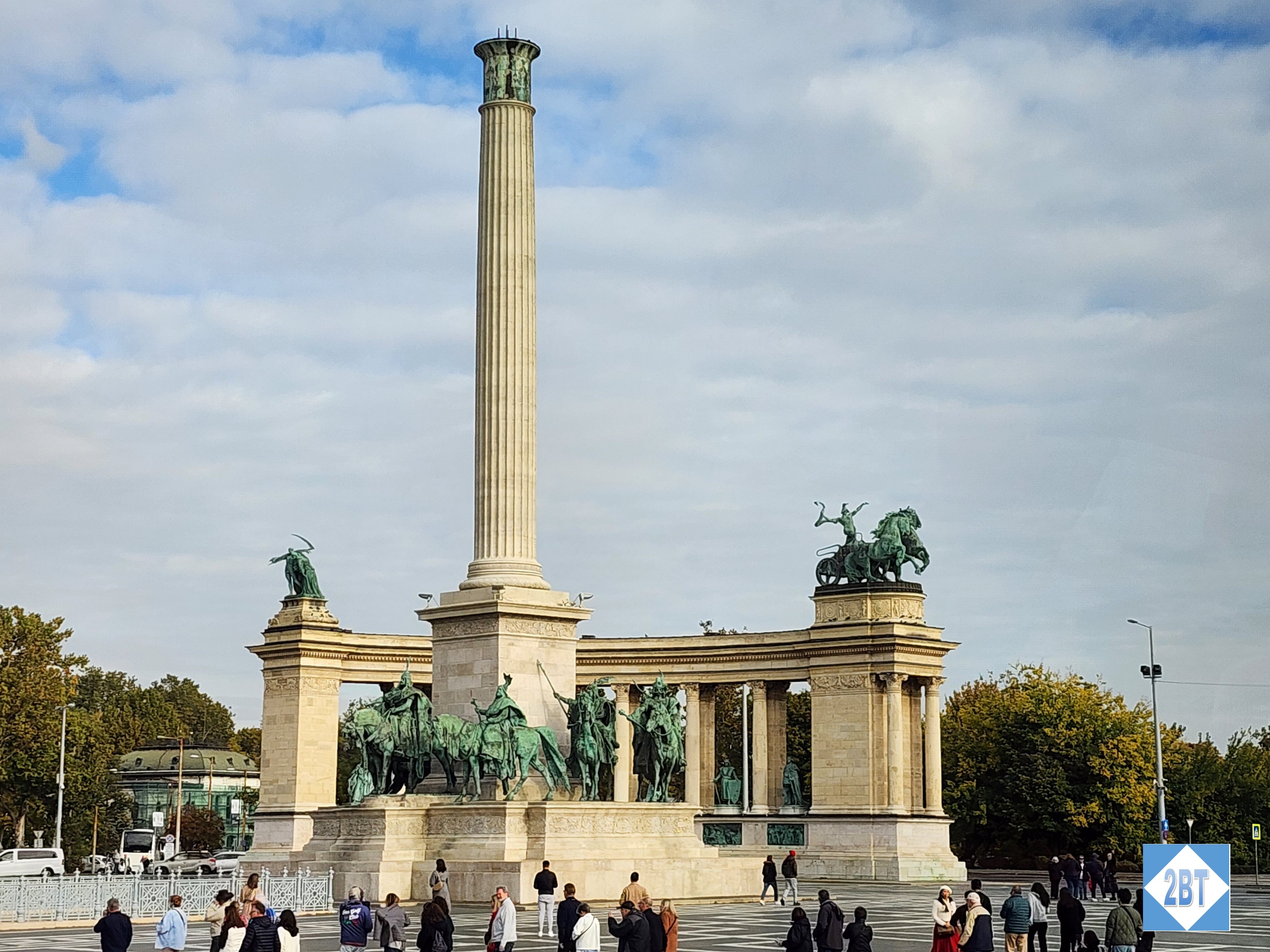
Heroes’ Square
Fisherman’s Bastion
I was thrilled to see that the scaffolding and sheets of plastic that covered the Fisherman’s Bastion on our last visit were no longer present. Unfortunately I forgot to get a photo of it except from the bus as we drove past. Still kicking myself on that one! It’s a truly impressive site looking up at the Bastion from the river or even just at the base of the hill on the Buda side.
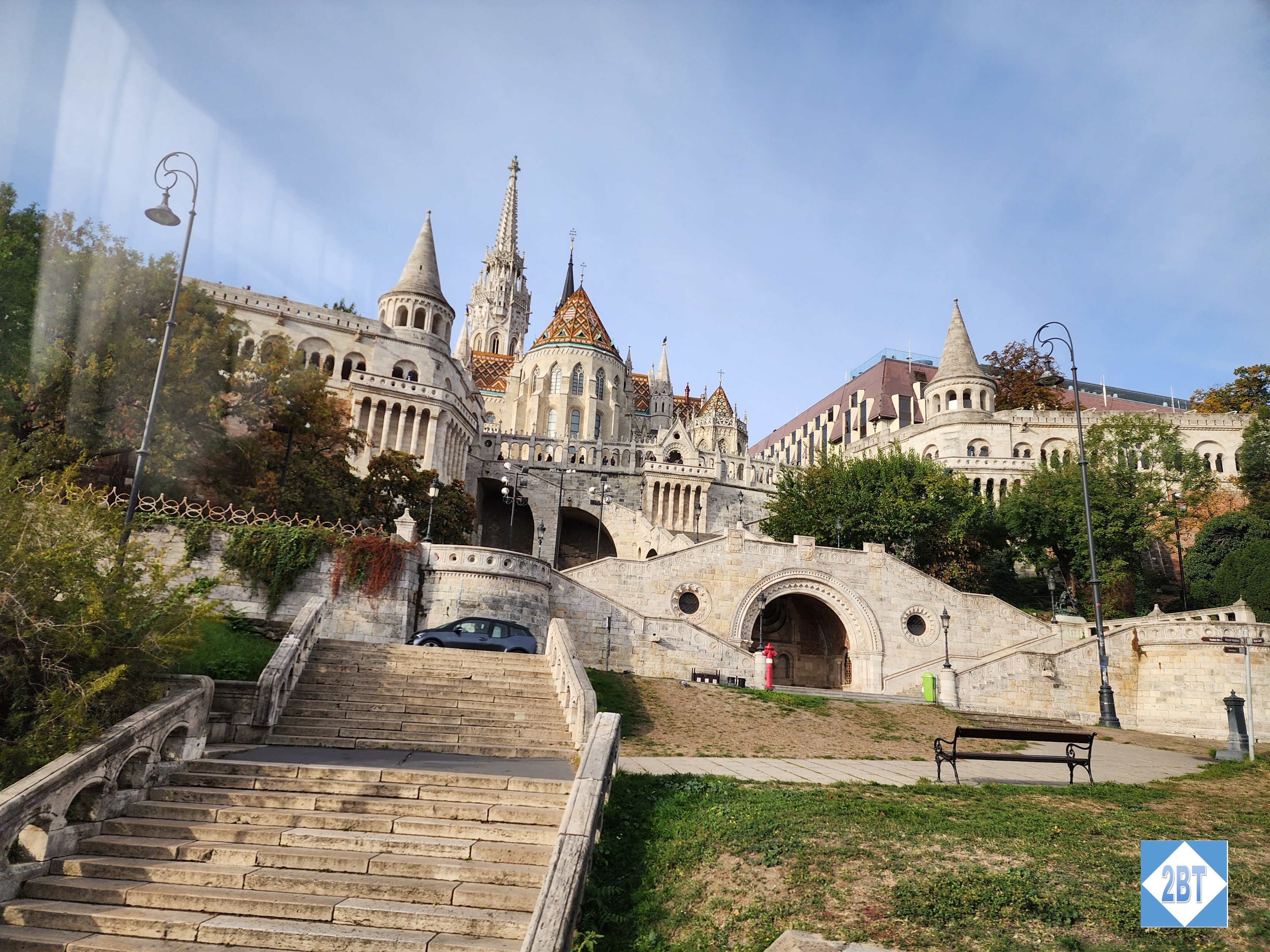
Fisherman’s Bastion as seen from the bus
Honvéd Memorial
The first stop on our tour of Buda was the Honvéd Memorial, which commemorates the Hungarian Revolution and the War of Independence of 1848-49 against the Habsburg Dynasty. The word Honvéd means “defender of the homeland”.
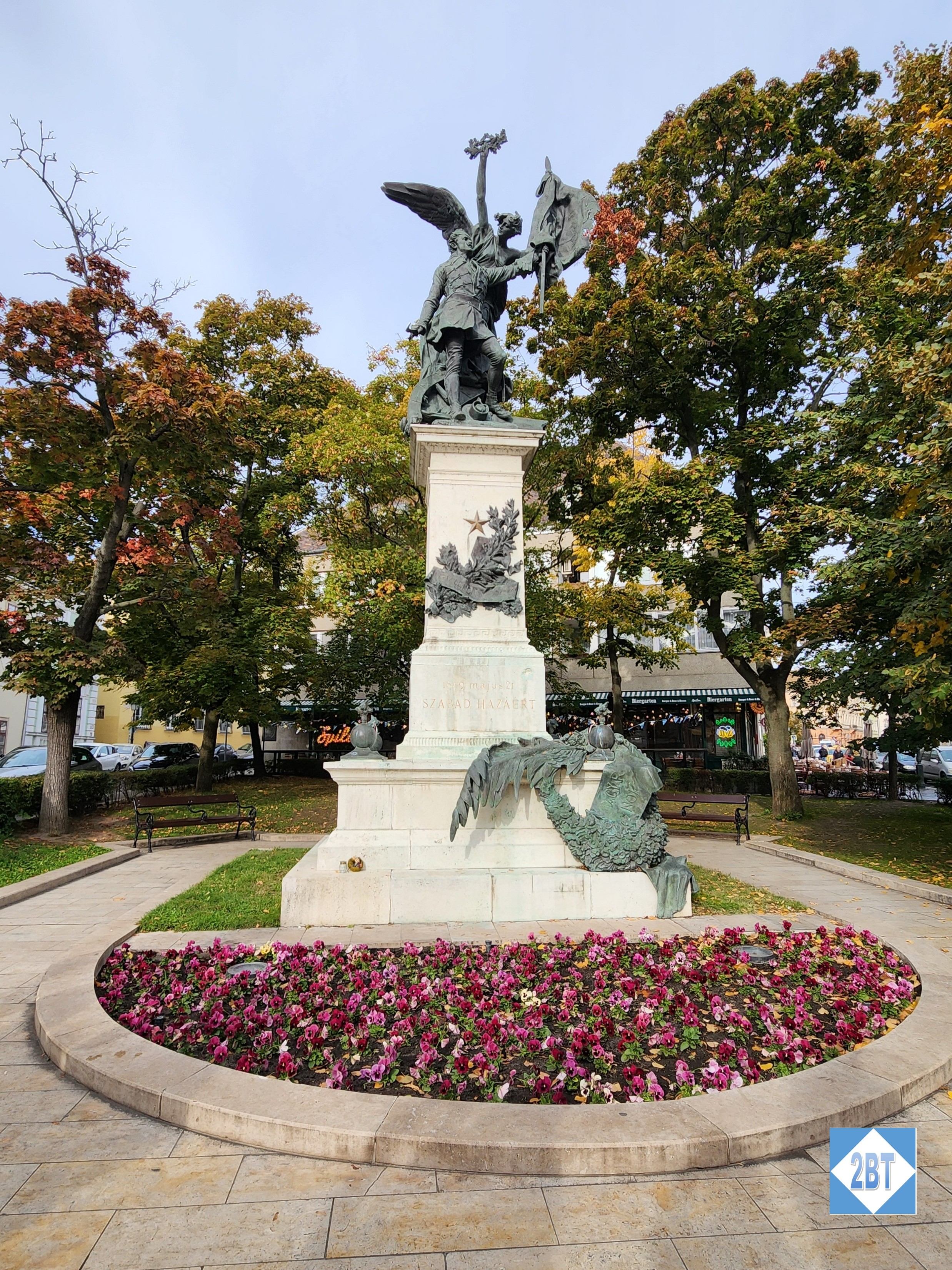
Honvéd Memorial in Buda
Holy Trinity Statue
The statue sits across the road from Matthias Church. It commemorates those who died during the Black Plague from 1691-1709. Anywhere from 30-60% of Europe’s population died from the disease.
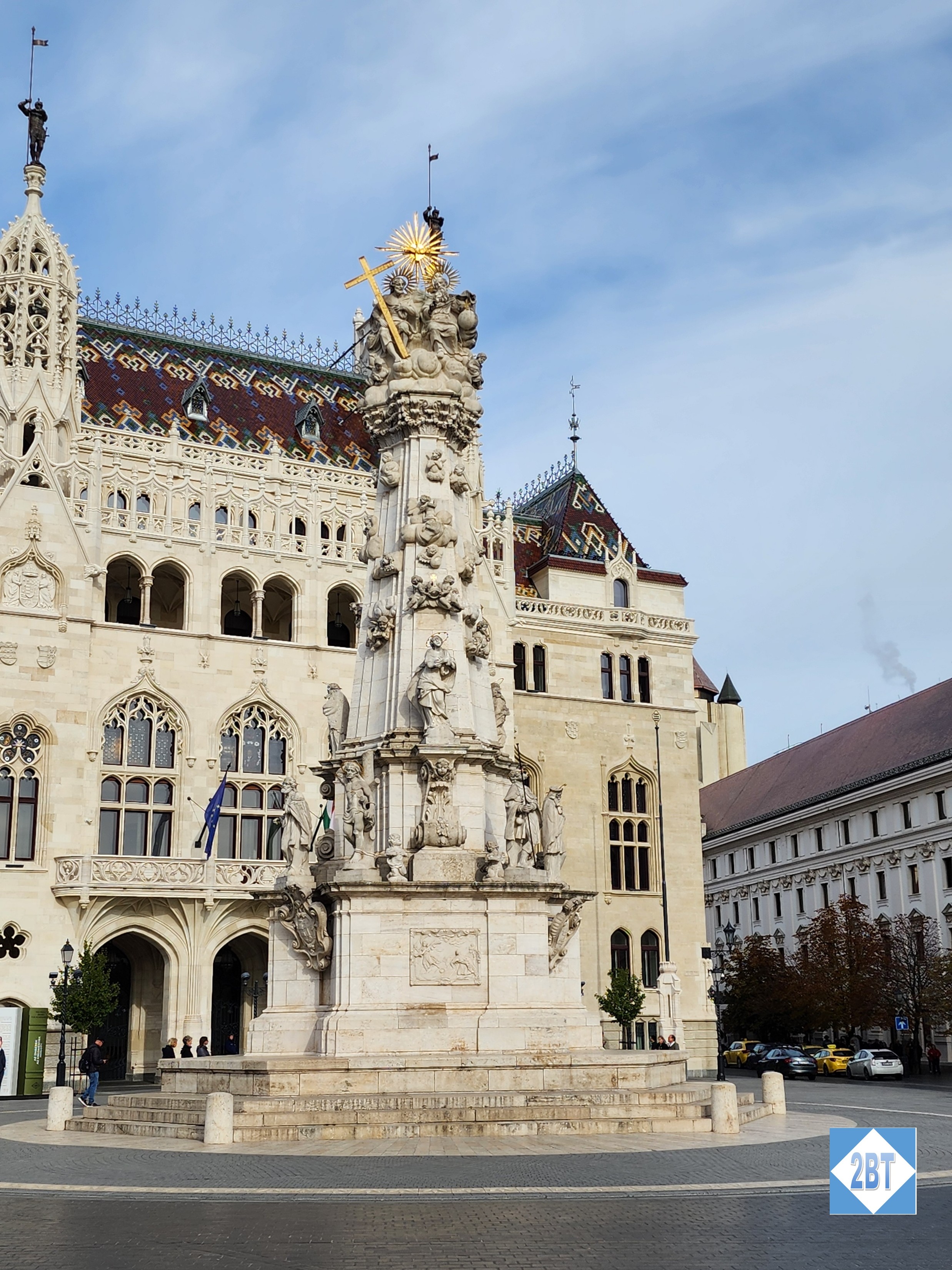
Holy Trinity Statue
Matthias Church
Exterior
The church is just as lovely as it was on our last visit. It’s so impressive and just so gothic. A church has been on this spot since about 1015 though many buildings have come and gone in the meantime. It gained its name during the reign of king Matthias Corvinus in the 15th century though parts of that version of the church were also subsequently destroyed. The version we see today is largely from the late 19th century.
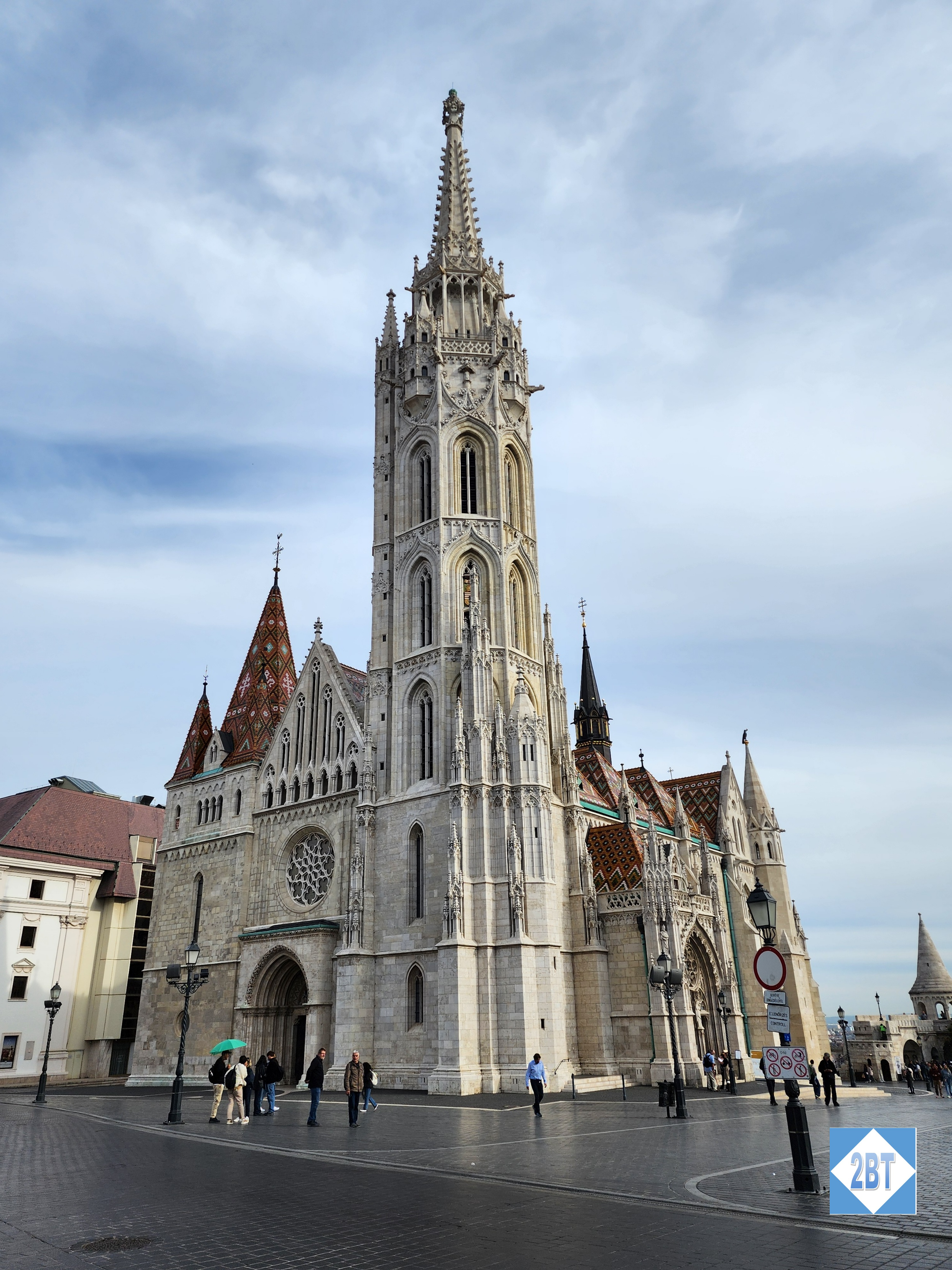
Matthias Church
Even after spending a full day up here on our last visit, I’d never noticed the raven atop one of the steeples. It is meant to be a symbol of King Matthias Corvinus. “Corvus” is another word for raven.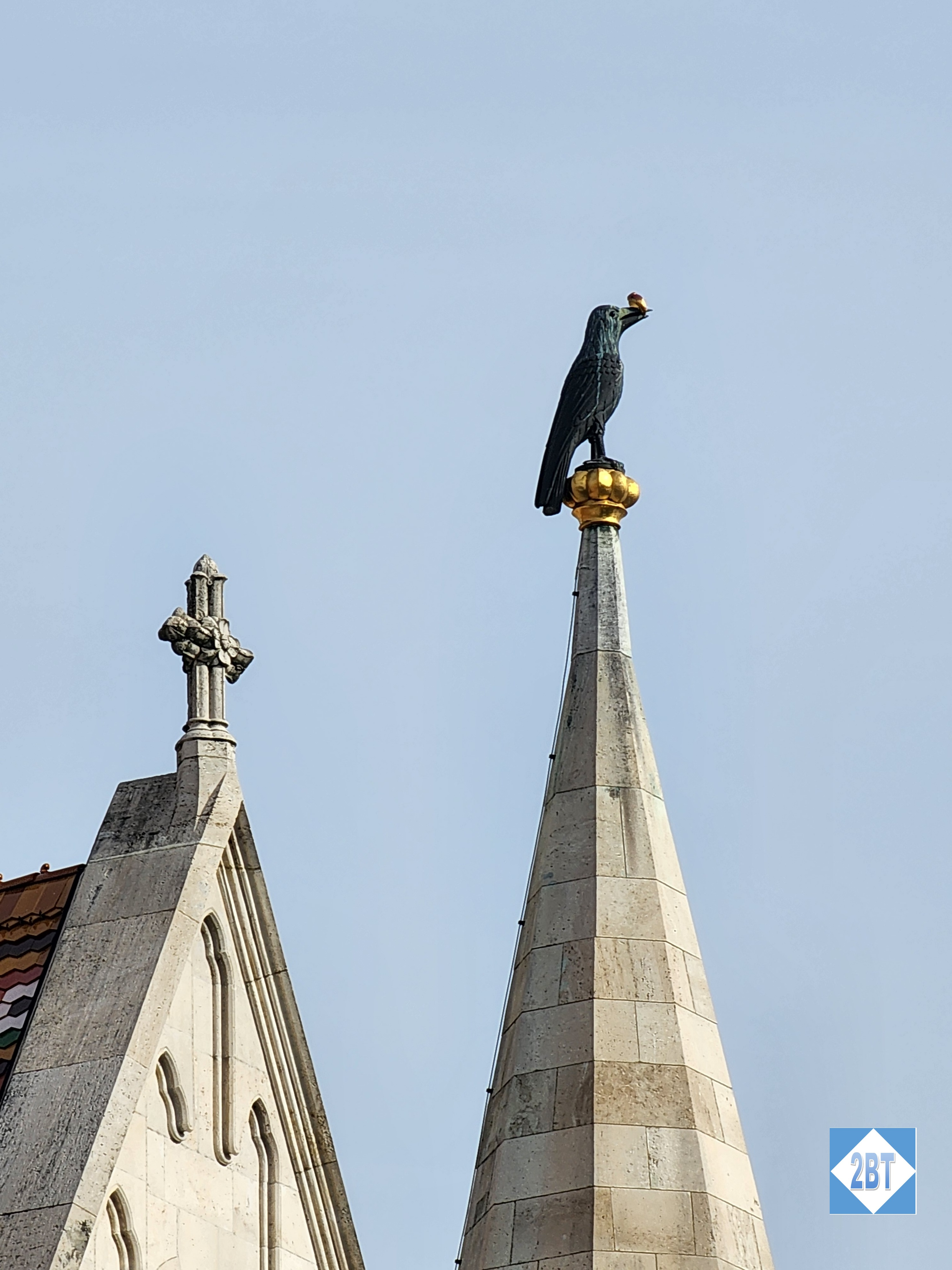
In my previous post I identified this statue as Matthias Corvinius because, why wouldn’t it be him? But it’s not, it’s king Stephen I, the first king of Hungary and a canonized saint! I was thrilled to be able to get a good shot with no people around it. It dates to 1906.
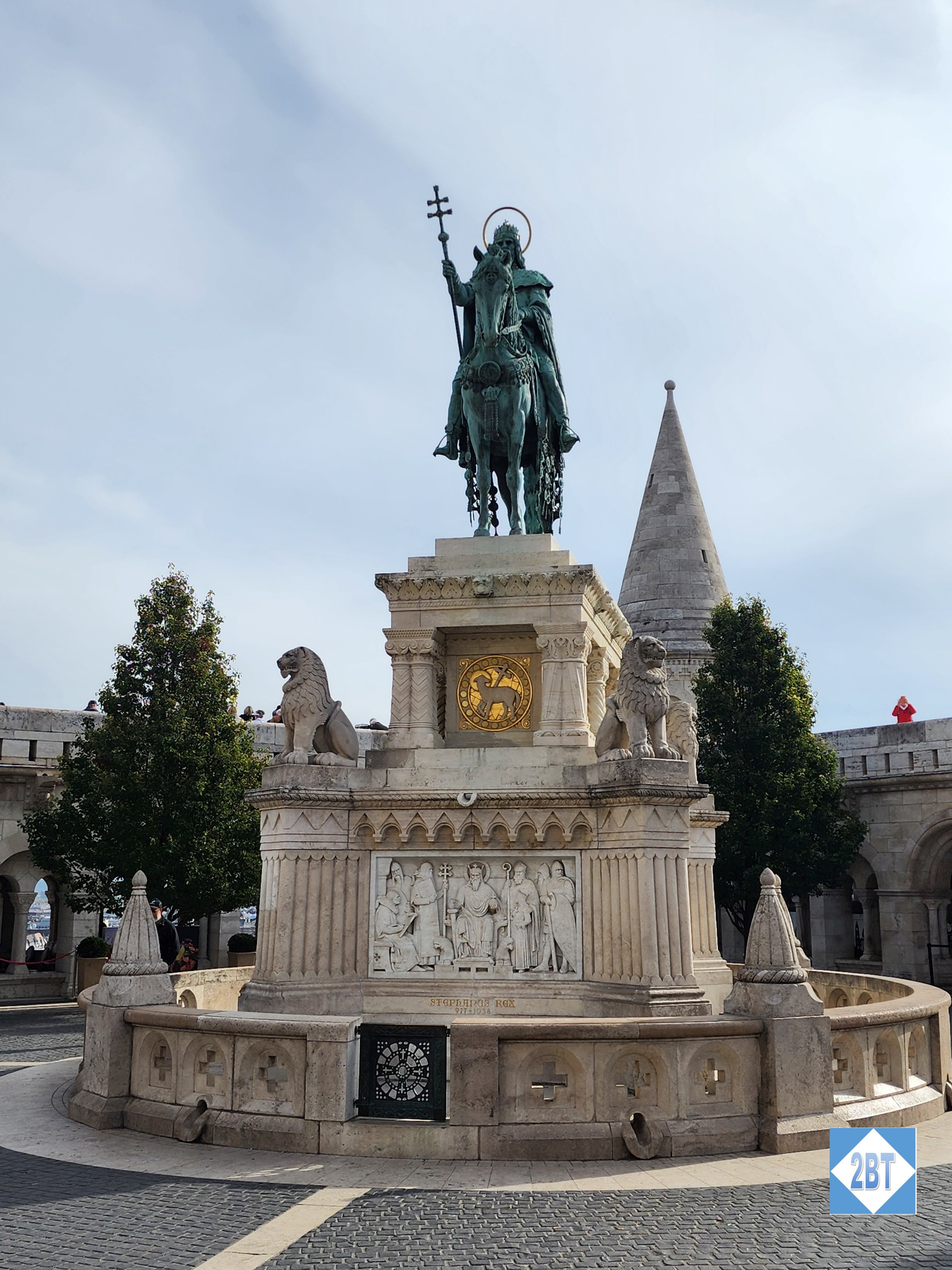
King Stephen Statue
Standing on the Fishermen’s Bastion you get a great view across the river of the Parliament building…
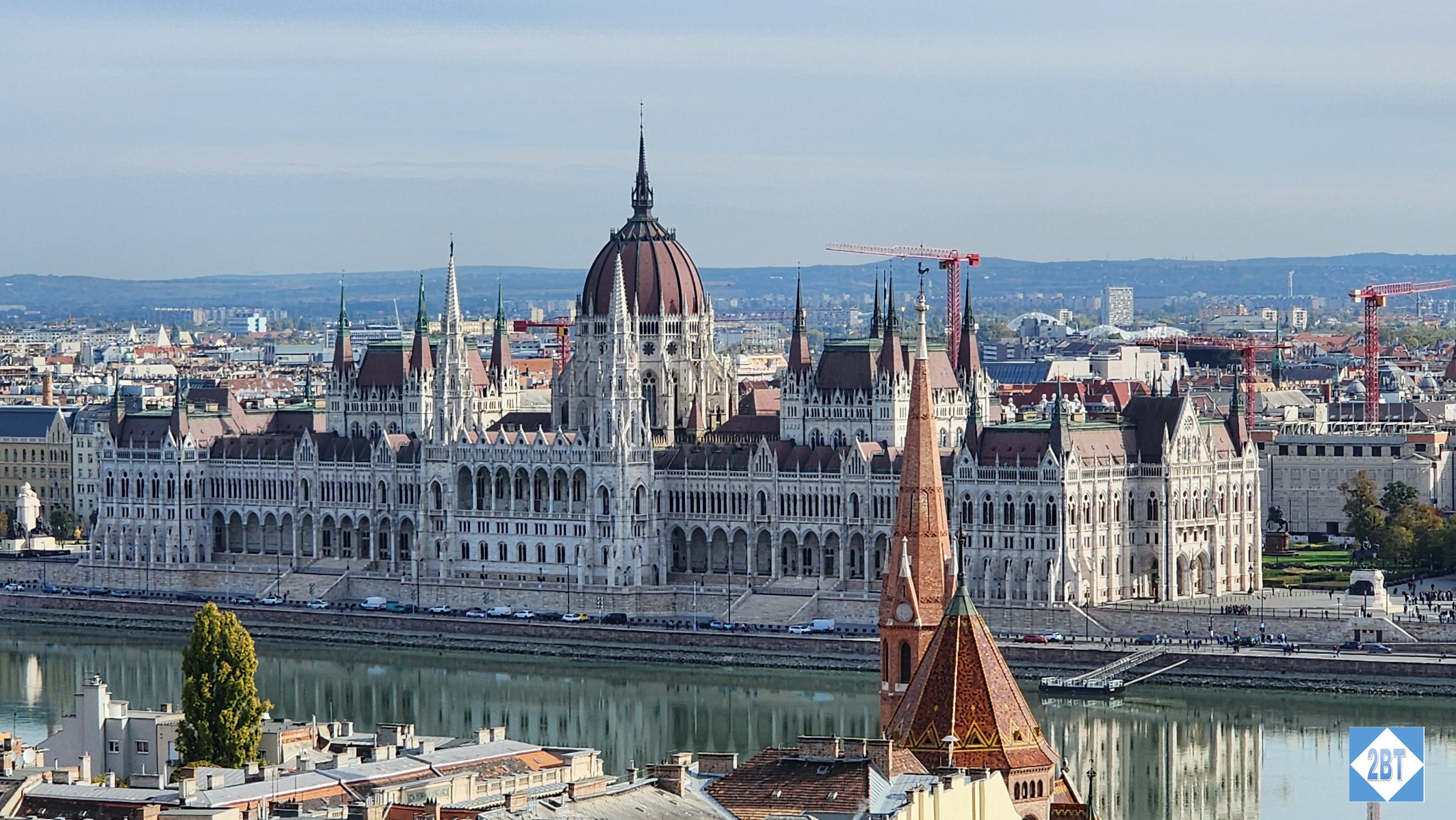
Hungarian Parliament Building
and of the Chain Bridge (which refers to its construction technique) with St. Stephen’s Cathedral in the background.
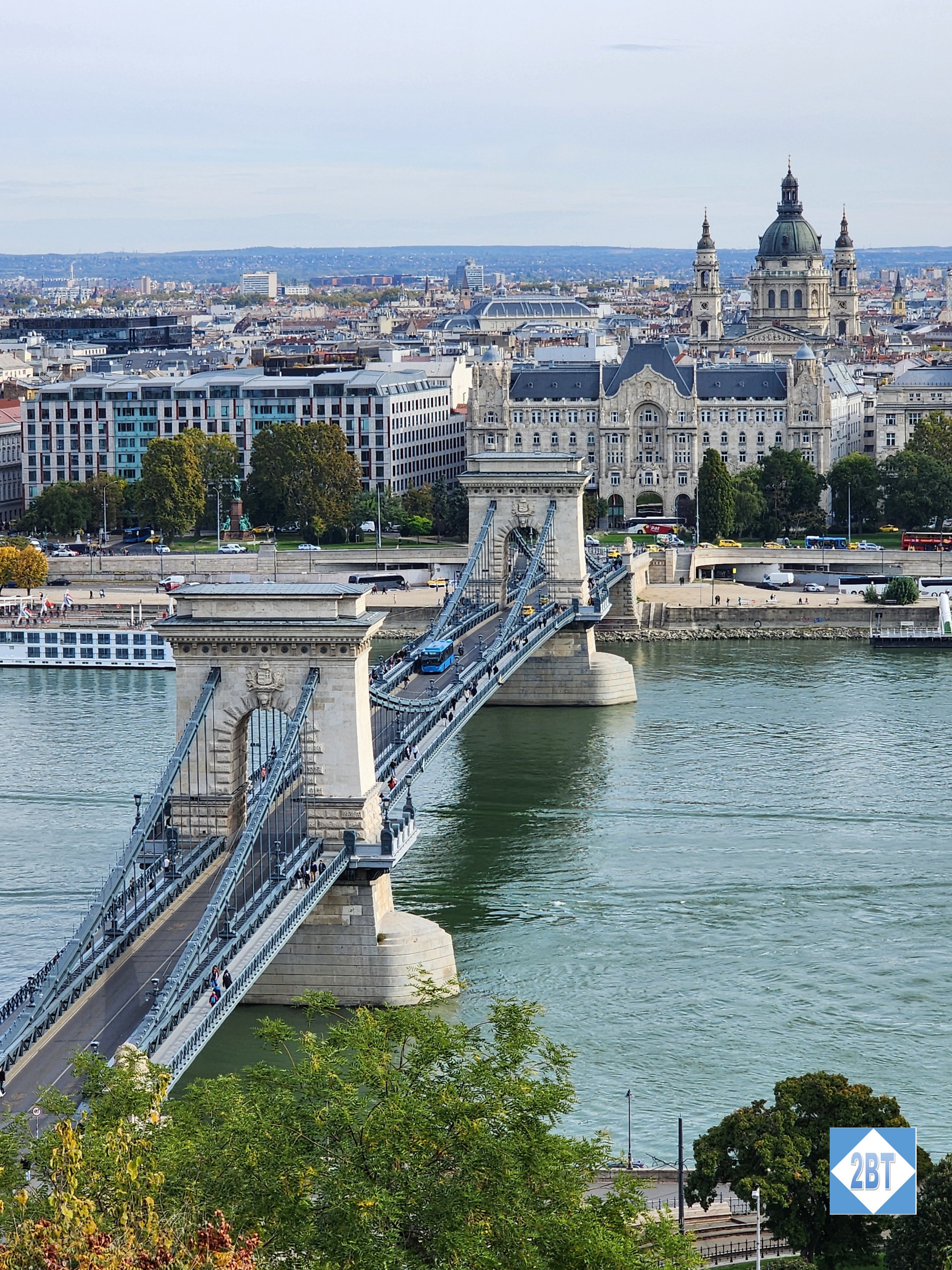
Chain Bridge and St. Stephen’s Cathedral
Interior
On this trip I didn’t take as many photos inside the church as I did on my prior visit but here are a few things I found interesting.
A mural with Mary and Jesus surrounded by historical Hungarian figures.
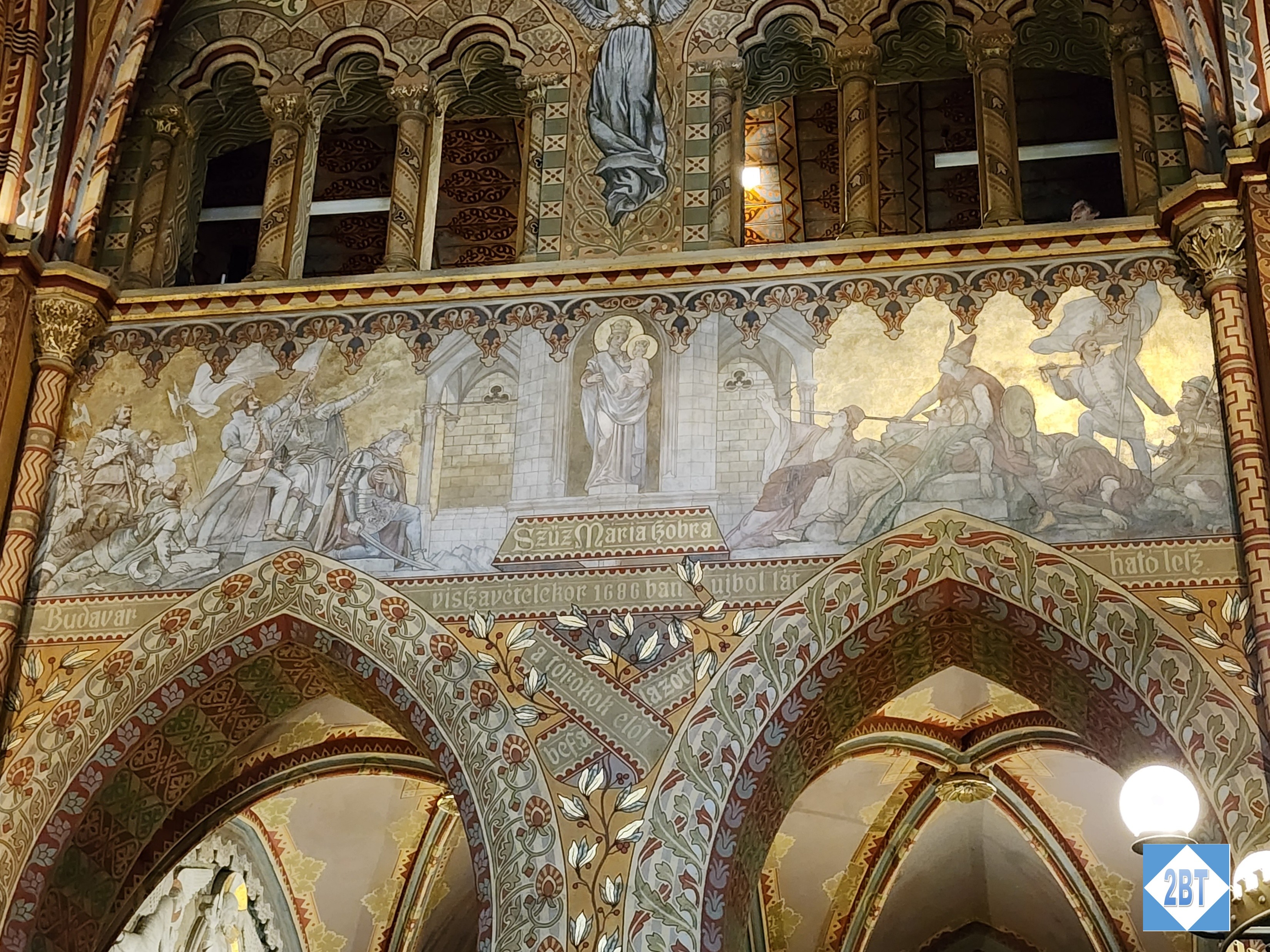
Mary, Jesus, and historical Hungarian figures
This is the Black Madonna. It’s modeled on a Caravaggio painting. When the Ottomans occupied the area, the statue was walled up into a niche as the Ottomans were using the church as a mosque. In 1686 when the city was under siege, cannon fire caused the wall of the niche to crumble, and the statue’s face shone through. When the praying Muslims saw the statue being revealed it so terrified them that their defense collapsed that same day.


I find all the detail, even on the columns and the ceiling just amazing.
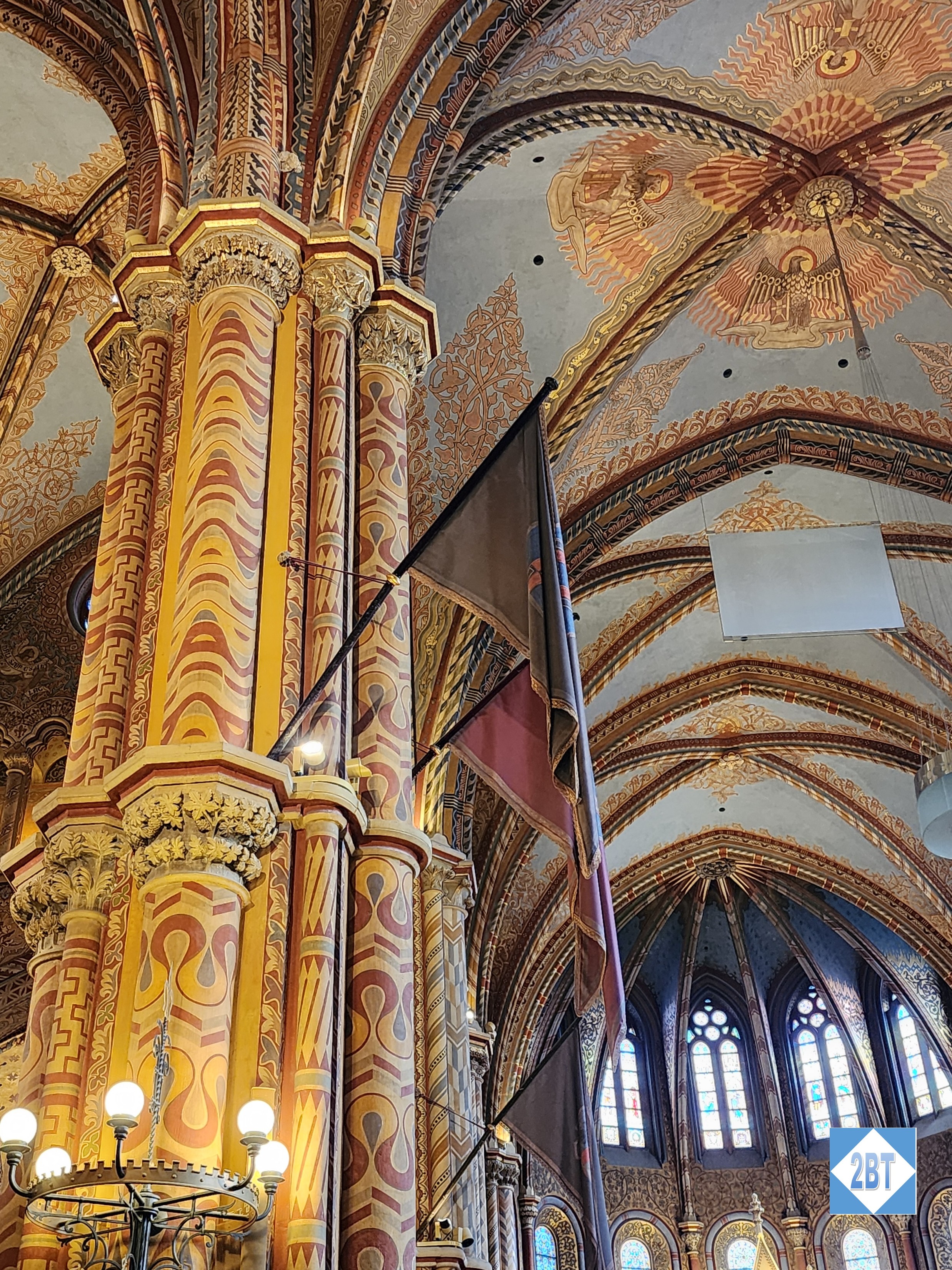
Inside Matthias Church
This is the main altar area at the front of the main auditorium.


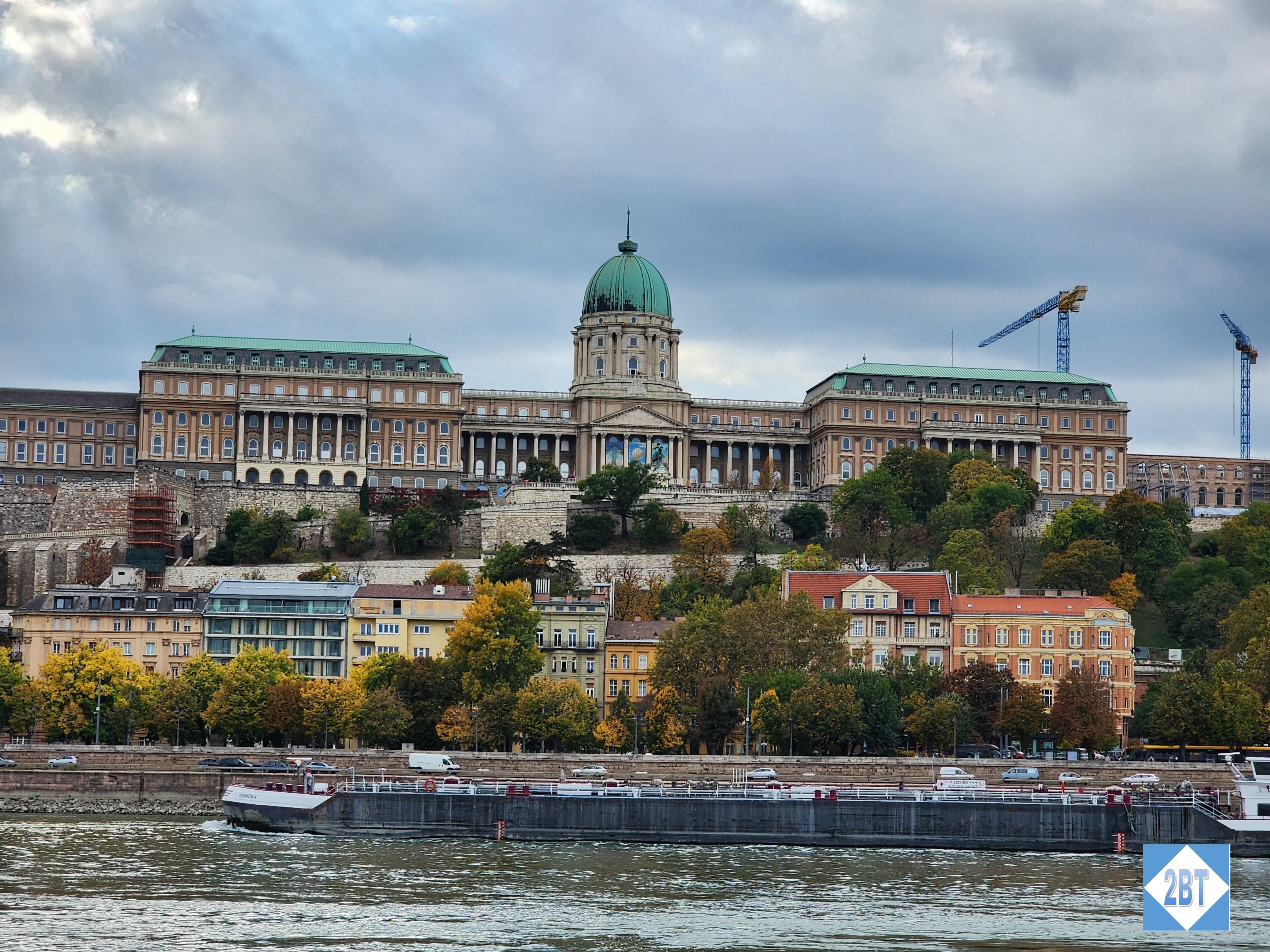
Buda Castle
The castle was undergoing a major renovation and since we’d been inside in 2016 we didn’t have a need to revisit its museum.
Buda Castle
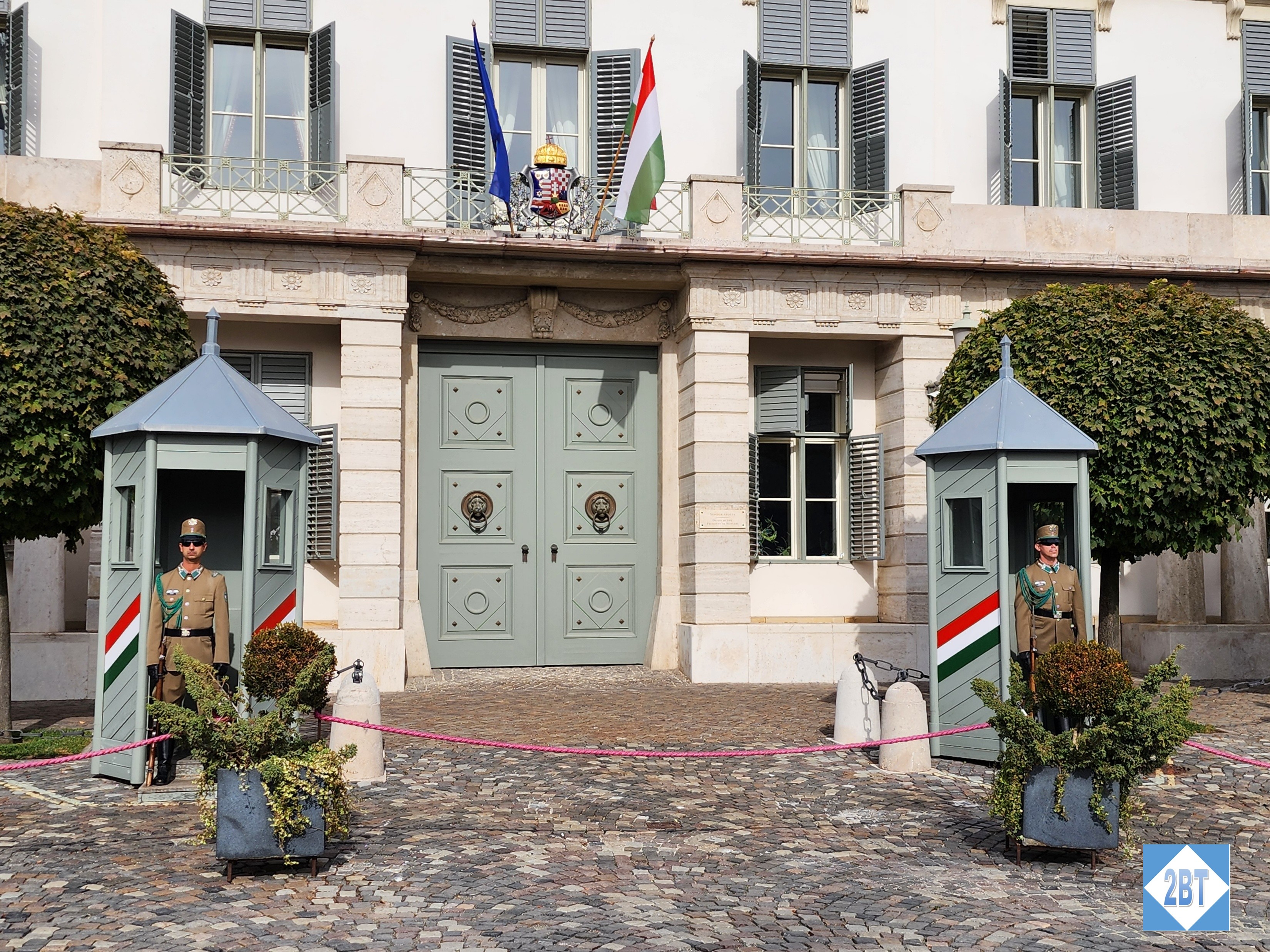
We did take a photo of Sándor Palace next door. This is both the official workspace and residence of the president of Hungary. Unfortunately we missed the changing of the guards ceremony that we saw last time we were here.
Margaret Island
Our tour was a half-day and returned us to our hotel and we had free time the rest of the afternoon. We set out toward Margaret Island, in the middle of the Danube. On the way we stopped at an Irish pub (one of our traditions) called Pointer Pub. It was not bad and the lunch special was a pretty good deal.
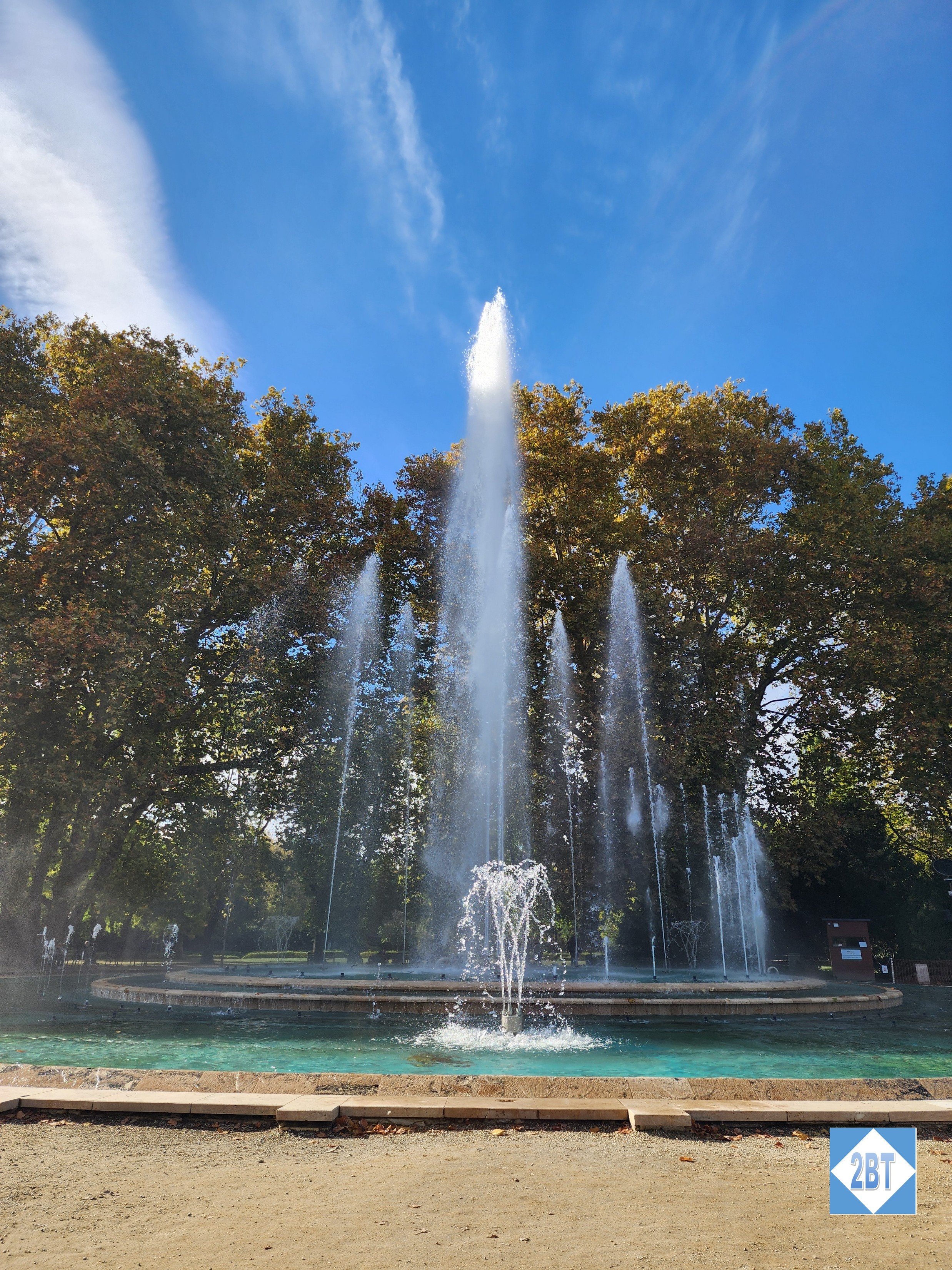
By the time we reached Margaret Island, my friend was fairly tired so we didn’t venture too deeply into it. I do wish we’d known the BUDAPEST sign was there as that would have made a nice souvenir photo. But we did stop at the Zenélő szökőkút, the Musical Fountain. Unlike some musical fountains that only play classical or calm music, this one played a lot of rock. Since we were there in the daytime we didn’t get the effect of the lights but it was still pretty cool.
Margaret Island Musical Fountain
Peter Falk Statue
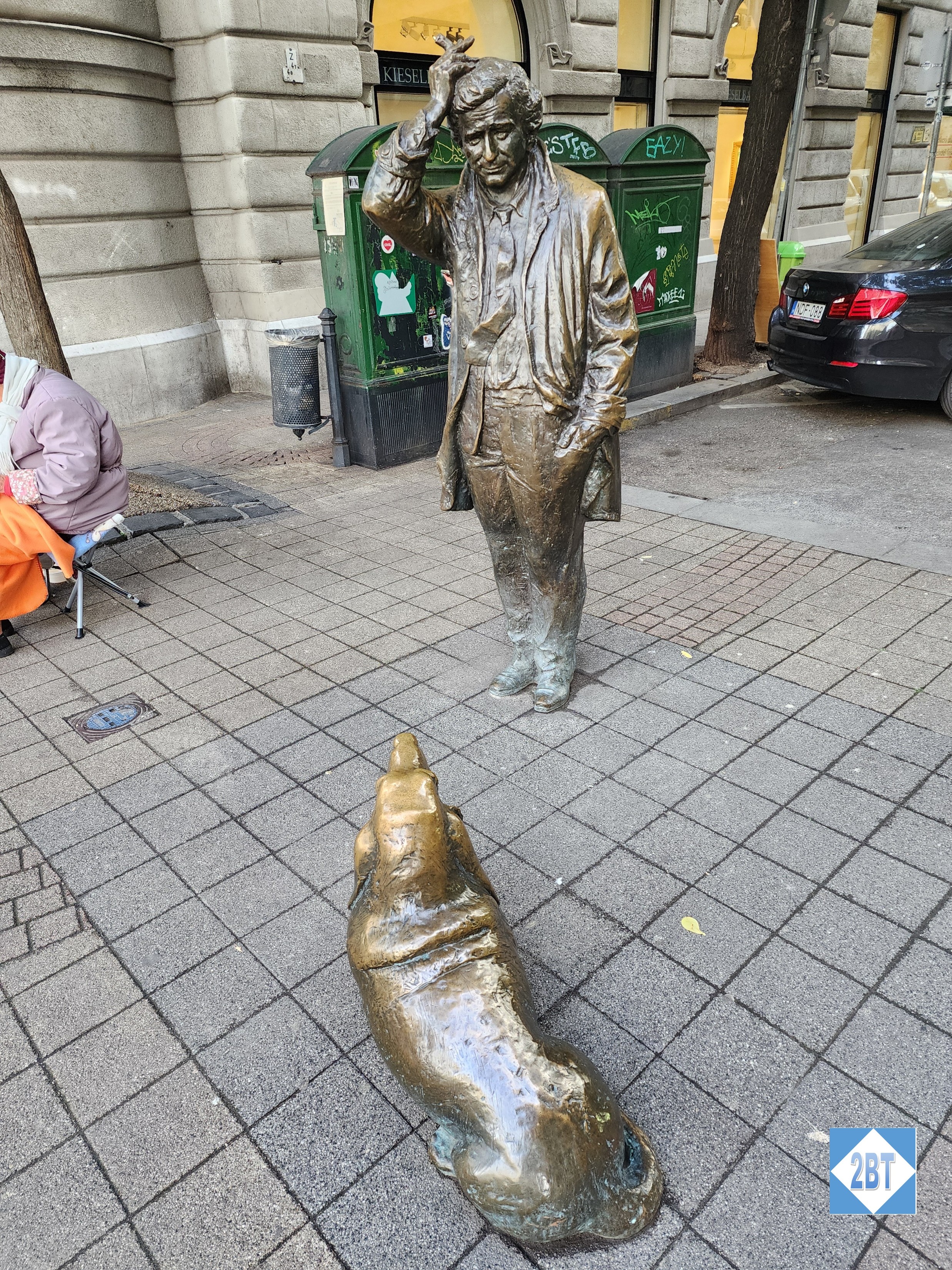
On the way back to the hotel we encountered this statue of Peter Falk as Columbo, with Columbo’s dog, who is apparently named Dog. I was a little young to watch Columbo when it originally aired and have never sought it out since. Why is this statue here? It resides on Falk Miksa Street, named for a 19th-century Hungarian politician. Though both men have the same family name and are Jewish, there’s never been any proof they were actually related. The statue was installed in 2014 as part of an urban renewal project on the street.
Peter Falk as Columbo and Dog
Shoes on the Danube Bank
While we saw this memorial on our previous visit, it was something I wanted to see again. The Shoes on the Danube Bank represents the thousands of people killed by the fascist Arrow Cross party. Around 20,000 people, mostly Jews, were shot between December 1944 and January 1945. Victims were ordered to take off their shoes (which soldiers could then use or sell) before they were shot, their bodies falling into the river. You can read more about this tragedy on Wikipedia.


Budapest By Night
On our second night in the city we dined at Belvárosi Lugas Étterem which is a small place just a block behind St. Stephen’s Cathedral. It was recommended by a Hungarian colleague of mine and I’d heartily endorse that recommendation! They’re known for their deer stew and since I’m not a real adventurous eater I had a little trepidation when ordering it but it was really good and I’m glad I did! It’s not a large place so I’d definitely get reservations. There is an al fresco dining area for when the weather is nice.
After dinner we strolled around for a bit to get photos of the major sites along the river. in the dark. Some of these photos were taken as we sailed out of the city the following night. The whole area is a UNESCO World Heritage site along with the river-facing buildings on the Buda side.
St. Stephen’s Basilica
Szent István-bazilika is a Roman Catholic basilica named after the first king of Hungary, who was later canonized. His right hand is housed in the reliquary. We did not visit inside on this trip but it’s a lovely building even on the outside. Of course we made sure to get a good photo during the day as well.


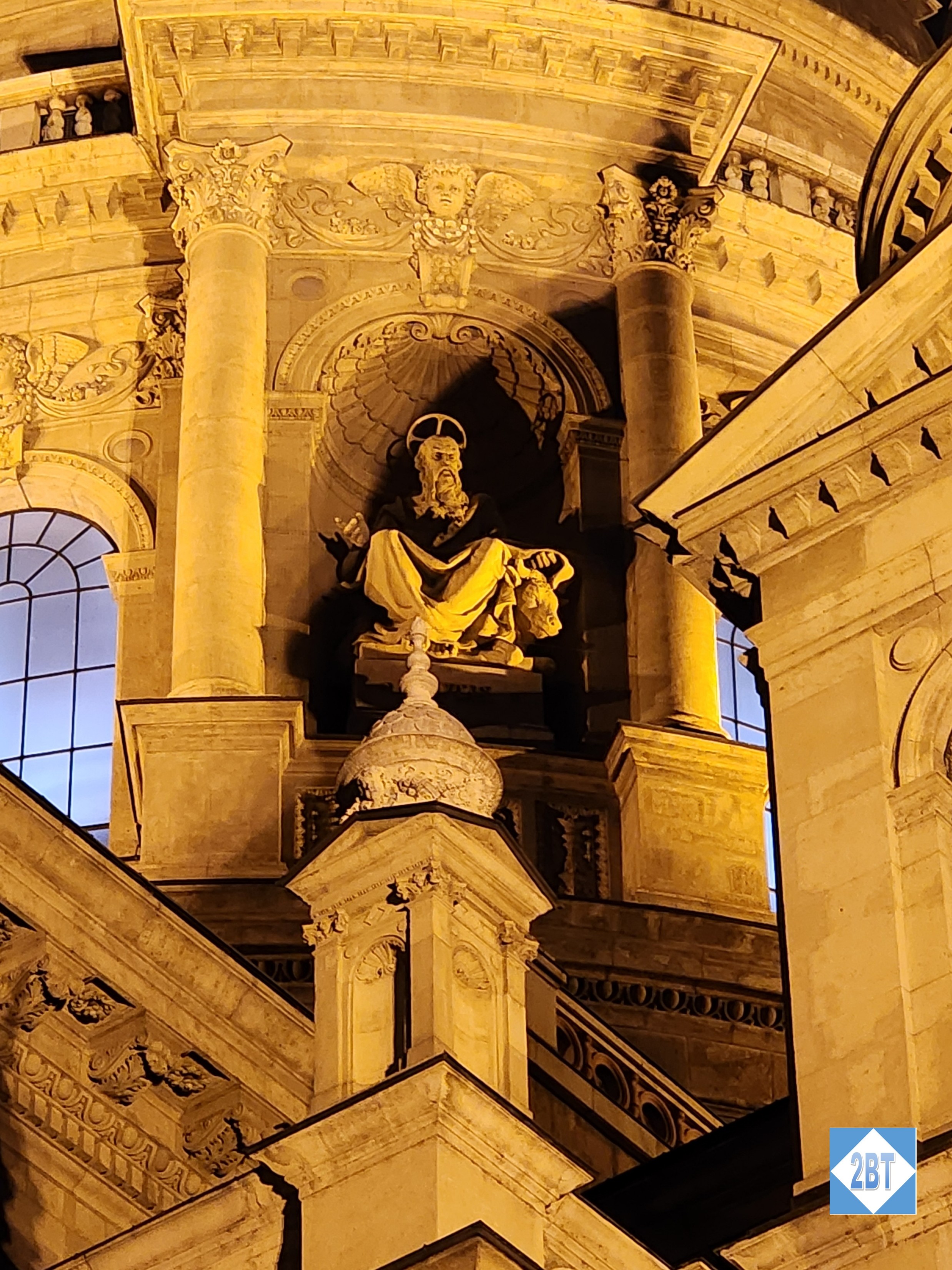
Detail of a bust high up on St. Stephen’s
Chain Bridge and Buda Castle
I took a similar photo on our previous visit and it remains one of my favorites. The white lights of the chain bridge against the yellow lights of the castle make a nice contrast.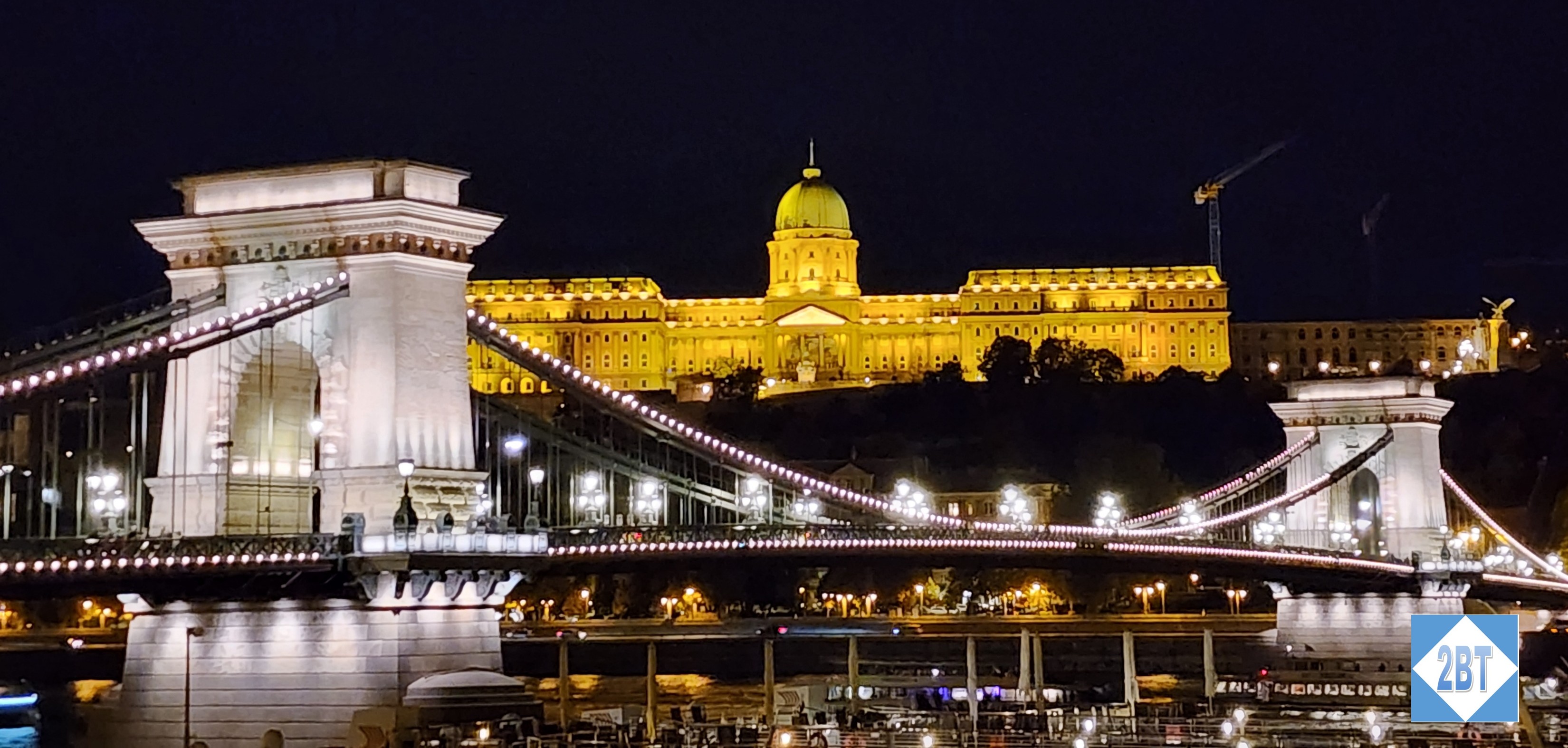
On our last night we were able to get nice shots of both the bridge and the castle from the river.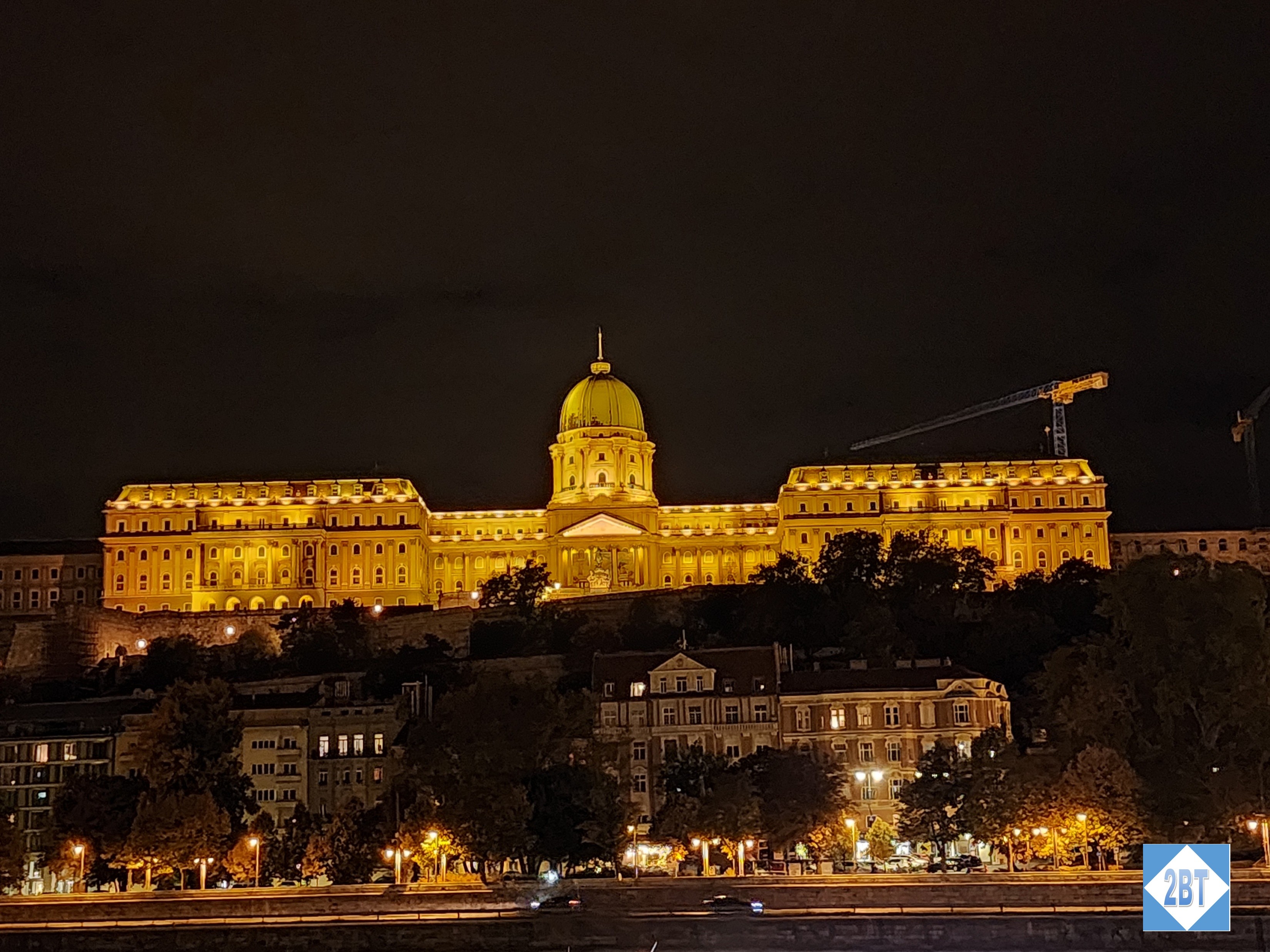
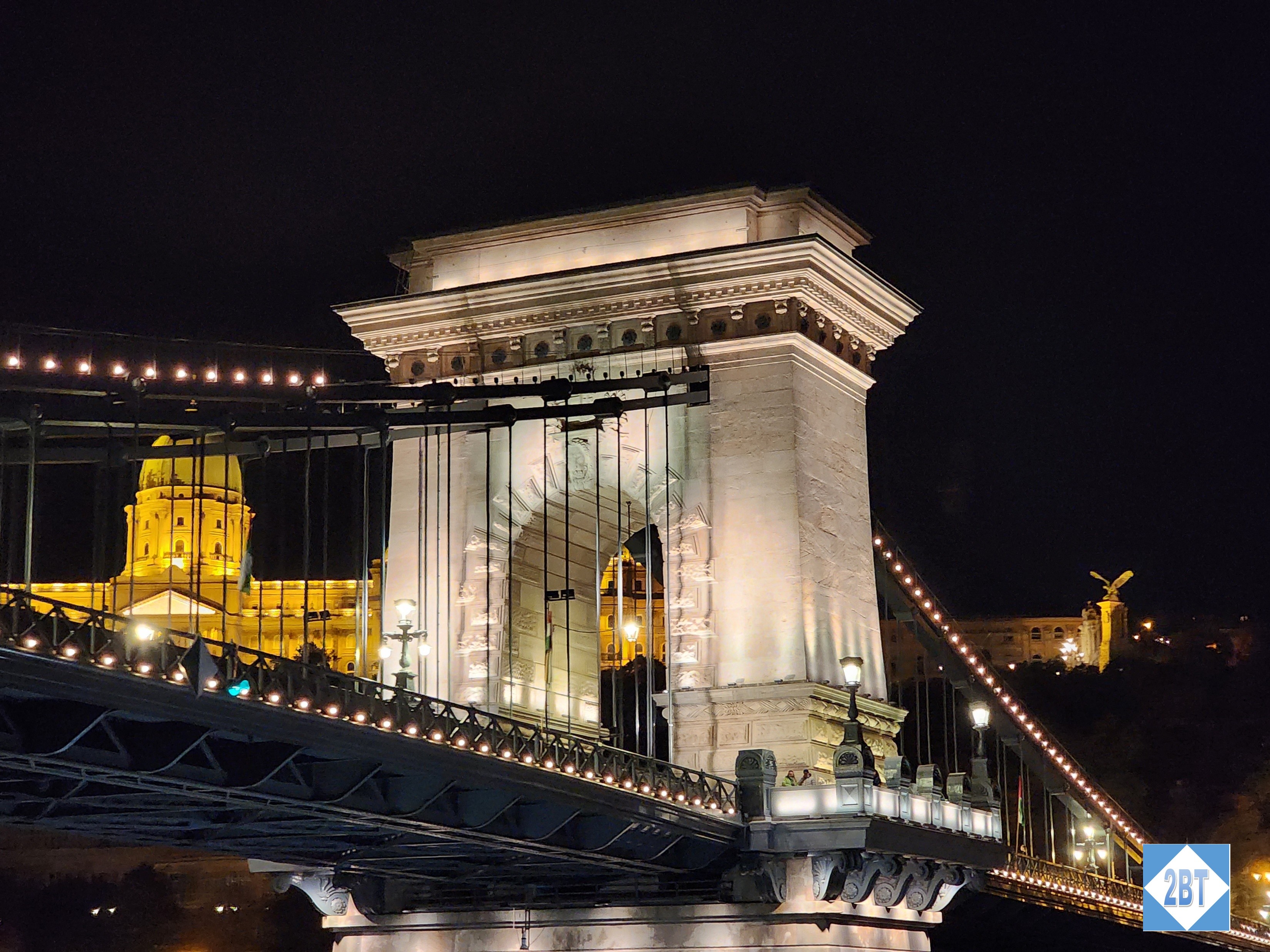
Chain Bridge
Matthias Church and Fisherman’s Bastion
The church and the bastion are illuminated as well. The squarish building on the right side behind the bastion is the Hilton.
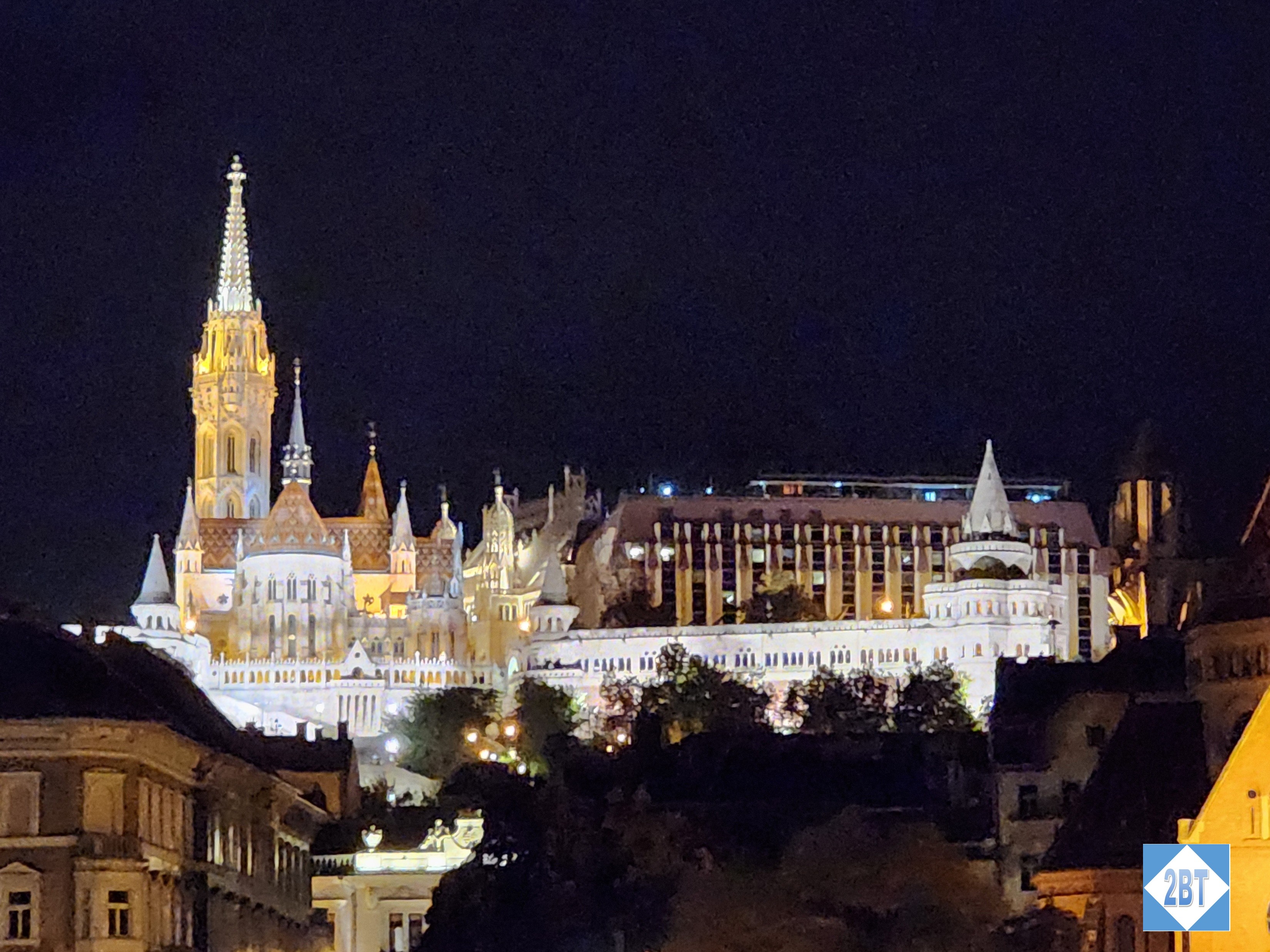
Matthias Church and Fisherman’s Bastion
Parliament
The Parliament building is so huge that there’s no way to get a good photo up close but I decided to give it a shot.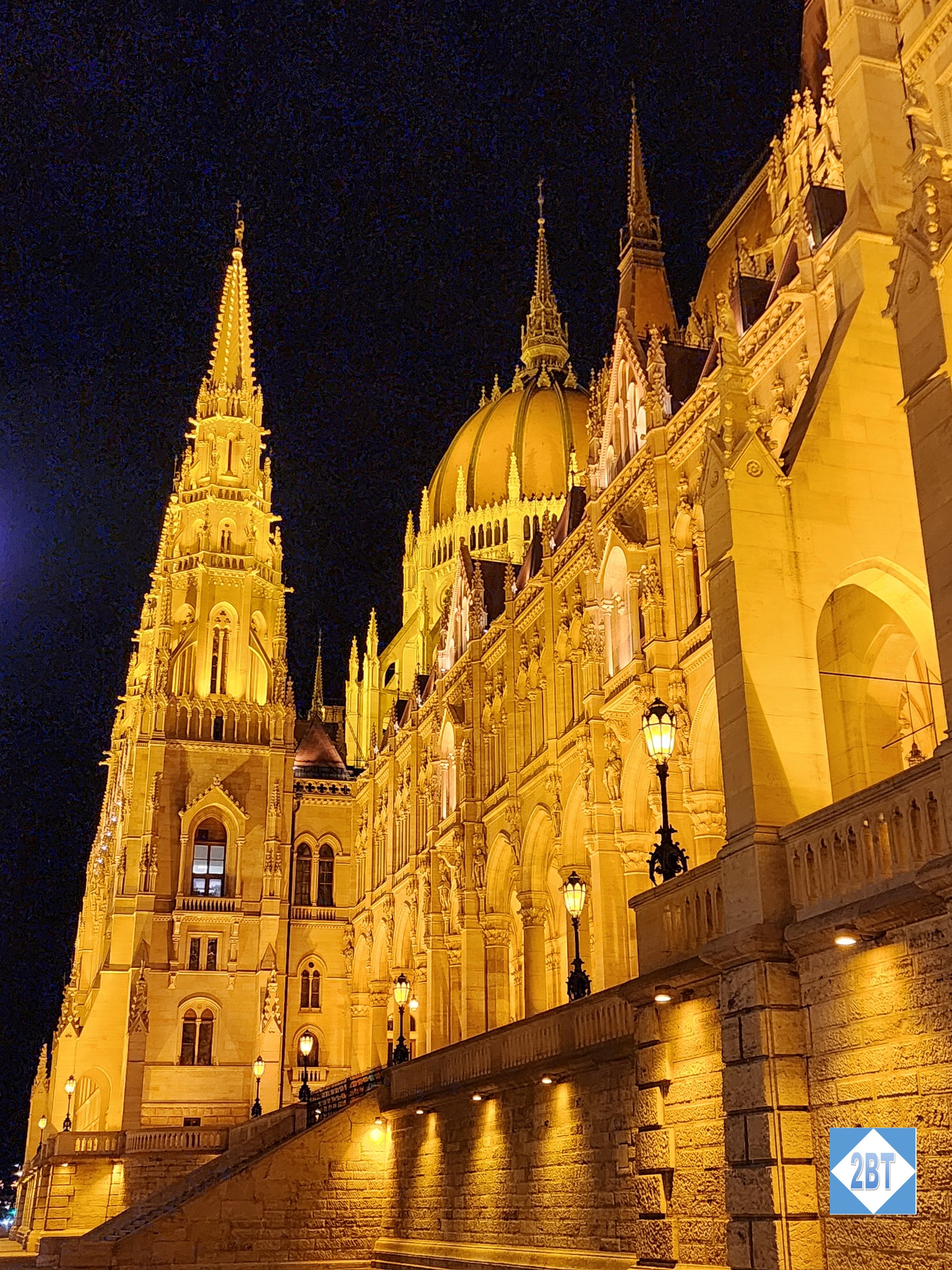
On our last night, as our ship left the port, we first sailed a little to the west, past the Parliament building, so that we could all get one last look at the impressive building by night. Then our boat turned around and headed east.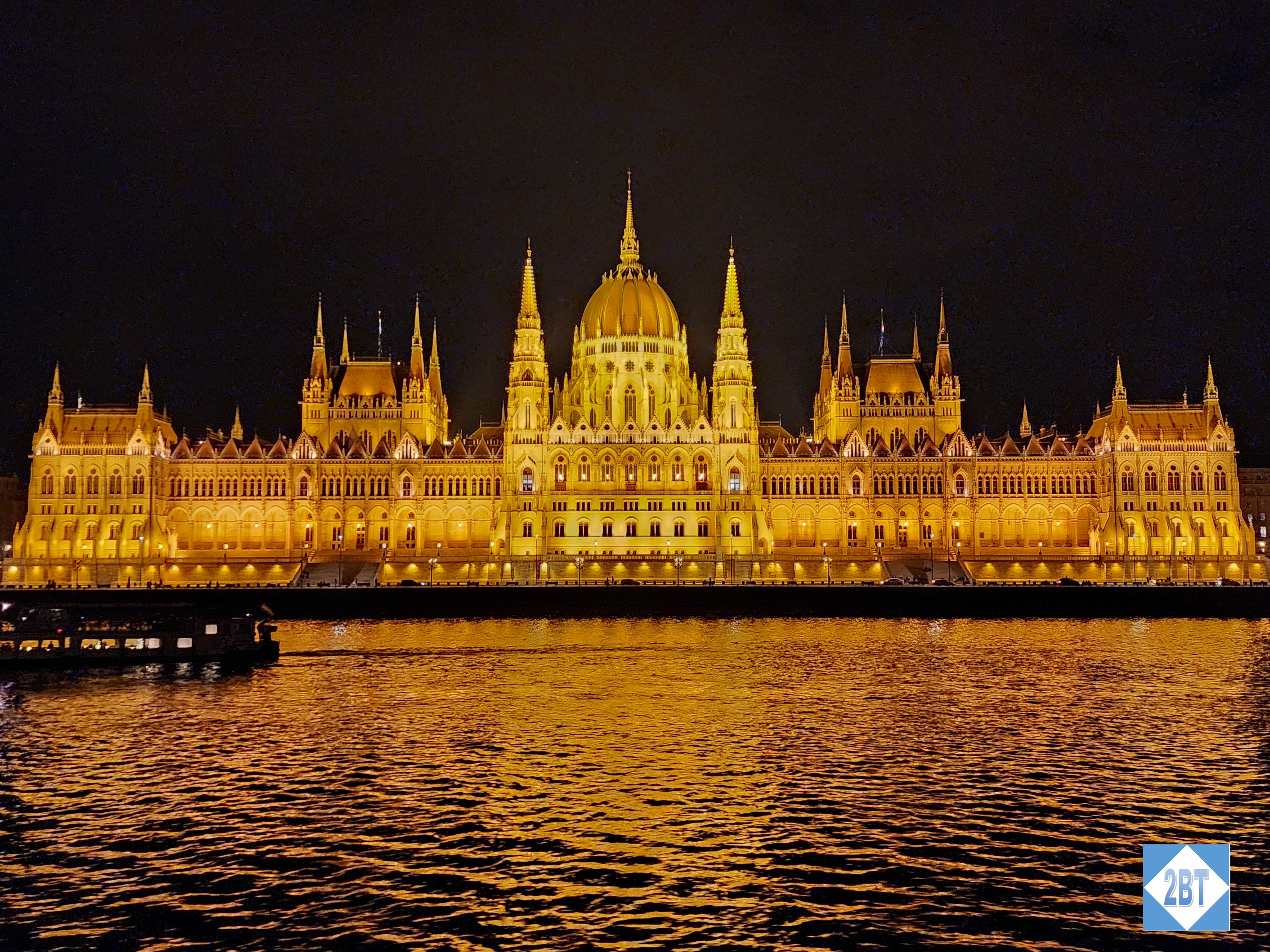
Olympic Rings
I wish I’d known to come back to visit this area during the day. The Olympic rings are painted in the colors of the Hungarian flag (red on top, white in the middle, green on the bottom) and are part of the Olympia park, which has displays about Hungarian Olympians. I’m a big Olympics nerd and would have been interested in seeing more of the park.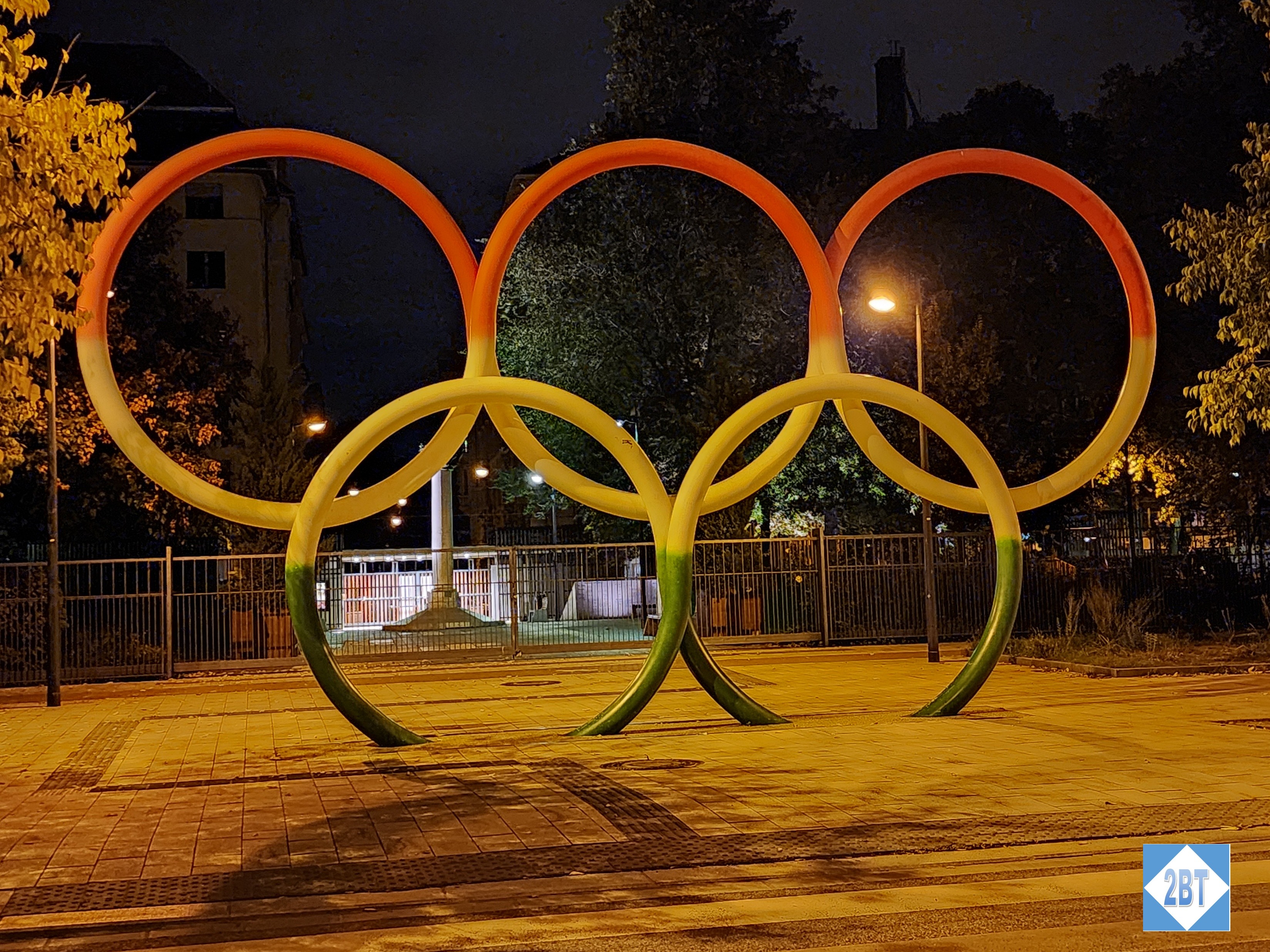
Royal Palace of Gödöllő
On our final day in Budapest we went on an optional excursion to the Royal Palace of Gödöllő. This is one of the largest and most important monuments of Hungarian palace architecture. It was built by a count and construction began in 1733. It’s surrounded by a huge park and gardens and the building itself underwent several enlargements during the 18th century.
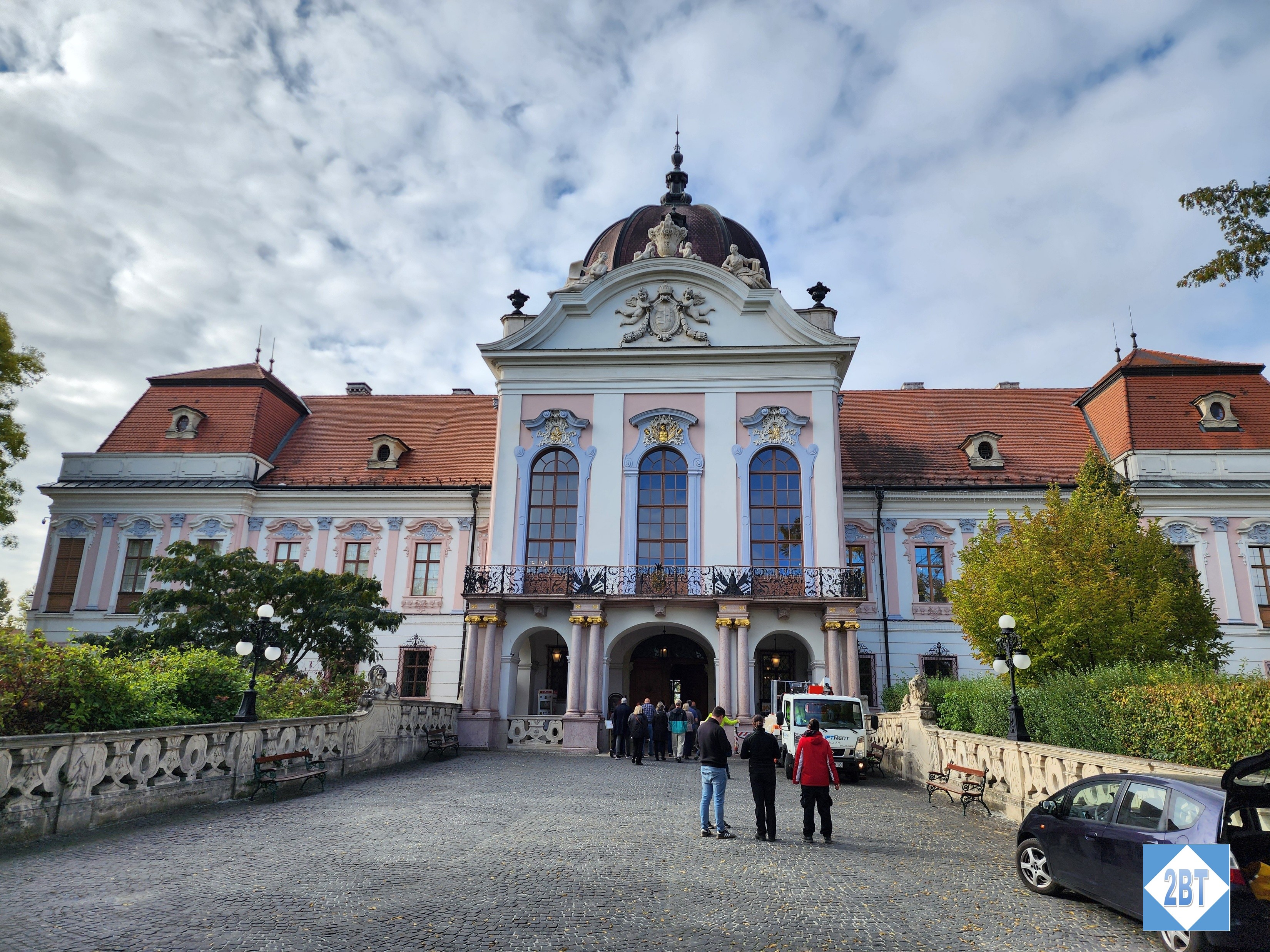
Royal Palace of Gödöllő
In the mid-1800s the count’s male lineage died out and it exchanged hands several times before being bought by the crown in 1867. It was designated as a “resting residence” for the royal family and the royal families of Francis Joseph and Charles IV would both spend several months each year at the palace. The palace was a favorite of the Empress Elisabeth, also known as Sissi.
After 1945, the building fell into decay under Communism. But in the mid-1980s repairs began and they were completed in 1991. It’s now an attraction for tourists and school children alike to enjoy its second life.
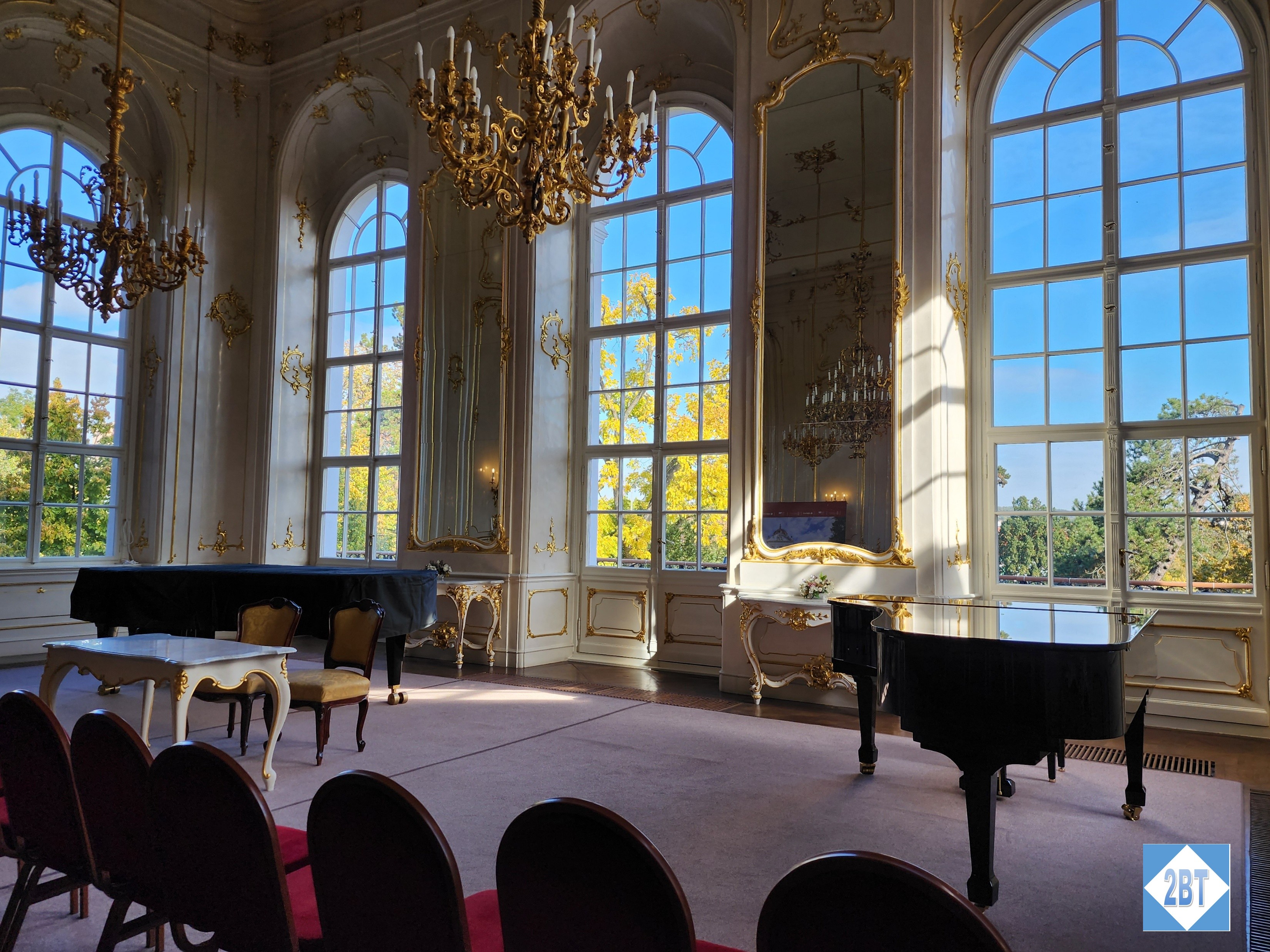
Gödöllő Ballroom


In the end
I found Budapest just as charming on my second visit as I did on my first. I’m sure there is a lot more of the city to uncover and I’d be happy to return anytime.


Recent Comments