Passage to Eastern Europe: Trip Introduction
Flight Review: LOT Polish Airlines 797-9 Business Class, ORD-WAW
Lodging Review: Hampton by Hilton Krakow
Our Time in Krakow, Poland
Flixbus from Krakow to Budapest
Lodging Review: Corinthia Budapest Hotel
Our Time in Budapest, Hungary
Our Time in Kalocsa, Hungary
Our Time in Osijek and Vukovar, Croatia
Our Time in Belgrade, Serbia
Our Time in Golubac, Serbia
Our Time in Vidin, Bulgaria
Our Time in Ruse, Bulgaria
Our Time in Bucharest, Romania
Lodging Review: JW Marriott Bucharest Grand Hotel
Flight Review: SWISS Airlines 777-300 ZRH-ORD
After our first night aboard the Viking Ullr we docked in Kalocsa, Hungary which is only about 1.5 hours south of Budapest by car but of course we were floating leisurely down the Danube. We boarded a motorcoach and for about 20 minutes we wound our way through farmland and the town of Kalocsa, which has a population of about 16,000 people. We then turned by this sign for the Bakodpuszta Horse Farm.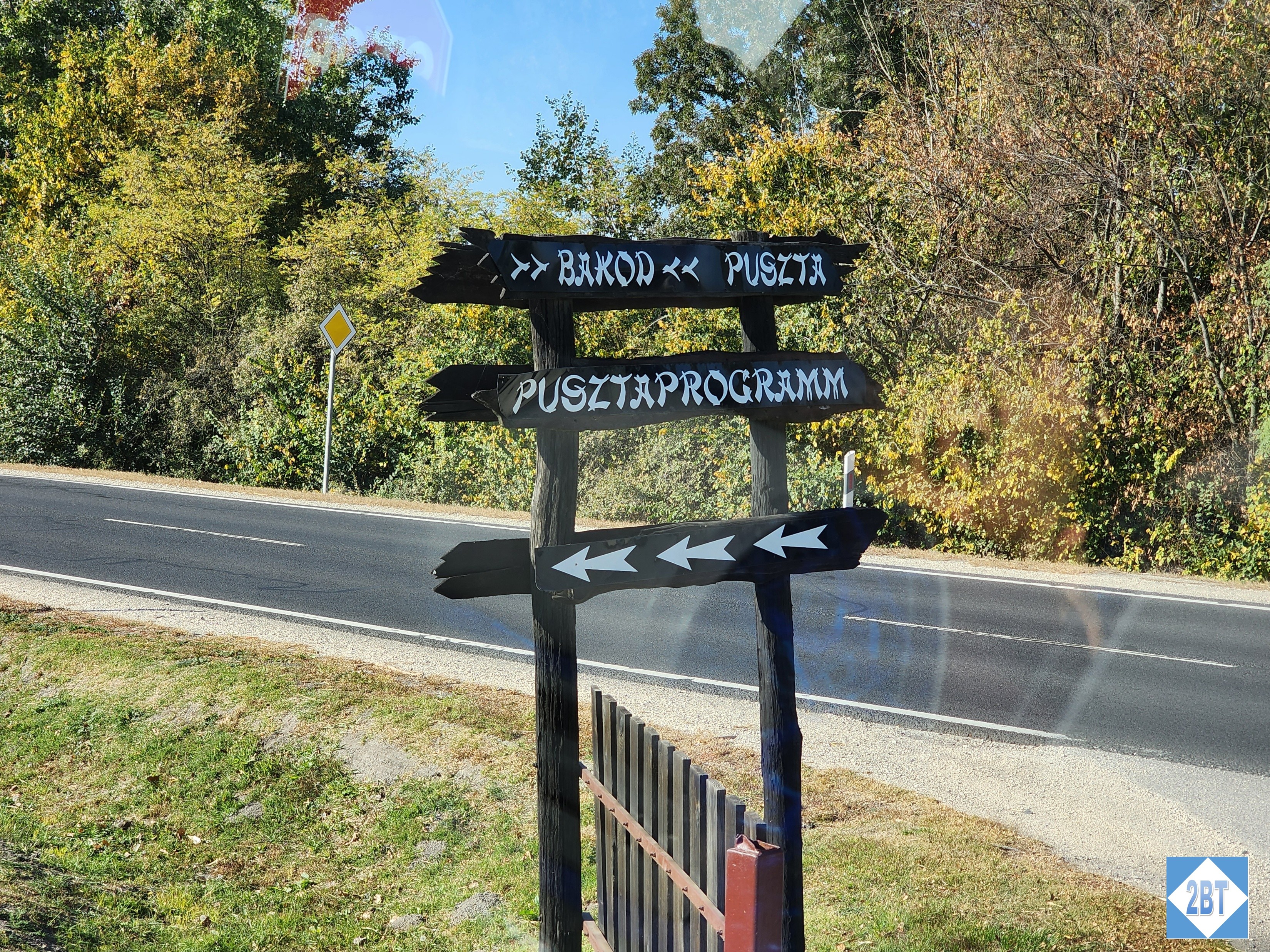
Bakodpuszta Horse Farm
While I think I perhaps knew that paprika was typically an ingredient in Hungarian goulash, I was not aware that Hungary is one of the top producers of paprika and I certainly didn’t know that Kalocsa was one of the two main regions where it is grown. Thus I was a bit surprised to see so much of it hanging from the rafters, drying out so it could be used later.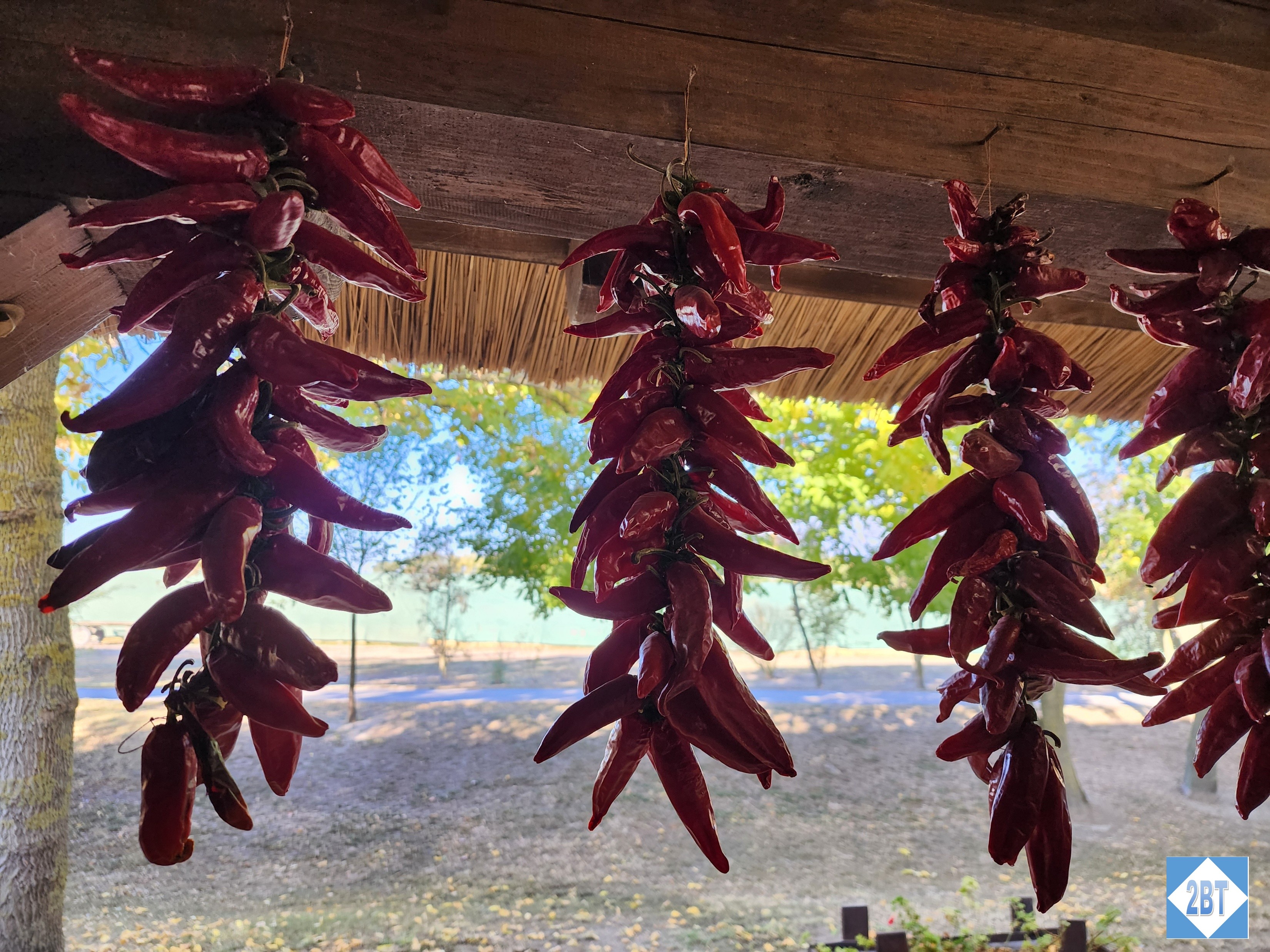
This gentleman in traditional clothing greeted us with a clarinet.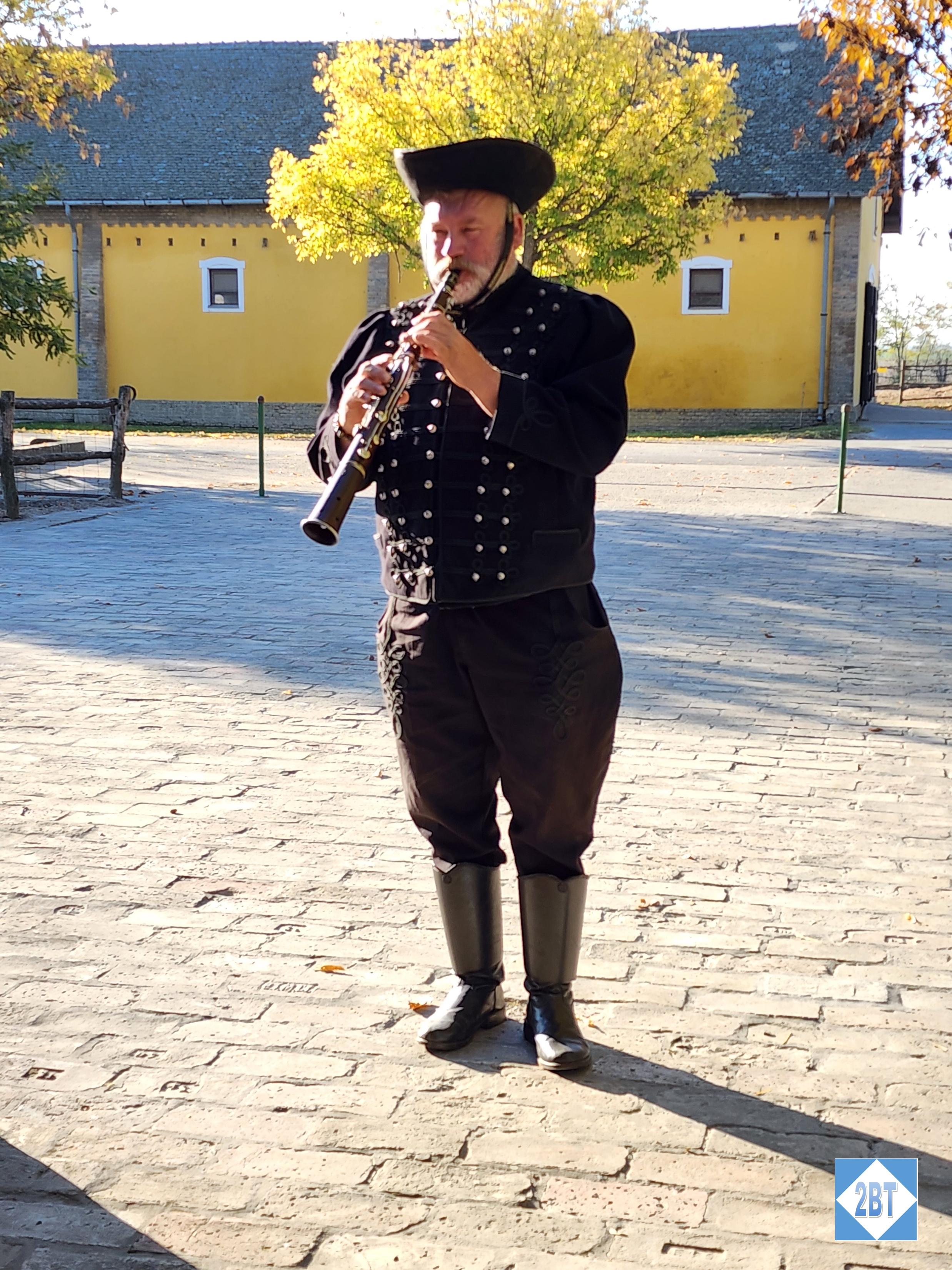
The Csikós Show
We sat in some covered bleachers while we watched the Horsemen of the Puszta put on their show. Hungary was founded by nomadic Magyar warriors who arrived from Asia on horseback and settled in the plain that became Hungary. These warriors became cowboys, or csikós, eventually began training their horses for survival in the area. This included having them lay down in the tall grass to hide, and to travel tightly together in teams. They’re trained with the cracking of a whip – which never touches them – and this also meant that the horses didn’t freak out when they heard gunfire back in the day.
Today, the csikós dress in traditional garb and entertain us with their livestock, although they also breed their own horses as well.
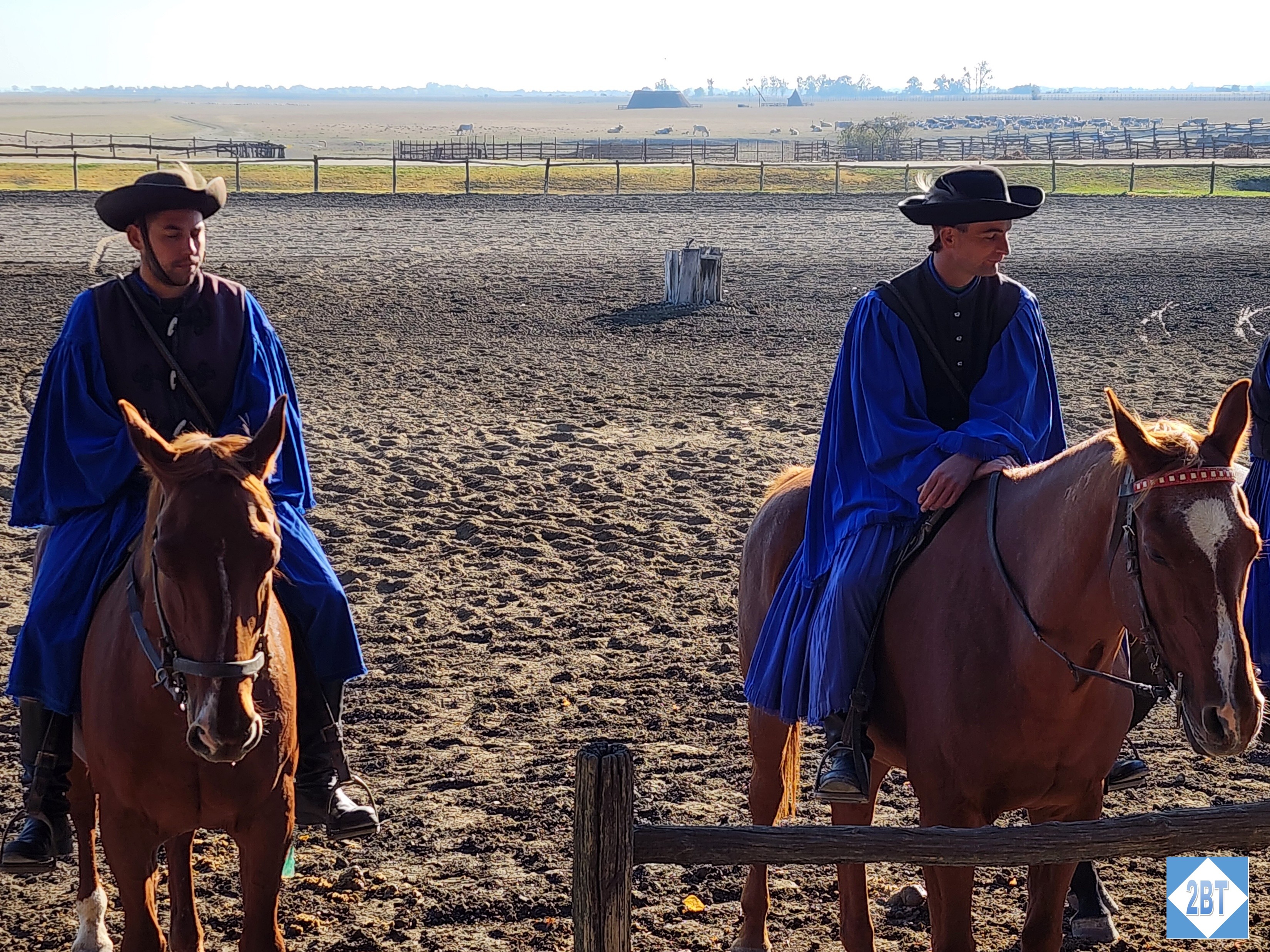
Csikos in traditional dress
These are traditionally Nonius, a muscular and heavy-boned horse, usually dark in color, although they have some beautiful white horses as well. And, oh yeah, the cute burro provided the comic relief.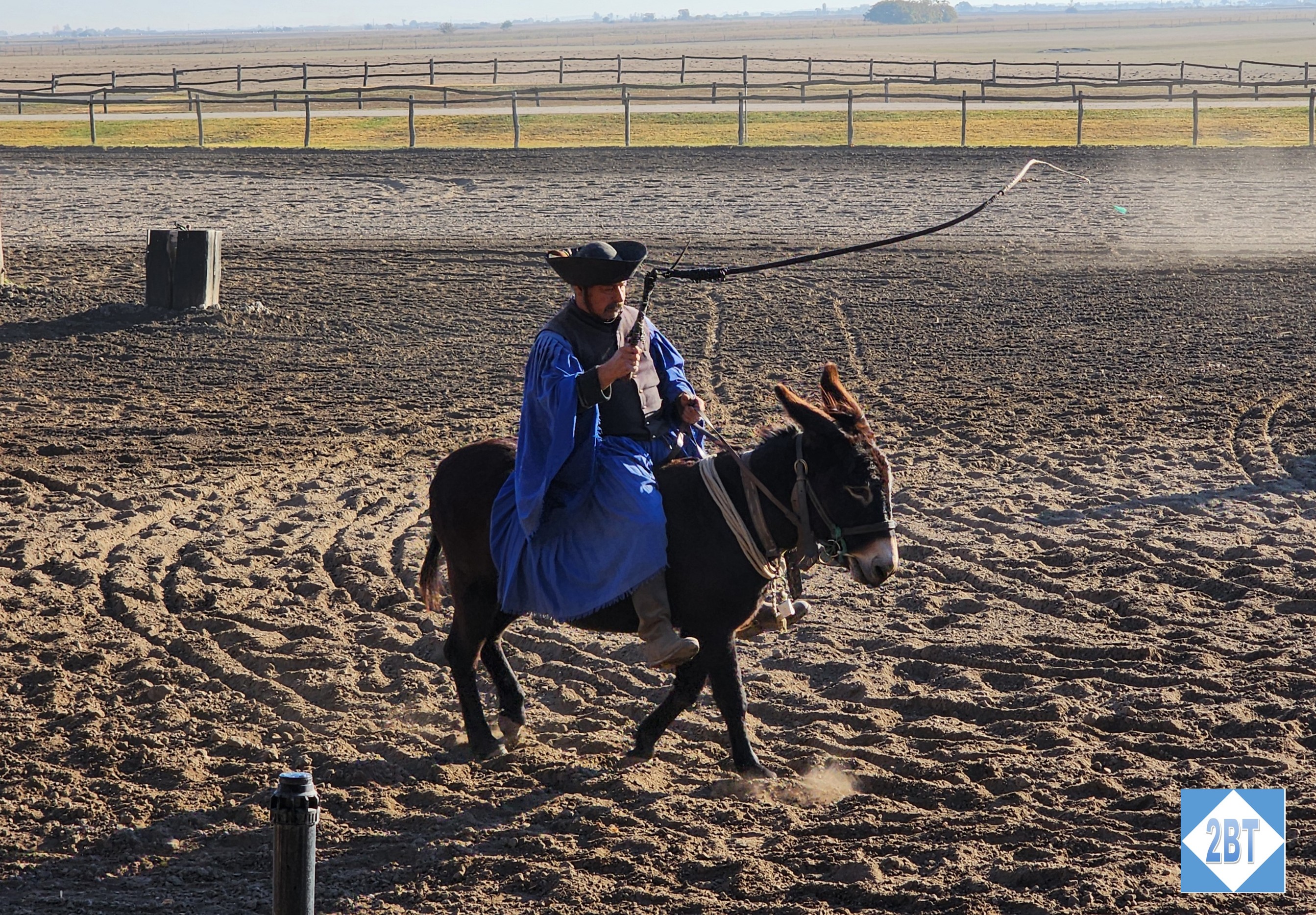
At first they showed us a traditional wagon pulled by some Hungarian Grey cattle with their giant horns.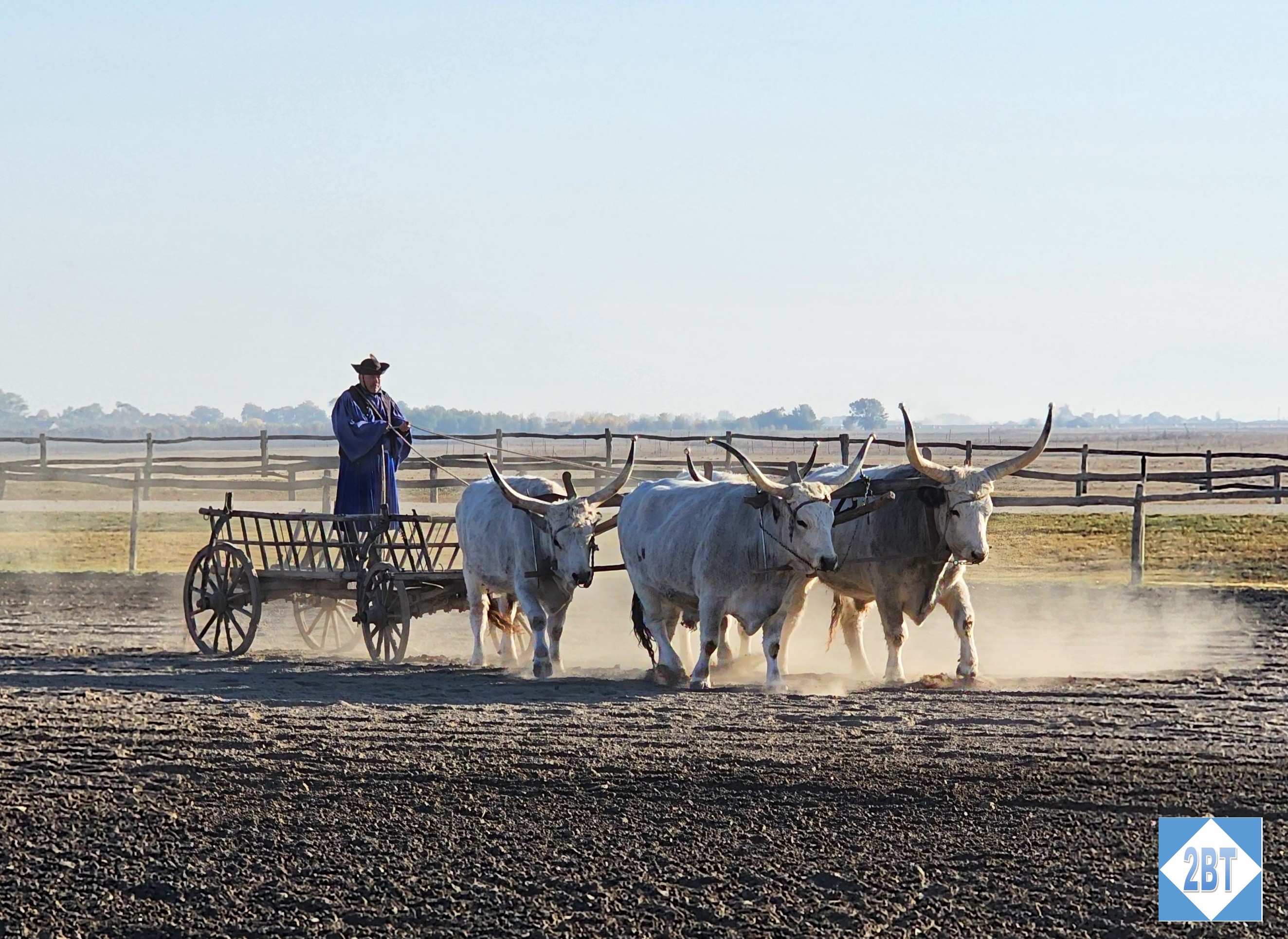
Next was a demonstration of several riders circling in sequence (while the burro tried to keep up) before stopping for a rest break.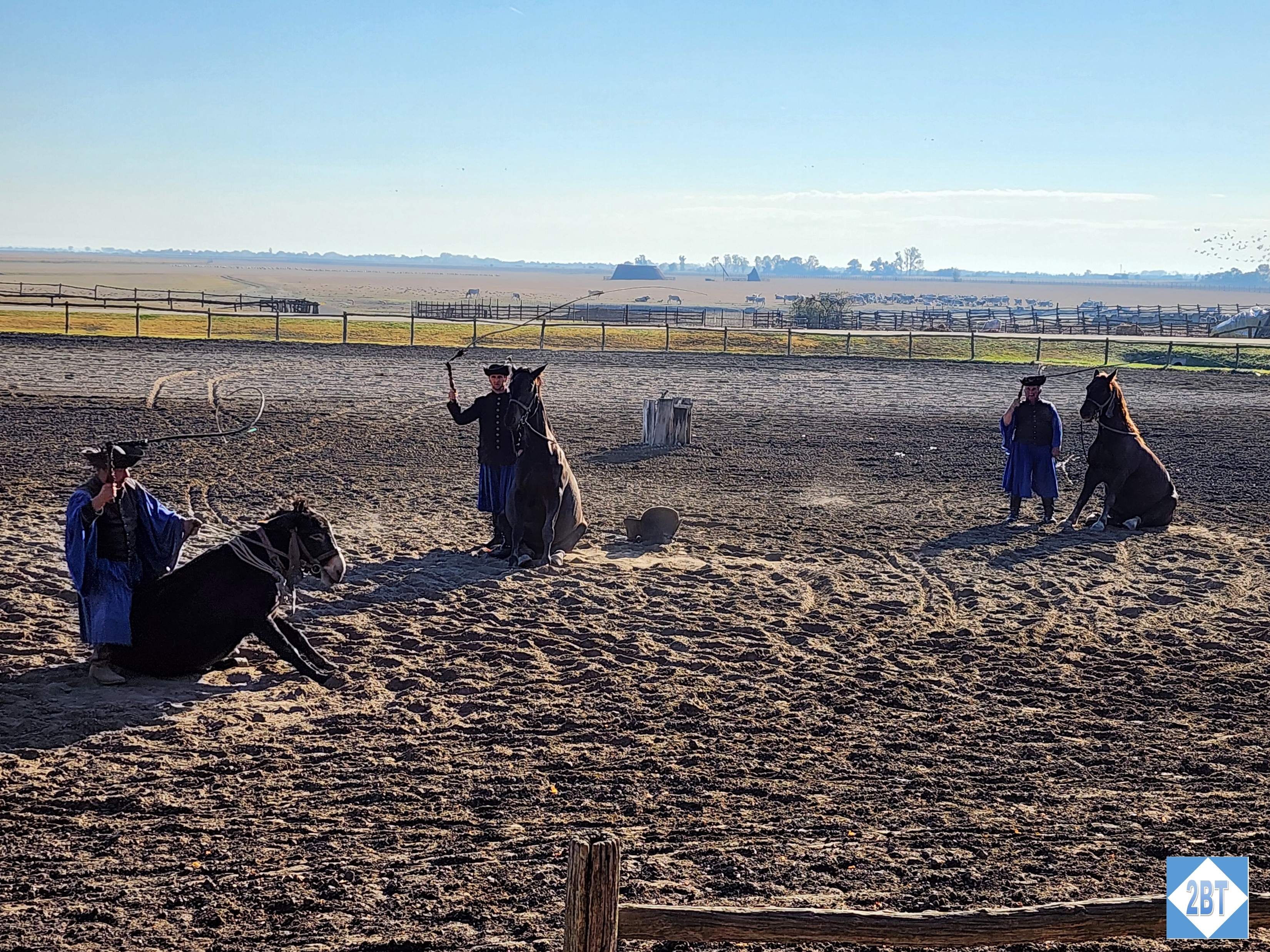
Next, a palomino and two other horses pulled a wagon.
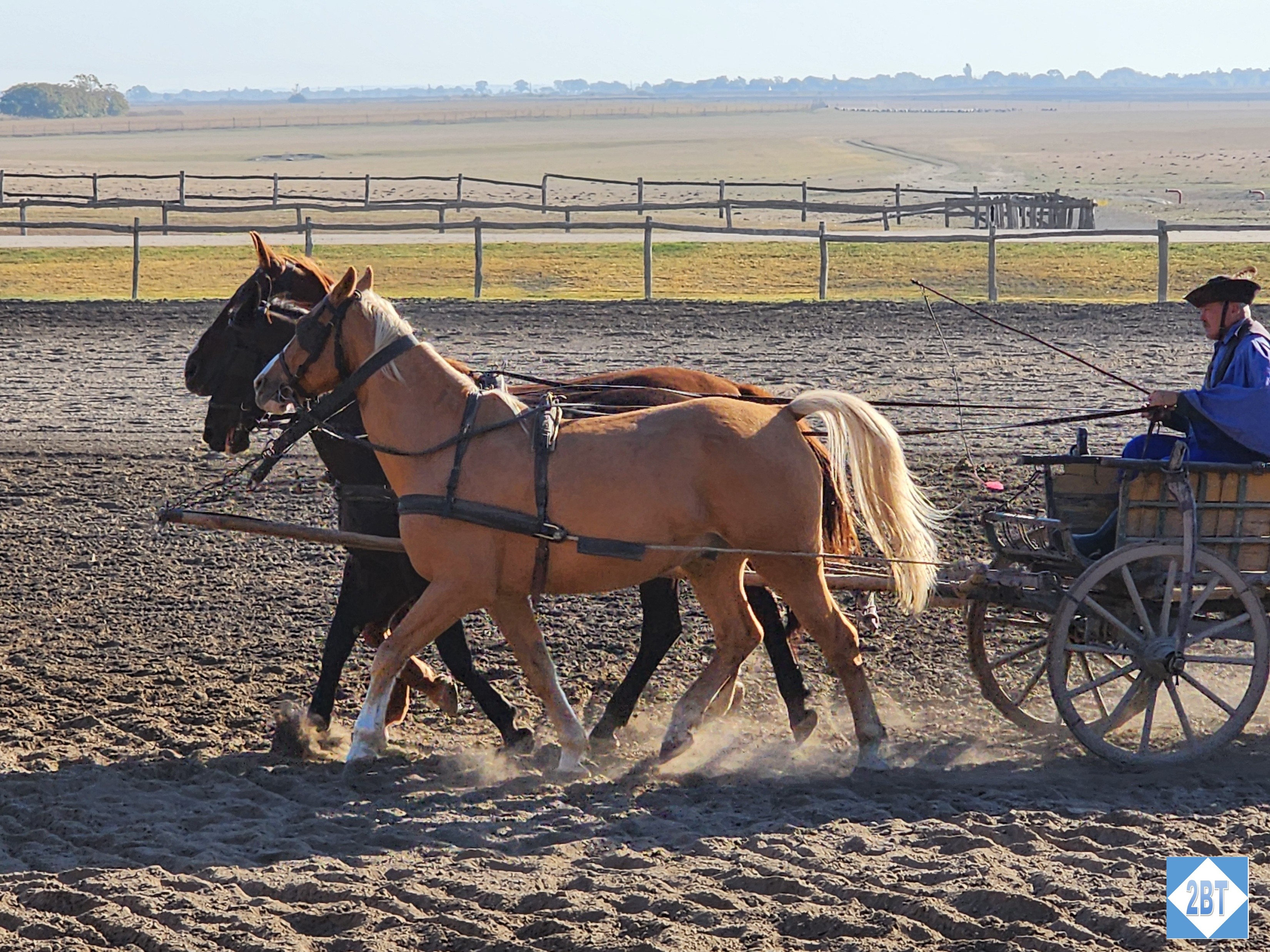
These were followed by a string of four black horses with a smaller wagon. The two riders are needed for ballast!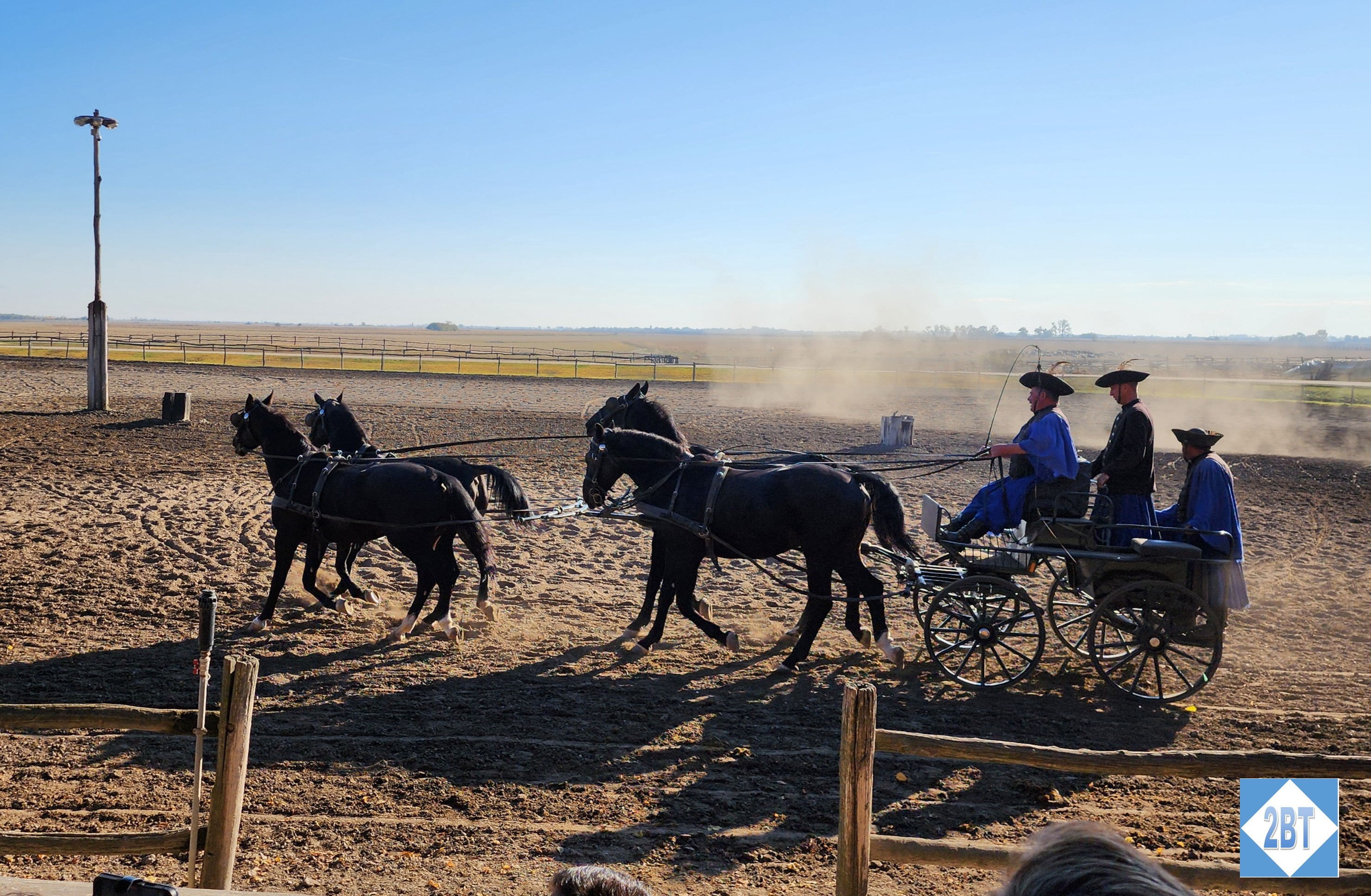
Then it was time for the finale, where one of the csikós stood atop two of the bareback horses that were part of a string of 10 loosely-bound horses (he did have squares of foam rubber under his feet) and he paraded around the paddock. It was quite spectacular.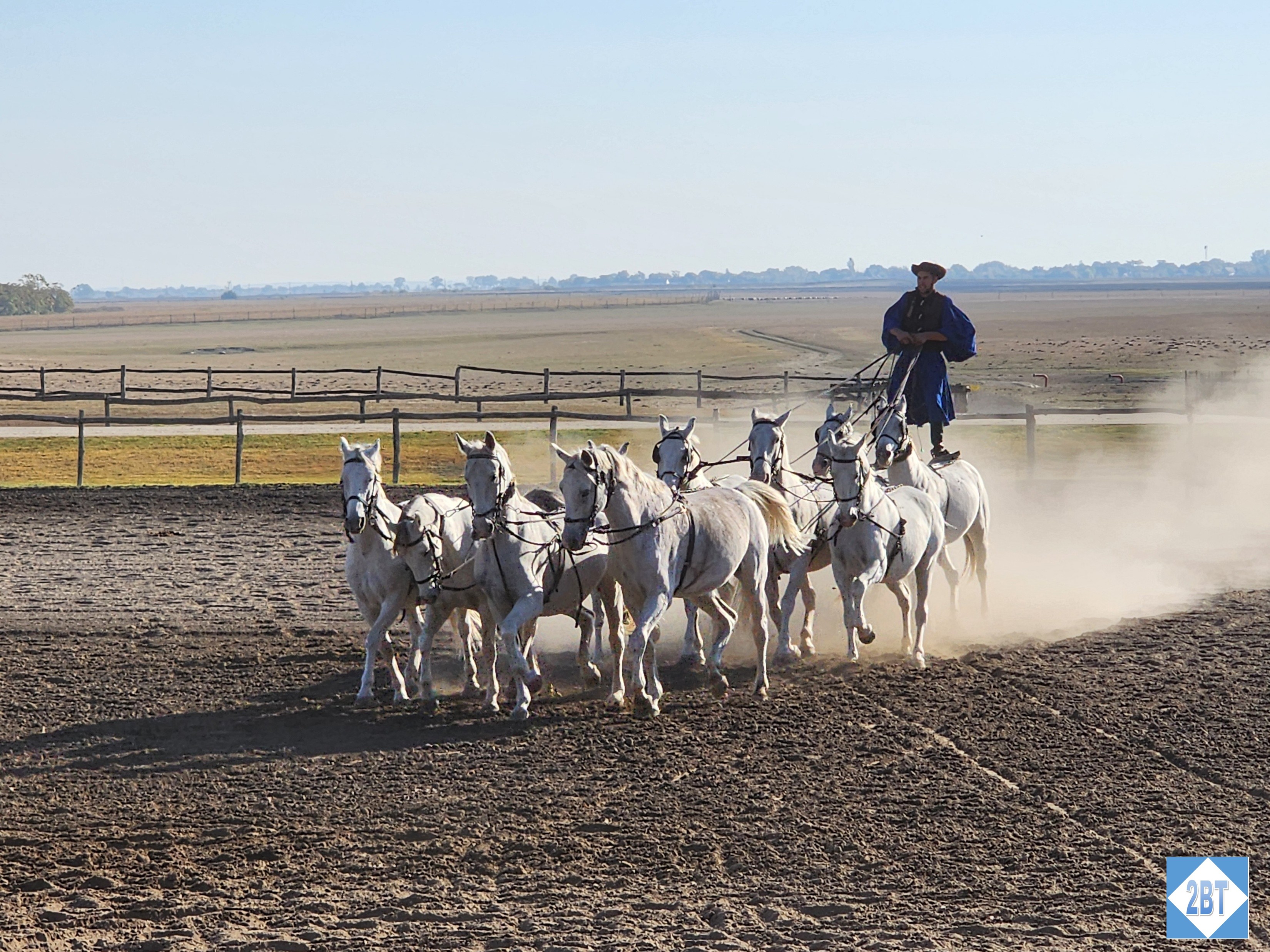
The Barn
After the show we had the opportunity to sample some of the local wine. As a non-drinker that didn’t do anything for me. But then we got to go visit the barn and have a look at some of their livestock. That proved to be quite educational! First we saw the pigs, but we’d seen pigs before.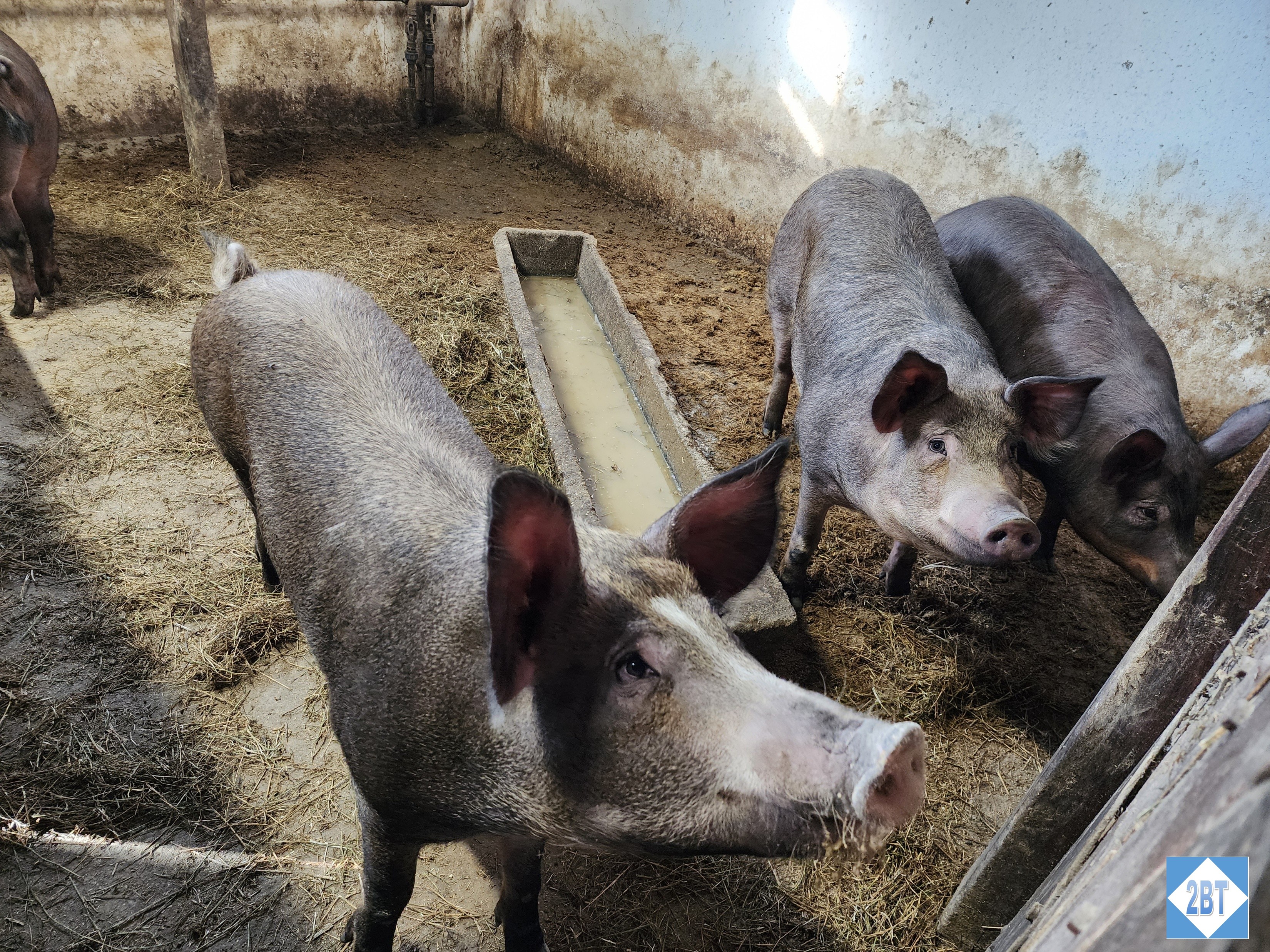
And we’d seen sheep before, but never any like this! This is a Hungarian Racka sheep, known for it’s long corkscrew-shaped horns. They’re native to Hungary and are raised for milk, wool, and meat.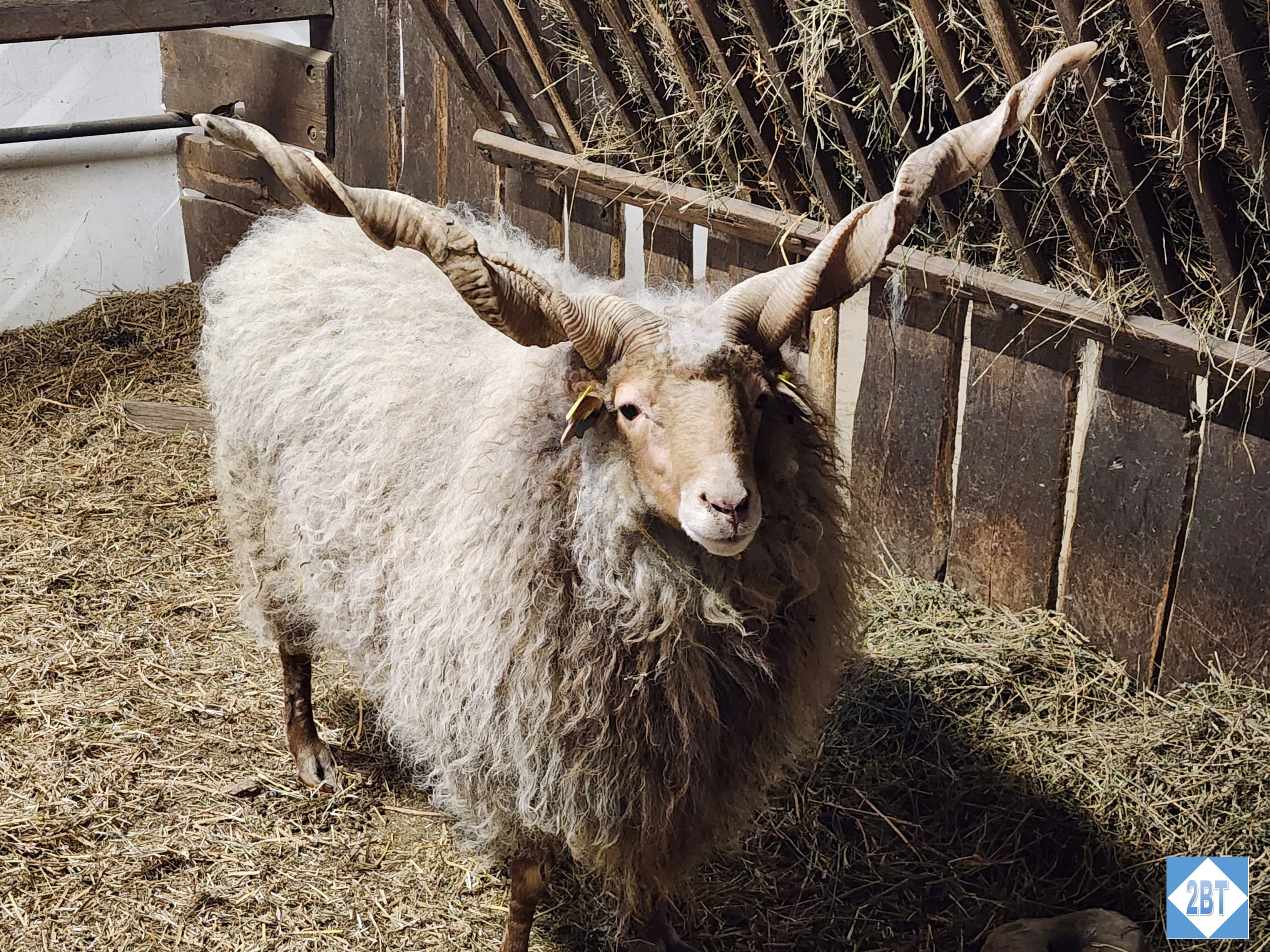
We got to see the Hungarian Greys and the white horses up close.


While there was only the one Racka sheep in the barn, we found quite a few more in an enclosure outside the main barn. These sheep are hilarious-looking!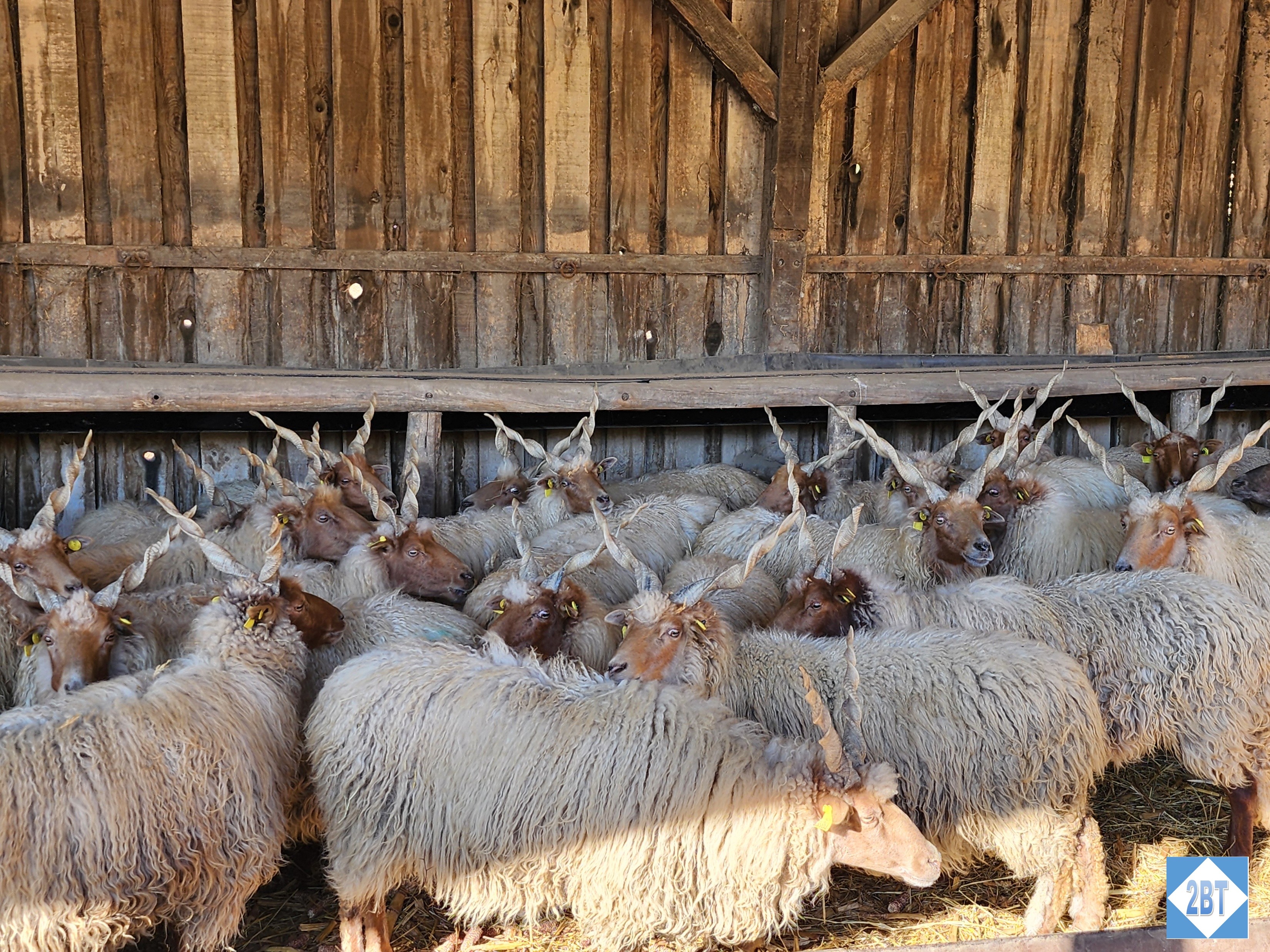
Kalocsa Cathedral and Archbishop’s Palace
Our last stop of the morning was in the town of Kalocsa where we visited the cathedral. The town was put on the map when King Stephen established the bishopric here in 1000 AD. As a result this small town has a beautiful cathedral and the Archibishop’s Palace (built in the mid-1760s) next door.
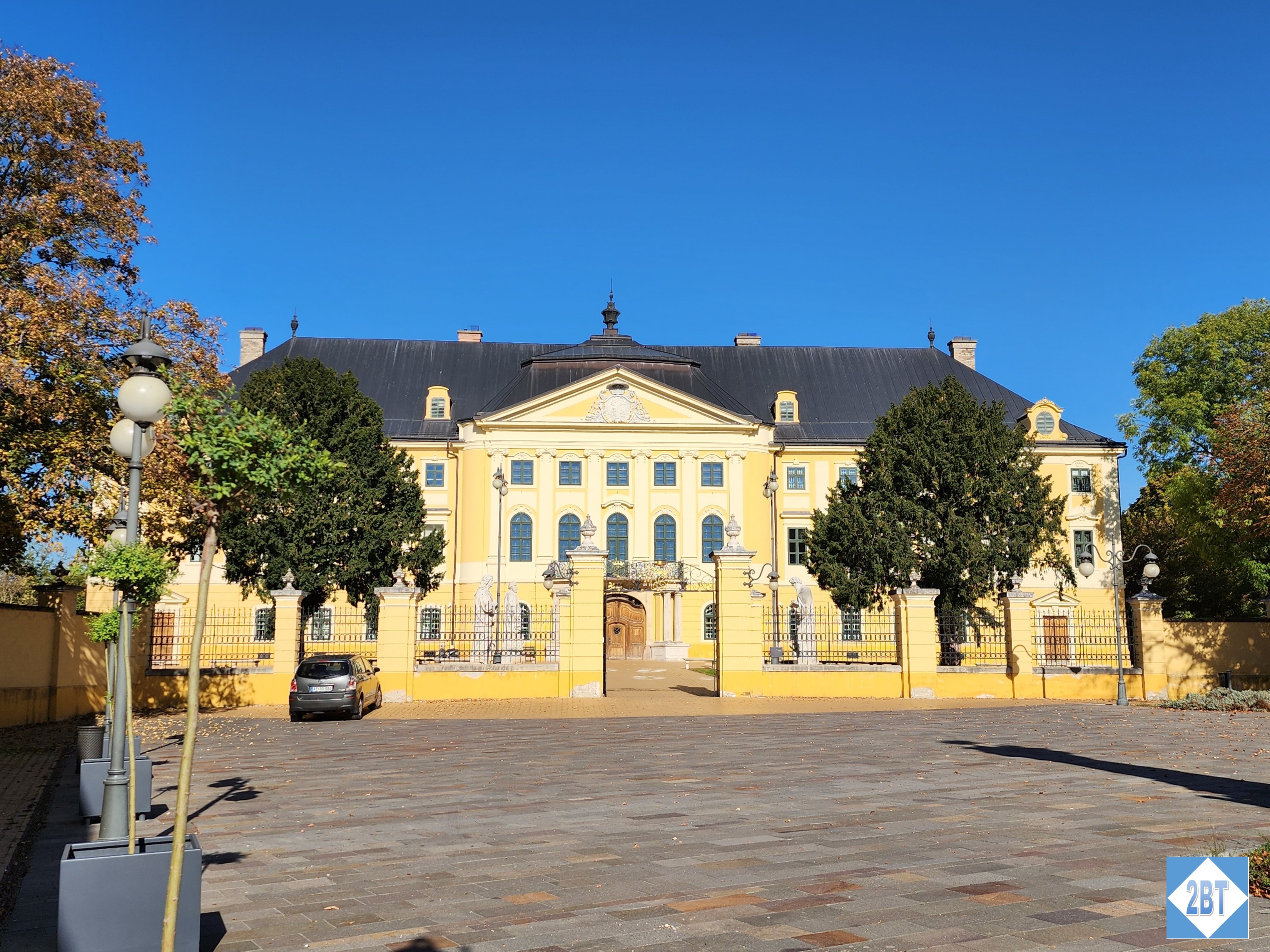
Kalocsa Archibishop’s Palace
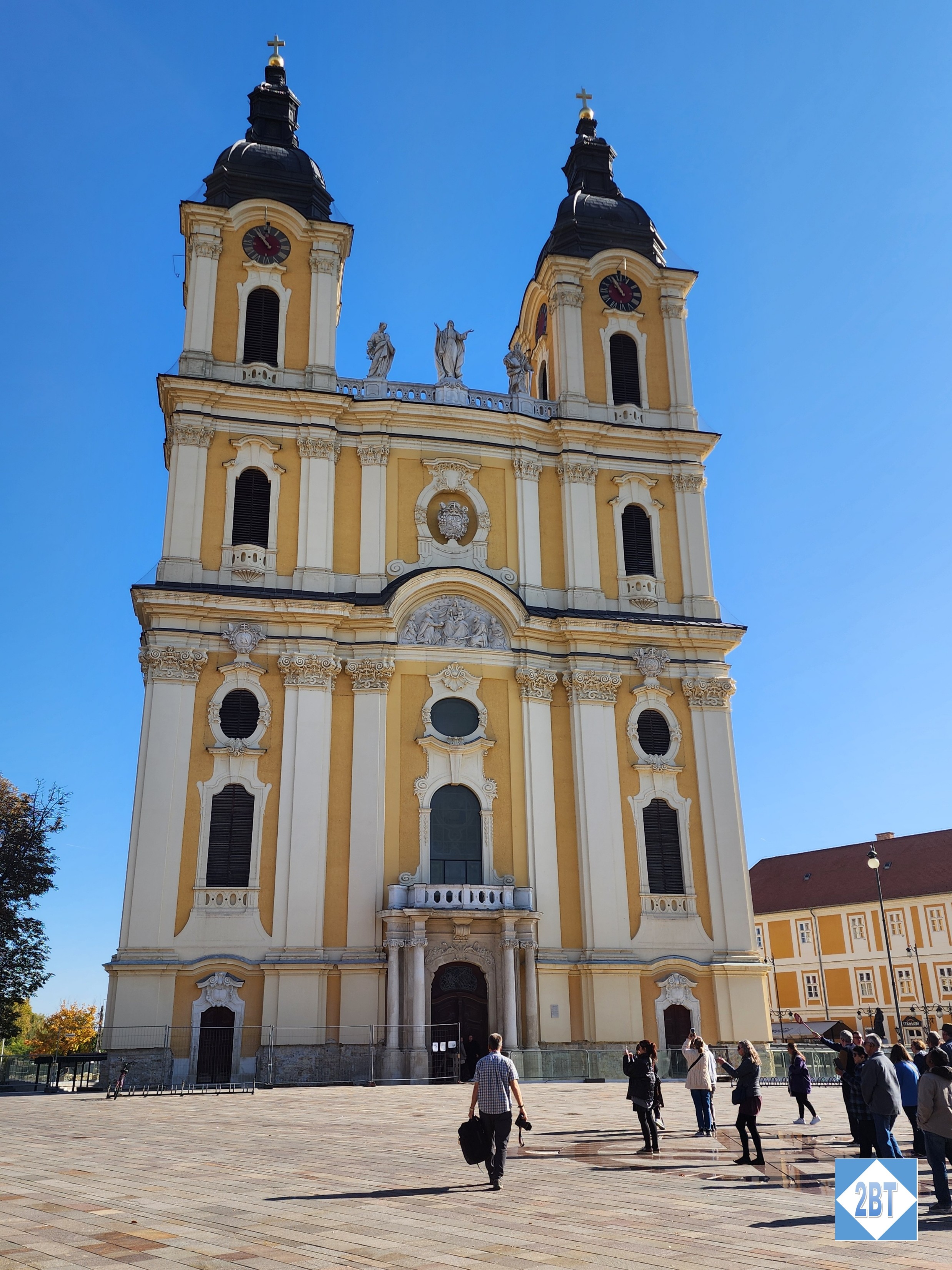
Kalocsa Cathedral
They’re both painted yellow, as is every building lining the square, because that was Empress Maria Theresa’s favorite color. The Archbishop’s Library is apparently quite impressive but we did not get to visit it.


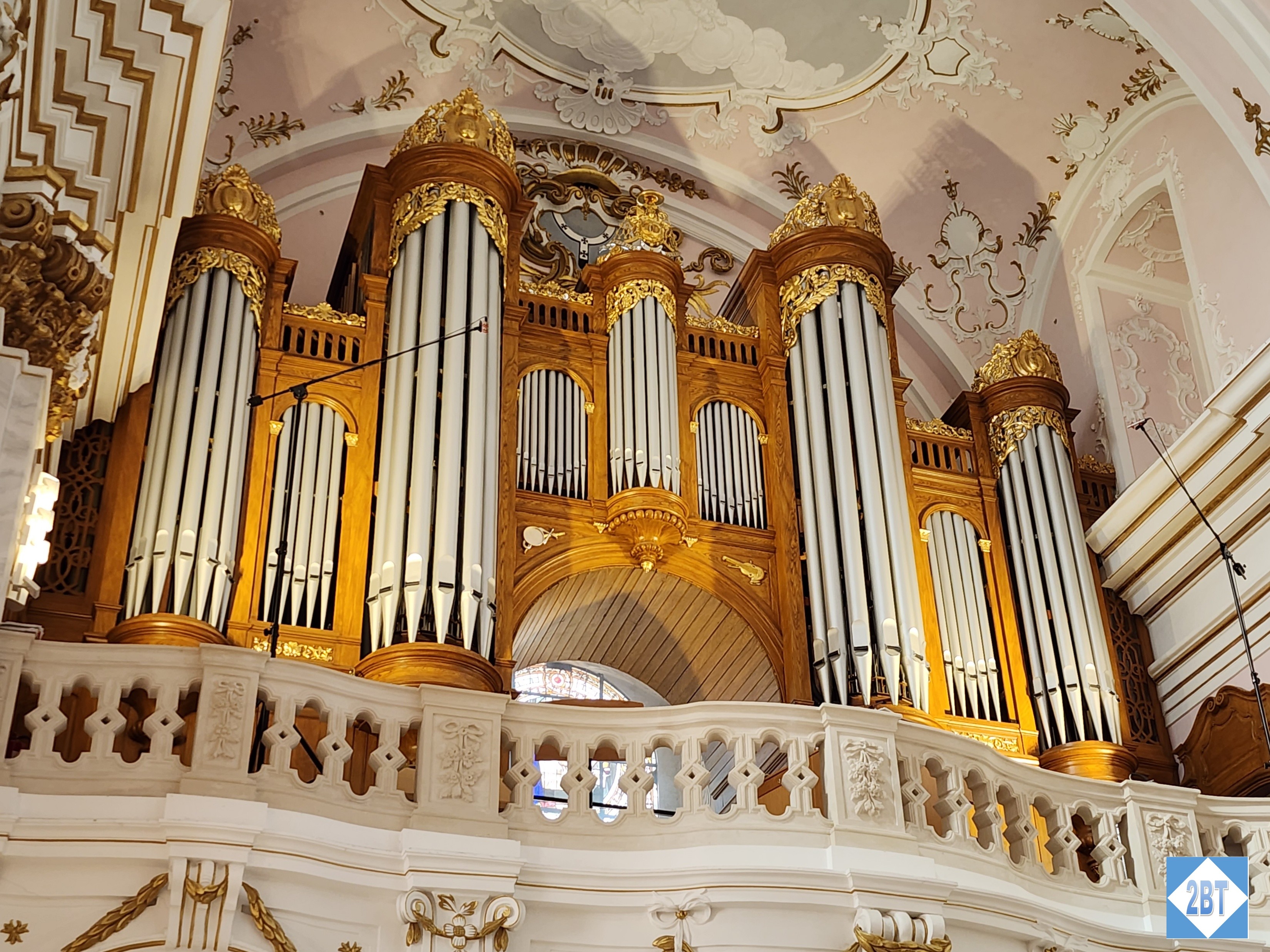
Kalocsa Cathedral Organ
In the end
I really enjoyed the csikós riding demonstration and seeing all the animals. Sometimes on these trips I can get a little tired of seeing the main church in each town but then again they are almost always beautiful. If you’re in the area I’d definitely recommend visiting the farm and if you have time, the Archibishop’s Library sounds quite interesting.


Recent Comments