Passage to Eastern Europe: Trip Introduction
Flight Review: LOT Polish Airlines 797-9 Business Class, ORD-WAW
Lodging Review: Hampton by Hilton Krakow
Our Time in Krakow, Poland
Flixbus from Krakow to Budapest
Lodging Review: Corinthia Budapest Hotel
Our Time in Budapest, Hungary
Our Time in Kalocsa, Hungary
Our Time in Osijek and Vukovar, Croatia
Our Time in Belgrade, Serbia
Our Time in Golubac, Serbia
Our Time in Vidin, Bulgaria
Our Time in Ruse, Bulgaria
Our Time in Bucharest, Romania
Lodging Review: JW Marriott Bucharest Grand Hotel
Flight Review: SWISS Airlines 777-300 ZRH-ORD
With Bulgaria and Romania being separated by the Danube, our ship didn’t have far to reposition during our last evening on board. We simply crossed the river and docked at the town of Giurgiu, Romania. The following morning we packed up our suitcases and the Viking crew took care of all of our bags while we boarded motor coaches for the drive inland to Bucharest, our final stop. Depending on traffic, it’s roughly a 70 to 90-minute drive to the country’s capital.
Romanian National Opera House
Our first stop was the home of both the Romanian National Opera and Ballet companies. The Romanian National Opera was founded in 1877 and in 1953 this building was created as their permanent home. The first opera to be performed was Tchaikovsky’s The Queen of Spades. On the next night, the first ballet performance of the company, Coppélia, took place at the same theater.
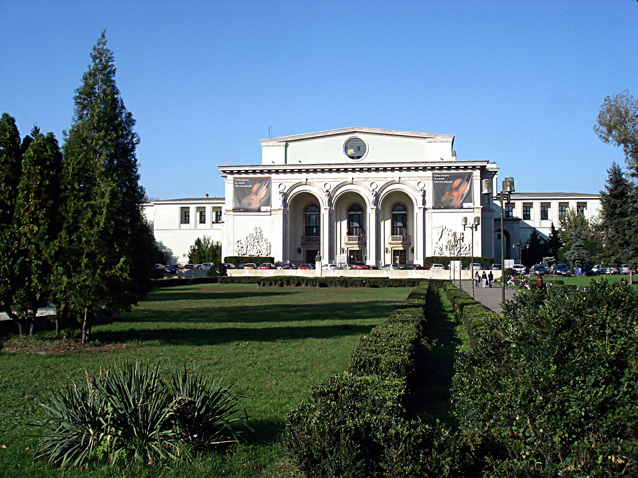
Photo credit: opera-online.com
In the lobby was this display of costumes by Romanian designer Doina Levintza, who has been the Opera’s chief costume designer for decades. She’s famous for her extravagant style. The red costumes are from productions like Carmen, Aida, and Turandot while the gold costumes are probably from Aida or La Traviata.


We then visited the main auditorium where they were preparing for a production. The hall is truly classic in style with its red velvet seats and curtains and the gold-colored trim.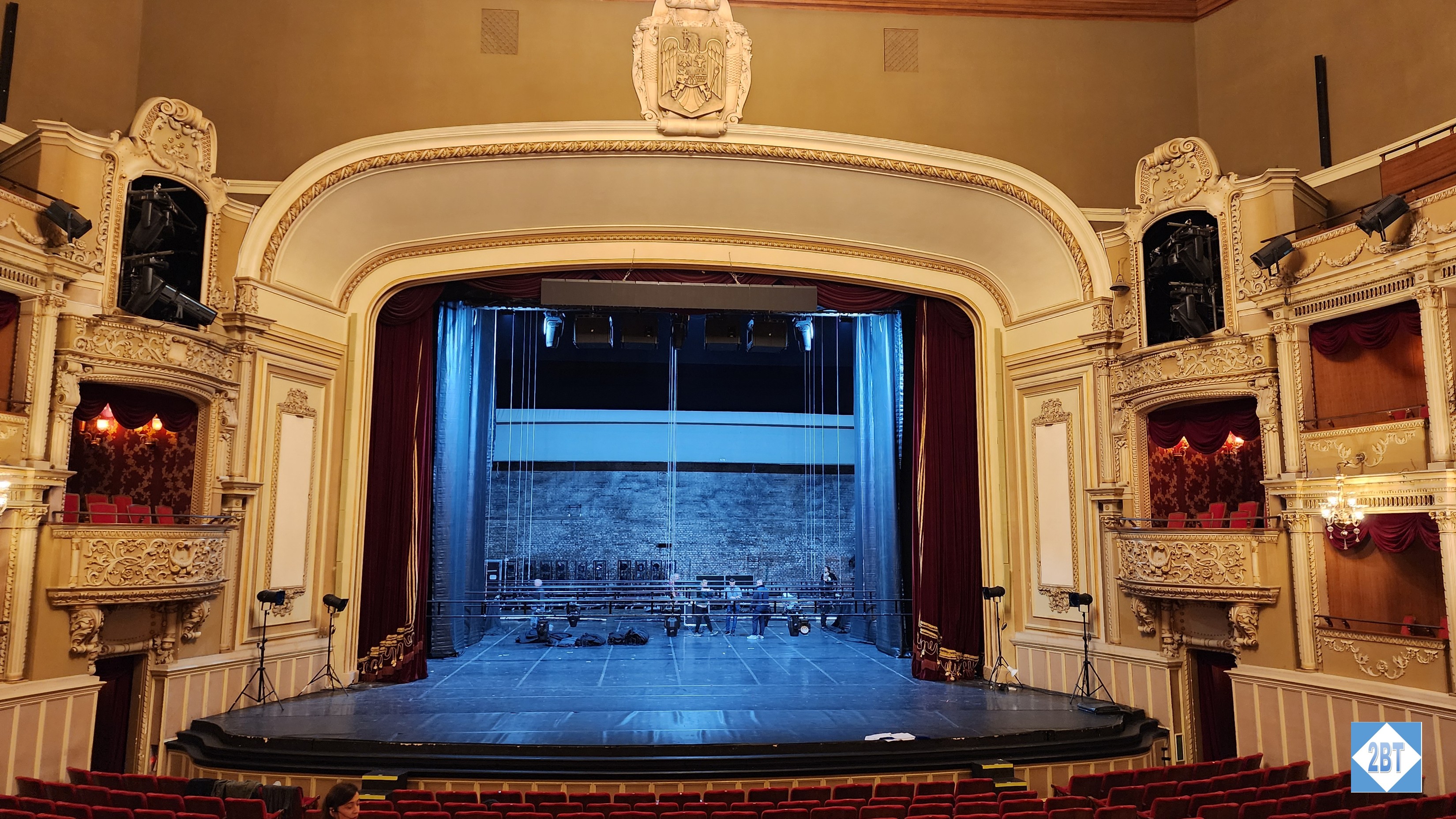


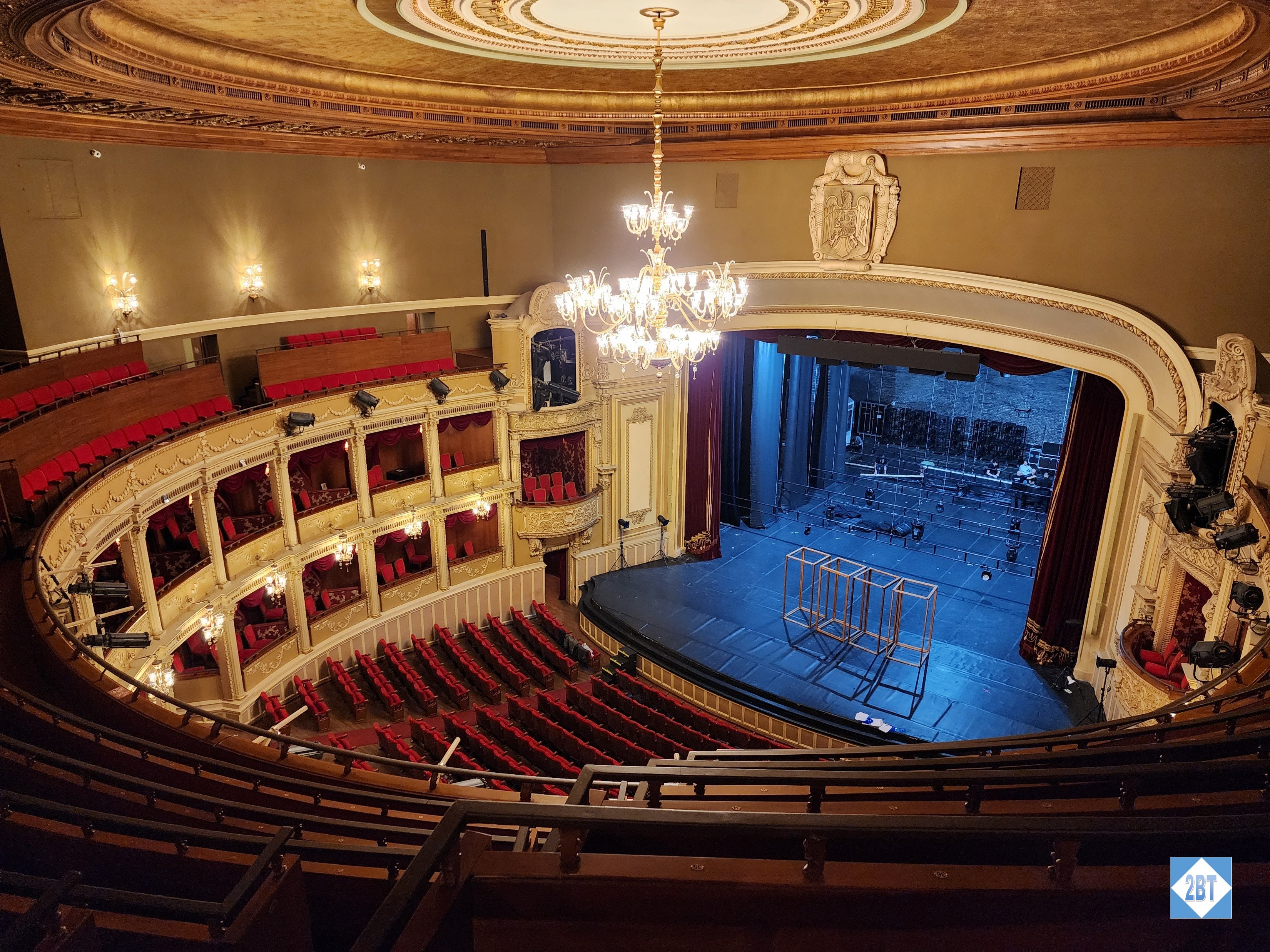
View from the very top
And of course there’s a magnificent chandelier overhead.


Above the stage is this massive Romanian coat of arms.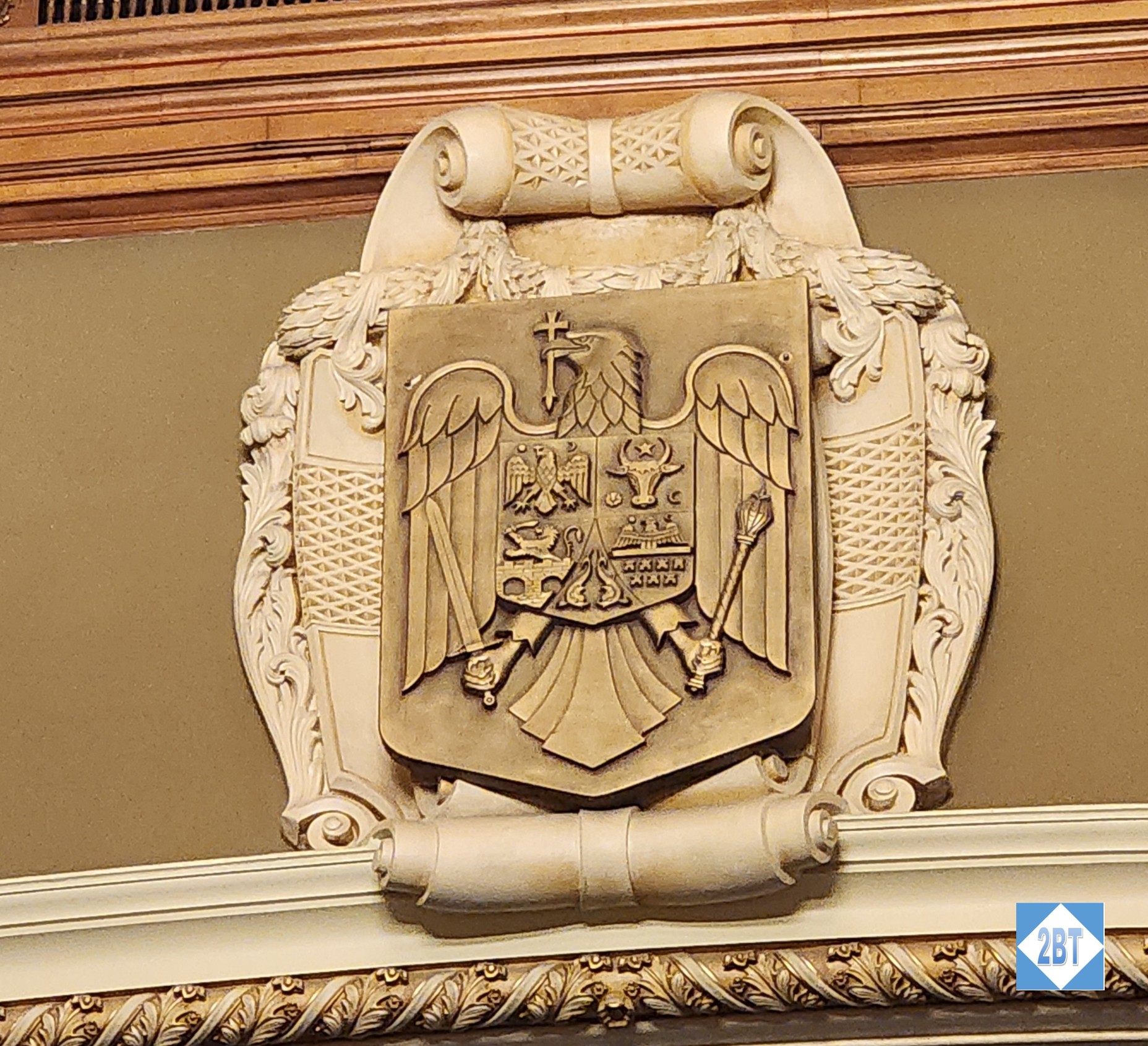
Revolution Square
Our next stop was Revolution Square, which is where the communist regime ultimately fell in December 1989. This is currently the Ministry of Internal Affairs building but in 1989 it was the Central Committee of the Romanian Communist Party. On December 21st of that year Nicolae Ceaușescu stood on its balcony (visible behind the shoulders of the seated statue) and gave a speech meant to calm the growing protests of a population unhappy with the leadership and communism. Instead, it triggered the Romanian Revolution. Ceaușescu and his wife, Elena, were forced to take cover inside the building. The next morning the unrest had spread throughout the country and the Ceaușescus fled via helicopter though the military eventually forced them to land and they were captured. On December 25th there was a sham trial in which they were found guilty of illegal gathering of wealth and of genocide. They were found guilty and were immediately taken out and shot. Shortly thereafter, capital punishment was abolished in the country.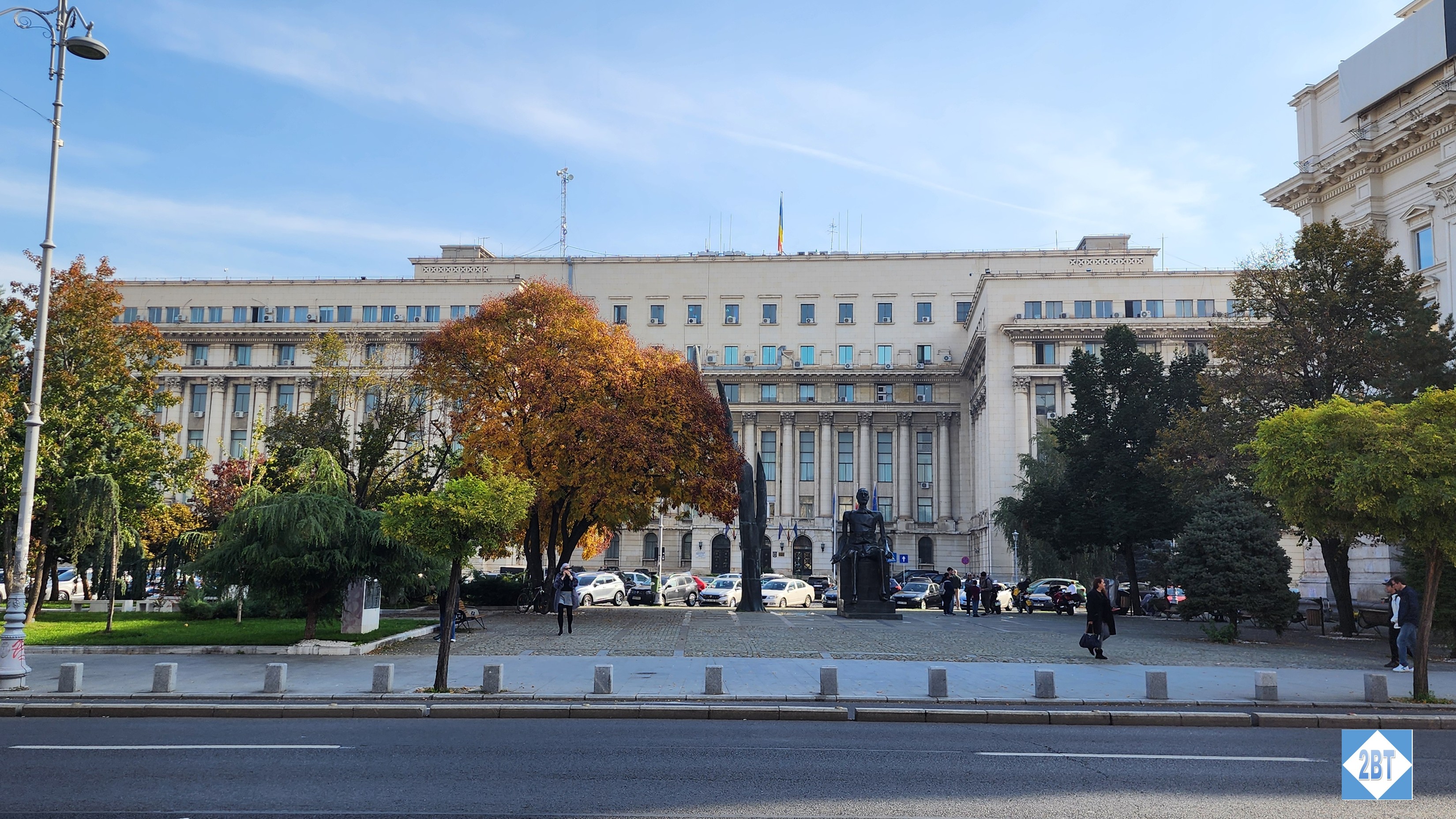
Until December 1989, this area was known as Palace Square because the former royal palace, now the National Museum of Art of Romania, was the predominant feature.
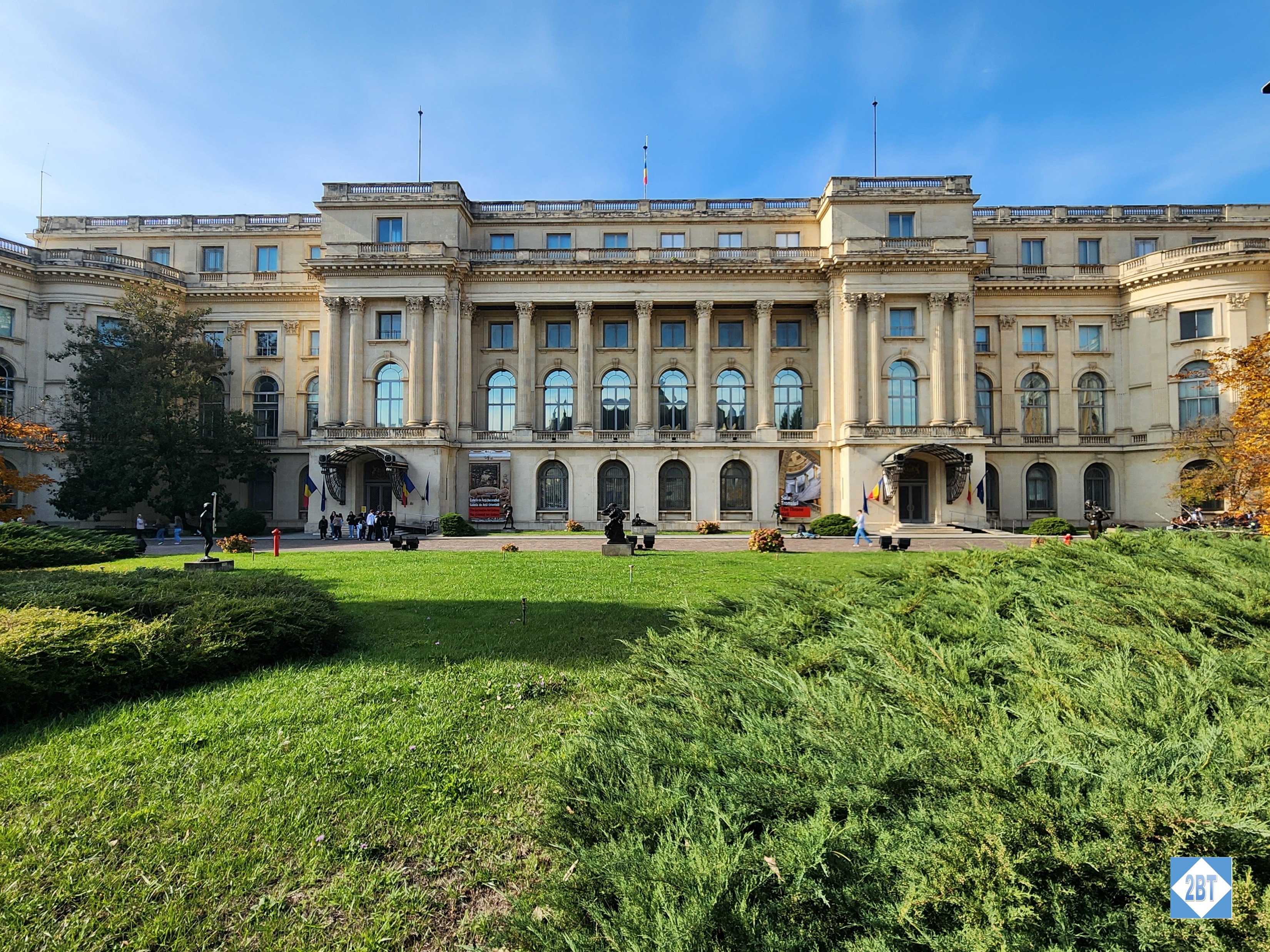
National Museum of the Art of Romania
This is the Memorial of Rebirth and not, as some locals apparently call it, a potato on a stick. The white obelisk stands for purity and the hope of rebirth while the dark, tangled sphere represents the suffering and chaos of the revolution. While some have criticized its abstract style, it’s a reminder of the important events that took place here in 1989.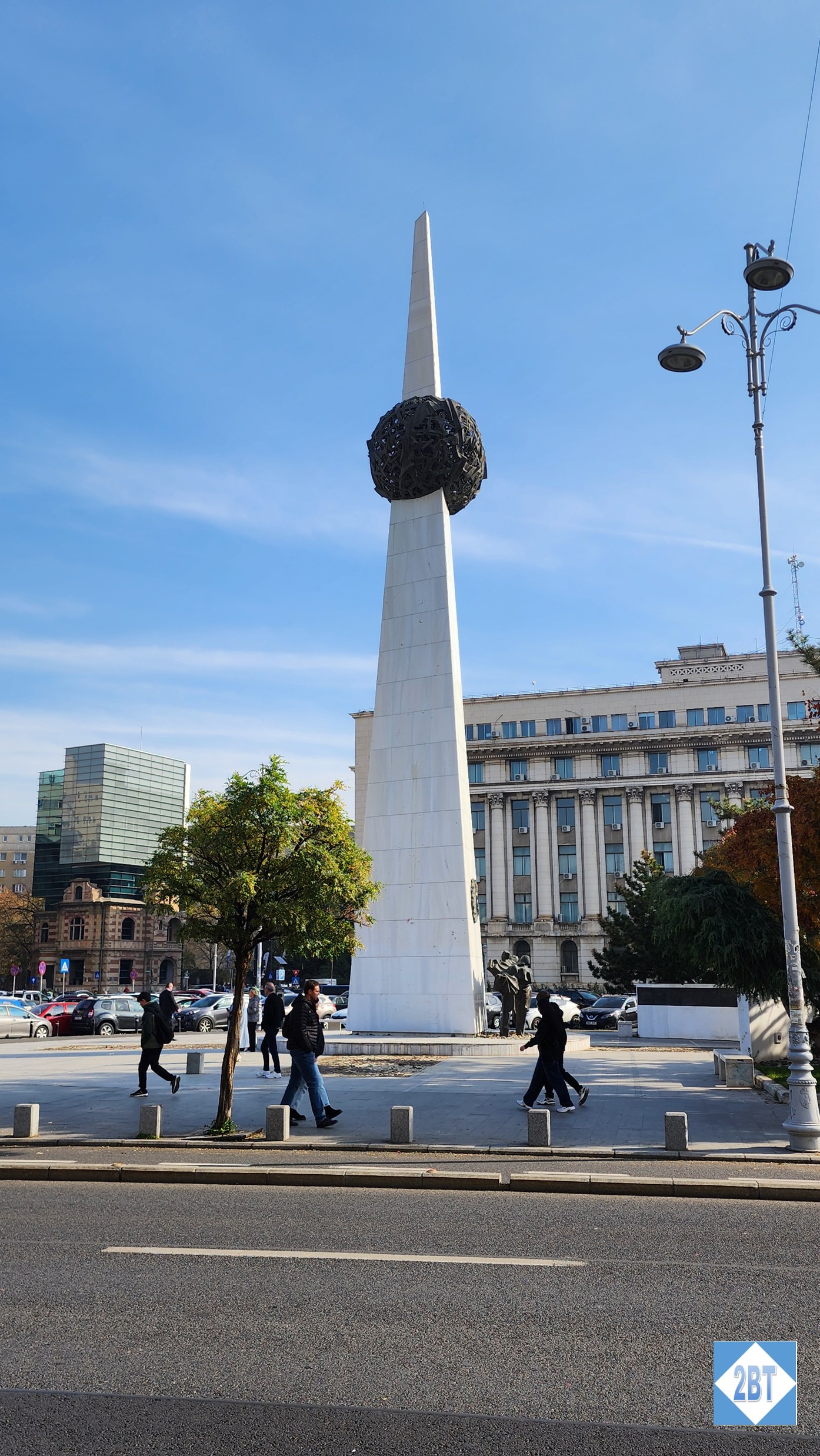
Also in this area is the library of the University of Bucharest and this statue of King Carol I (1866-1881) is in front of that building.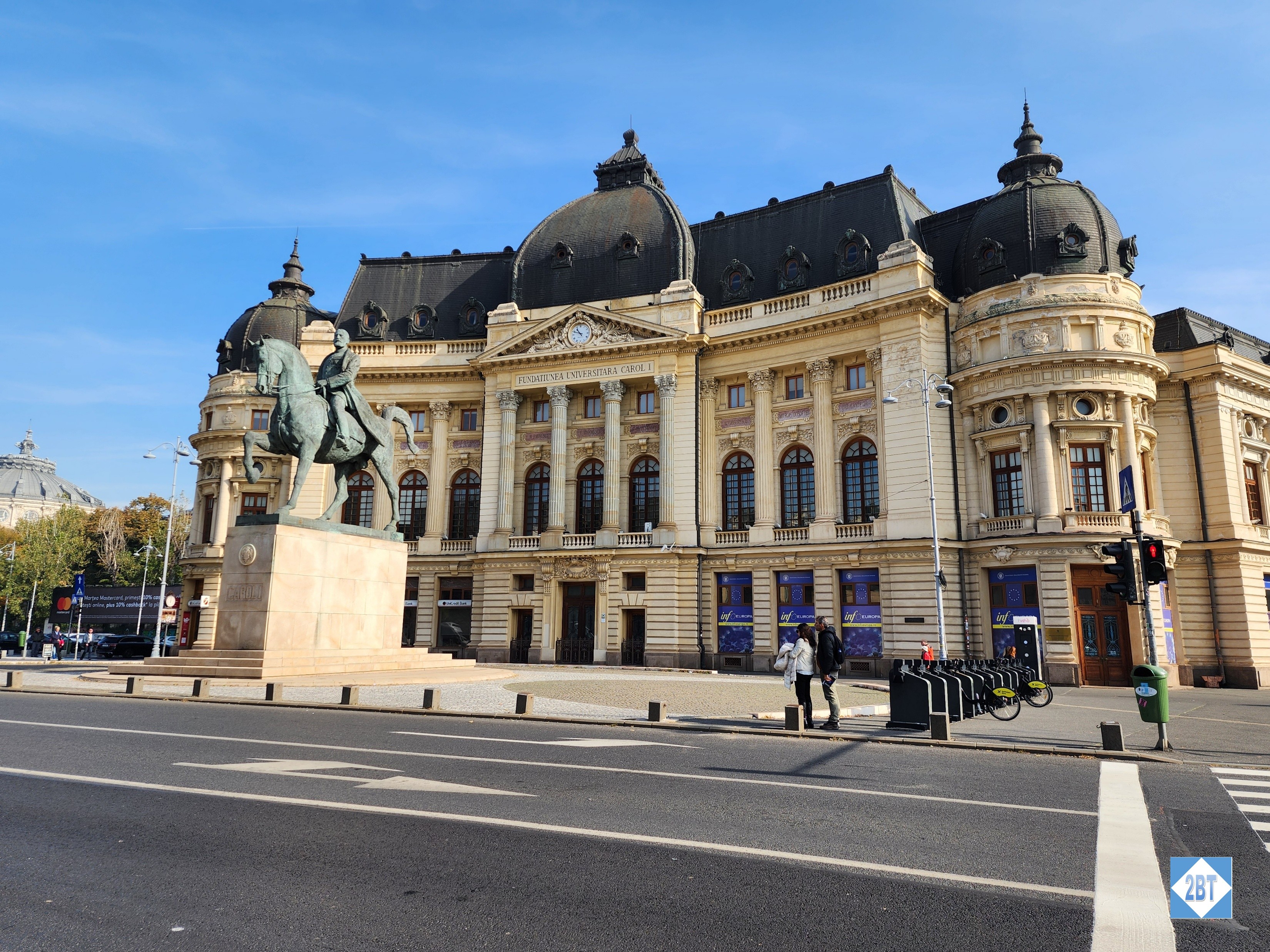
This crazy-looking building is the Union of Romanian Architects Building. The lower part dates to the 19th century and was part of the Senate Palace that was damaged during the 1989 revolution. The upper portion was added in the early 2000s. The group wanted to keep the contrast of old vs. new and revitalize the building. It’s certainly different!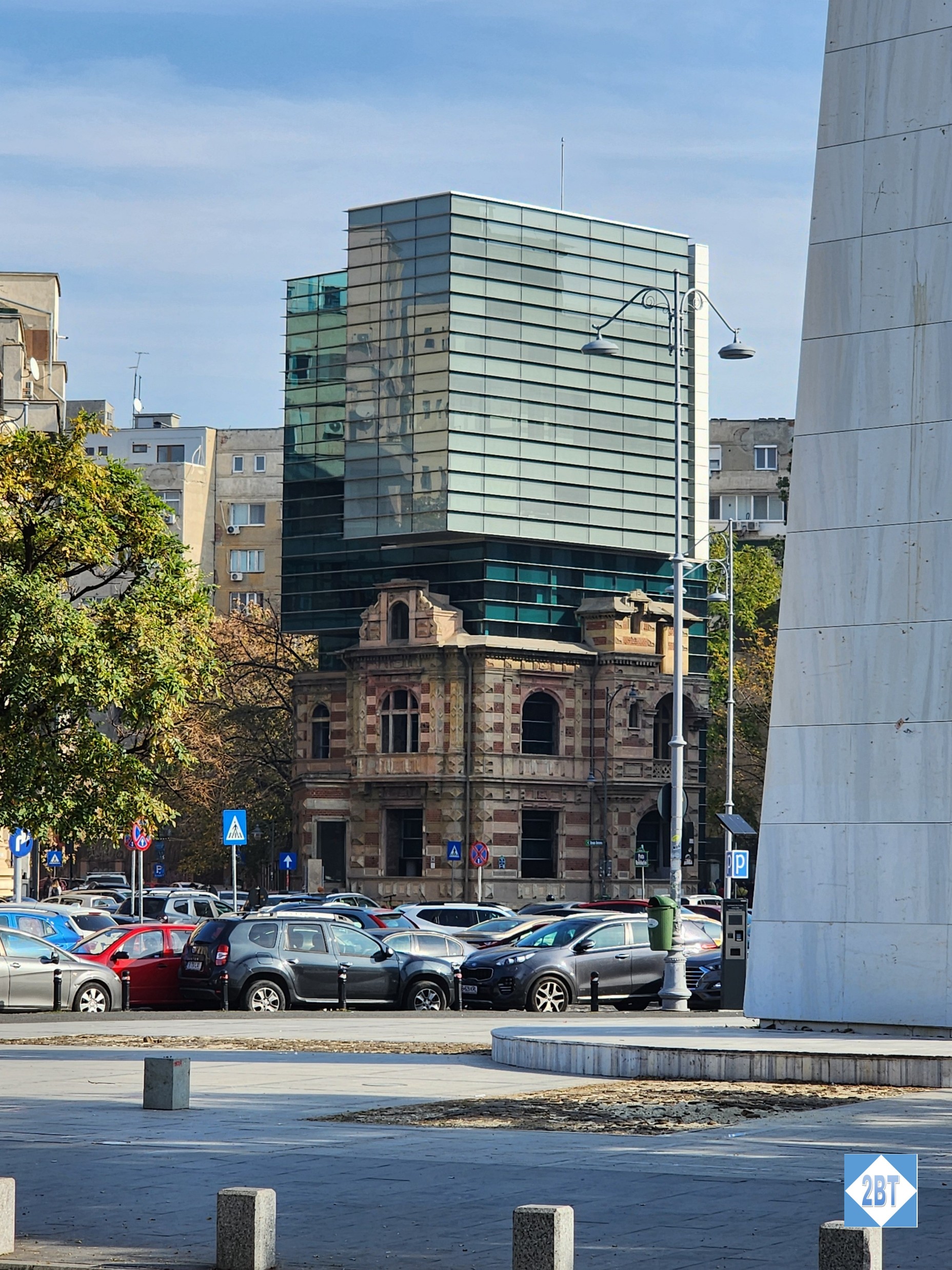
Casa Ceaușescu
I don’t have any photos of this site because they’re not allowed indoors where the most interesting things are. When the Ceaușescus lived in this house, there was a lot more land around it. That land has since been sold which makes it difficult to get a good photo of the building itself.
The interior of the house is pretty much frozen in the 1980s, as it was when the family lived here. Each of the adult children had their own fairly small apartments and the house is much larger than it first appears to be. We were allowed to go into the master suite and into their massive walk-in closets with some of their clothes on display. Throughout the house was a lot of gold leaf and designs with peacocks as those were a favorite of the couple. A couple of live peacocks roamed the grounds. The one thing I remember most clearly is the indoor pool area. The mosaic tiles were made of hand-cut Venetian glass and had real gold leaf tesserae. The designs were customer floral and peacock motifs and the gold leaf makes the wall sparkle as it reflects the water. It’s just crazy-lavish for a private residence.
Our Bucharest guide was a Korean-born woman who spoke great English and was married to a Romanian man she’d met when they both worked on a cruise boat. They now live in Bucharest full time and just the week before our visit, her husband took his father to visit Casa Ceaușescu for the first time. The father was astonished because even after all this time he had thought the Ceaușescus just lived in a regular house like a good communist should. Even today, it seems a majority of Romanians felt their life was better under his reign and would vote for him if they could. But certainly not everyone feels that way. When the Ceaușescus were arrested and shot, the story goes that Elena received twice as many bullets as Nicolae because she was quite nasty to those who worked for the family and the government. This place is definitely worth a visit just to see the house as it was and if you even remember a little bit about the politics of the time I think you’ll find it fascinating.
Of their children, only the oldest, Valentin, a nuclear physicist, survives. Daughter Zola, a mathematician, died of cancer in 2006, and the youngest, Nicu, a physicist, died in 1996 of cirrhosis. While Valentin wanted nothing to do with politics, Nicu had been considered to be the heir apparent to his father.
The Triumphal Arch
Bucharest has its own triumphal arch and this one commemorates Romania’s victory in the First World War and the coronation of King Ferdinand I and his wife Marie. The original version was a hurriedly-constructed wooden arch built in 1878 after Romania obtained its independence from the Ottoman Empire. An arch with a concrete skeleton with plaster was constructed in 1922 but it deteriorated badly and the current one, which certainly has influences from the arch in Paris, was inaugurated in 1936.


Old Town Bucharest
Then, finally, it was time for lunch and we stopped at Caru’ cu bere, a restaurant built in an old brewery. I don’t have photos as it was very crowded but the interior of the building is beautiful and like many restaurants in the area, they have al fresco dining in front.
The restaurant is in the city’s Old Town so after lunch we had a short walking tour of the area. That included the Stavropoleos Monastery which dates to the 18th century. At one time it had an inn and annexes but they were demolished at the end of the 19th century as they were in disrepair due to earthquakes in the area.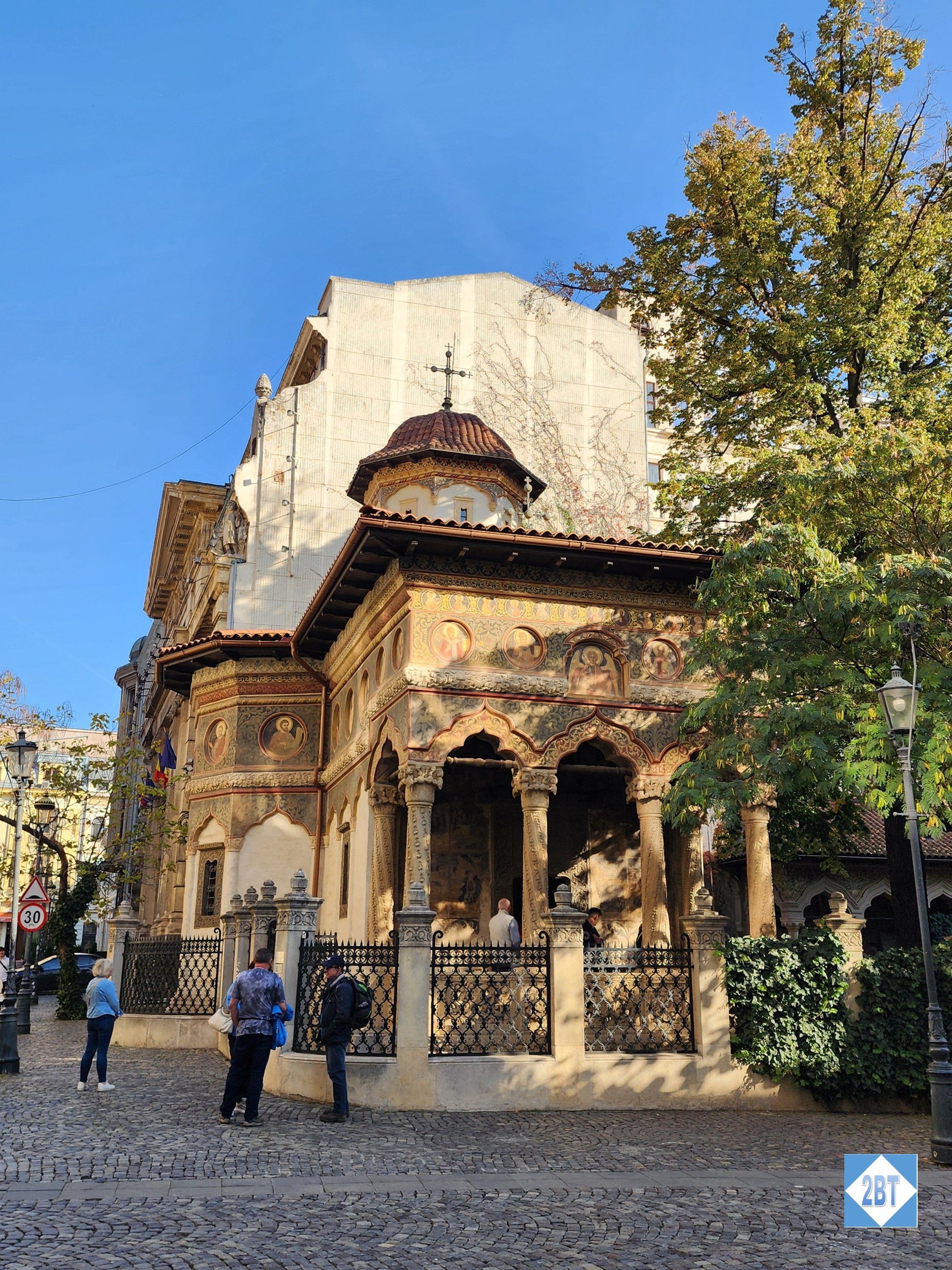
This lovely building is the headquarters of the National Bank of Romania. Construction was completed in 1880 though it was expanded in the early 20th century.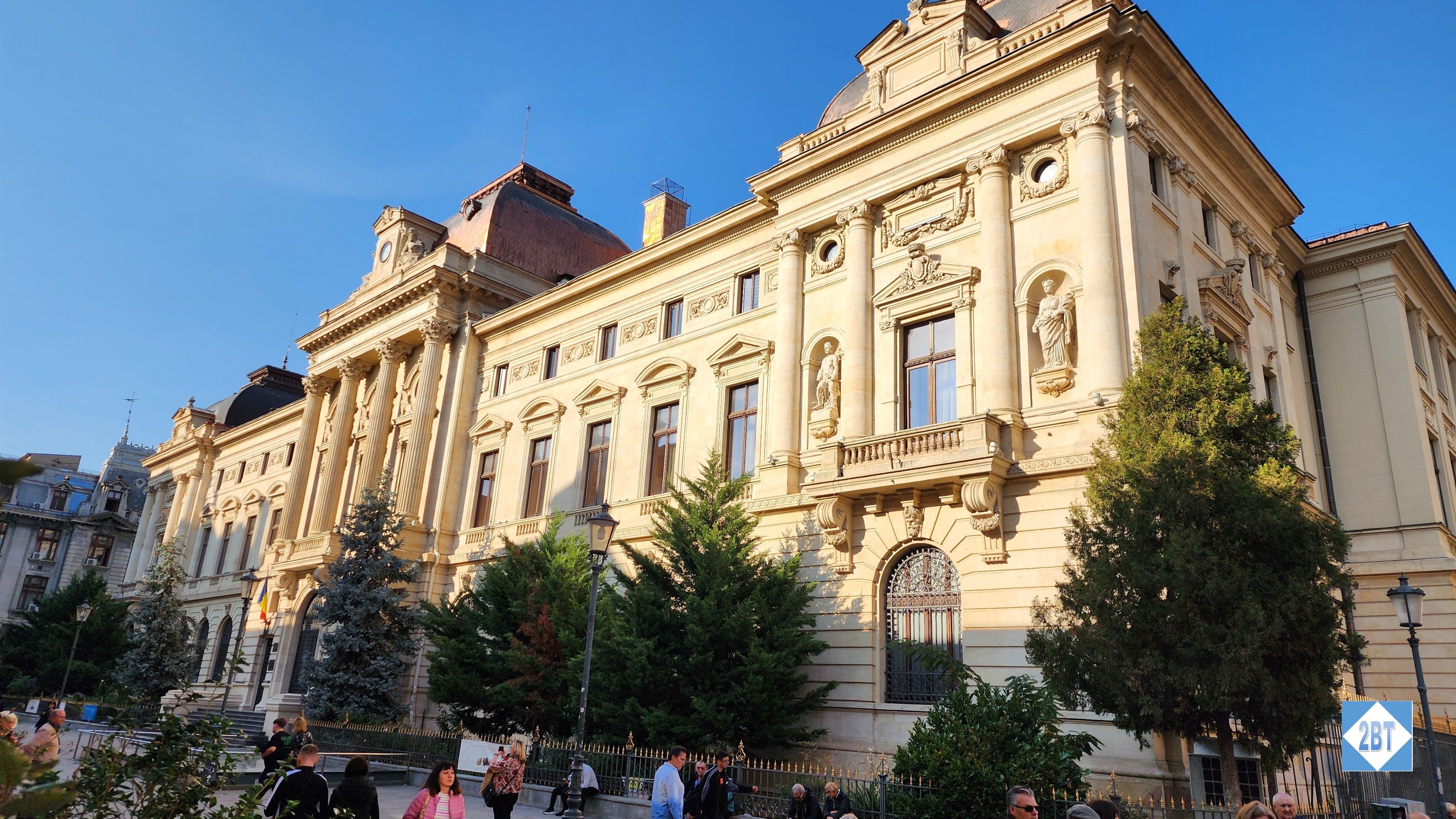
Despite looking (to me, at least) like a train station, this is the CEC Palace, the home of the Savings Bank of Romania. Built 1897-1900 it was designed by a French architect and the similarity to a train station was intentional.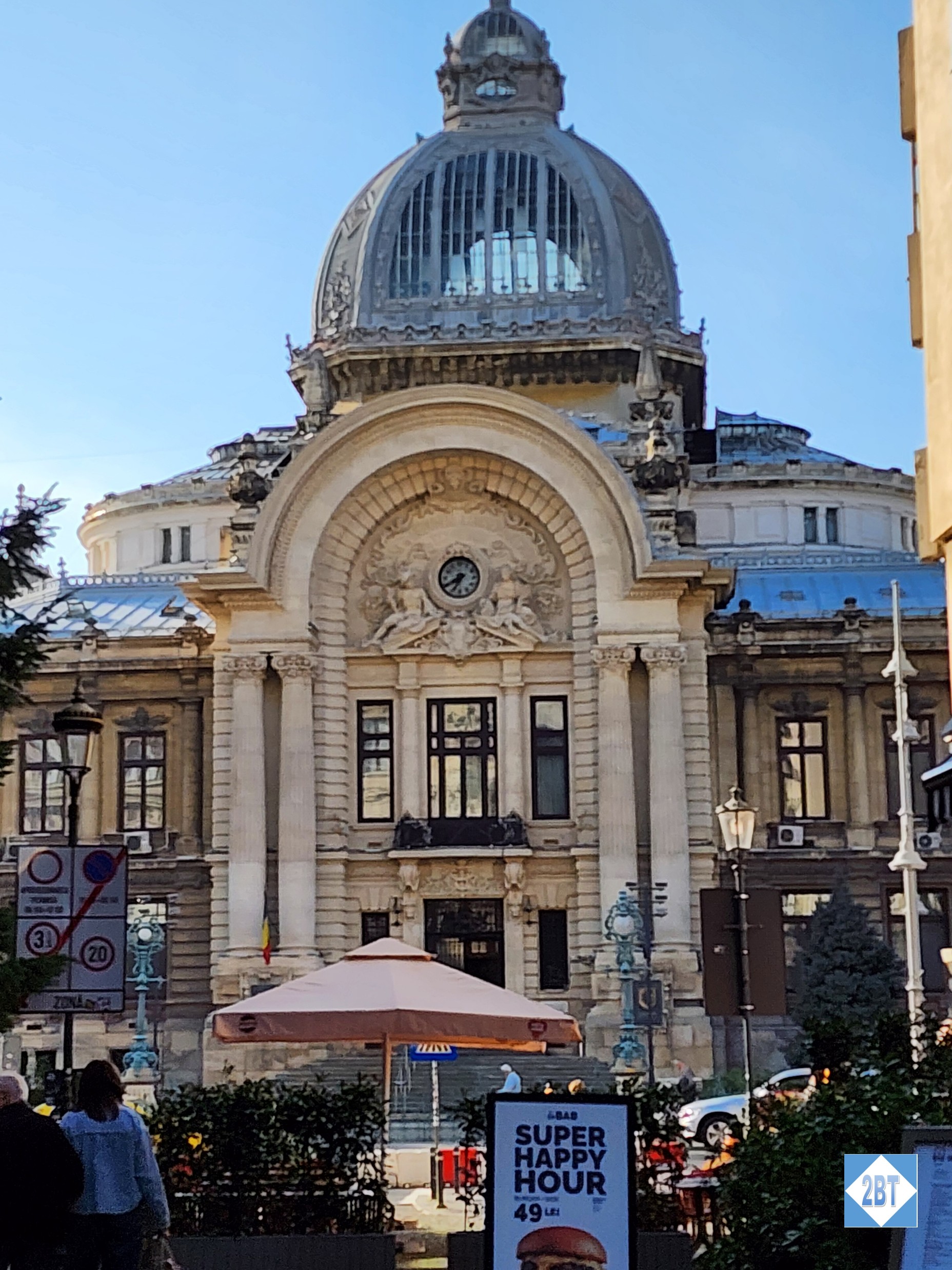
Palace of the Parliament
Before we reached our hotel we had one last stop at the Palace of the Parliament, the world’s largest civilian administrative building. While it’s not terribly tall above ground (276 feet), it also reached 302 feet below ground. Overall it measures 3.93 million square feet and weighs in at an astonishing 9.04 billion pounds. It was built on the orders of Nicolae Ceaușescu and over 700 architects worked on it. It took 13 years to complete, from 1984 to 1997.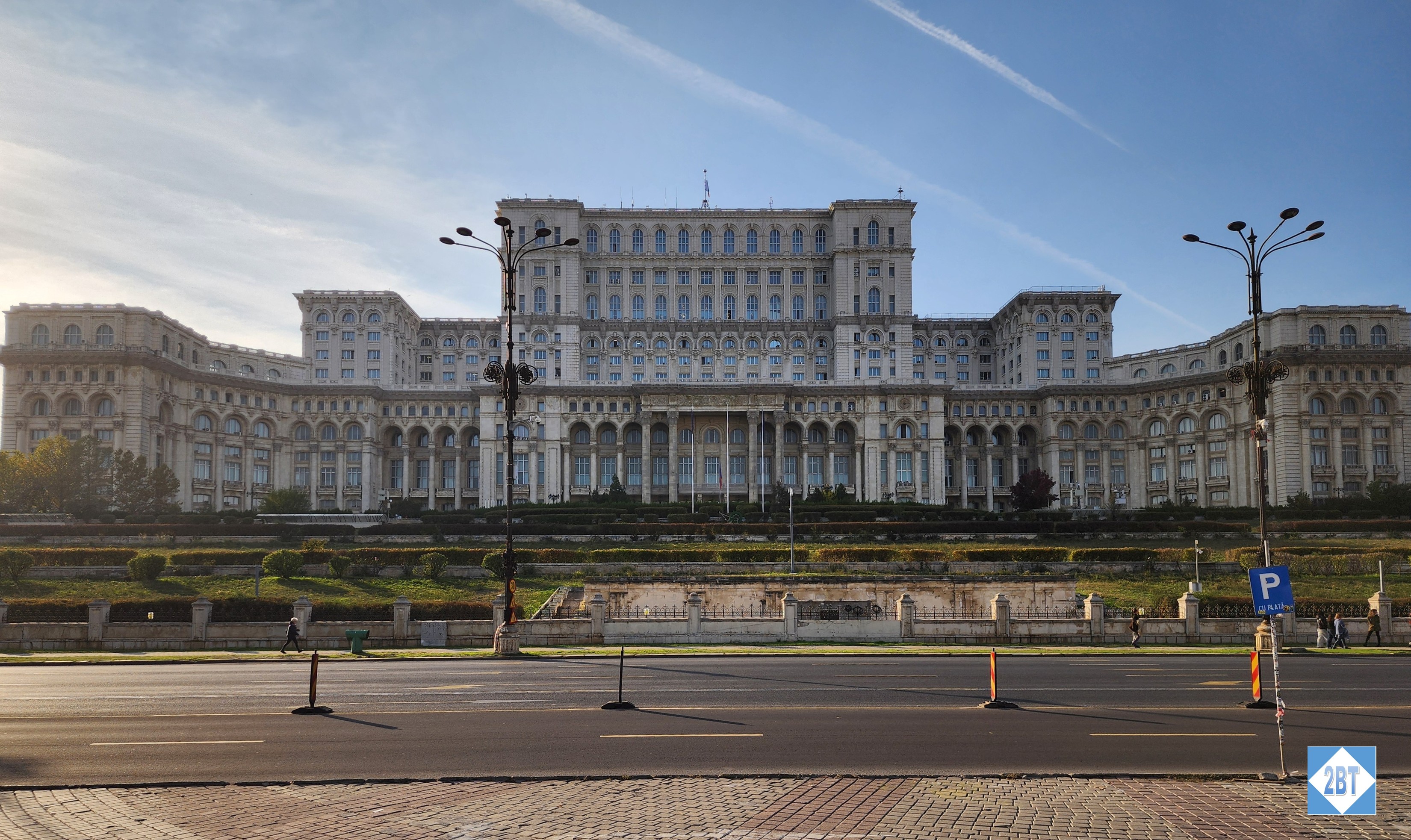
It houses not only the Parliament (both the Chamber of Deputies and the Senate), but also the National Museum of Contemporary Art. Since 1998 it’s house the Regional Southeast European Cooperative Initiative Centre for Fighting Transborder Crime.
Cathedral of the Salvation of the Romanian People
This church was right next door to our hotel and though the church was consecrated in 2018 (for Romania’s centennial) there was still construction ongoing. But the golden domes gleamed in the sunlight and our room gave us a great vantage point after dark.


In the end
I found Bucharest a fascinating place and could have easily spent another day or two there. While we did not opt for the tour of the Parliament building, from talking with those who went on that tour, it was quite something inside.
 2B Traveling
Recent Comments