Passage to Eastern Europe: Trip Introduction
Flight Review: LOT Polish Airlines 797-9 Business Class, ORD-WAW
Lodging Review: Hampton by Hilton Krakow
Our Time in Krakow, Poland
Flixbus from Krakow to Budapest
Lodging Review: Corinthia Budapest Hotel
Our Time in Budapest, Hungary
Our Time in Kalocsa, Hungary
Our Time in Osijek and Vukovar, Croatia
Our Time in Belgrade, Serbia
Our Time in Golubac, Serbia
Our Time in Vidin, Bulgaria
Our Time in Ruse, Bulgaria
Our Time in Bucharest, Romania
Lodging Review: JW Marriott Bucharest Grand Hotel
Flight Review: SWISS Airlines 777-300 ZRH-ORD
While we’d been to Croatia before, it was always on the country’s west coast. Twice we’d visited Dubrovnik and the surrounding area and on our last Mediterranean cruise we’d had an unscheduled stop in Zadar. Our port on this date was Vukovar (VOO-koh-var) which is in the far eastern part of the country. We’d also visit Osijek (OH-see-yeck) which was not terribly far away on the Drava River. Our included morning tour saw our boat’s passengers divided into four groups. Two groups visited local residents first while the other two groups visited a local church and then the groups swapped activities.


Osijek
Our group did the home visit first. As there were about 15-20 people in our group Viking had arranged for each group to visit a local B&B so there would be space for all of us. We visited with the proprietor and she told us about life in the area and living through Croatia’s War of Independence. She had baked us some treats and had a local wine which everyone seemed to enjoy. I didn’t take any photos because really, we were just sitting around in a large kitchen in this lady’s home and it wasn’t particularly remarkable.
Our next stop of the morning was the Church of the Glorious Name of Mary (Crkva Imena Marijina) in Osijek. We took in the beautiful surroundings and were treated to a short concert, which was lovely.


We then walked around part of Tvrđa (Citadel) which is the Old Town Osijek. The origins of the fort date to the defeat of the Ottomans in 1687, though construction didn’t start until 1712. By 1735 it was complete and was the largest and most advanced Habsburg fortress on the border with the Ottoman Empire.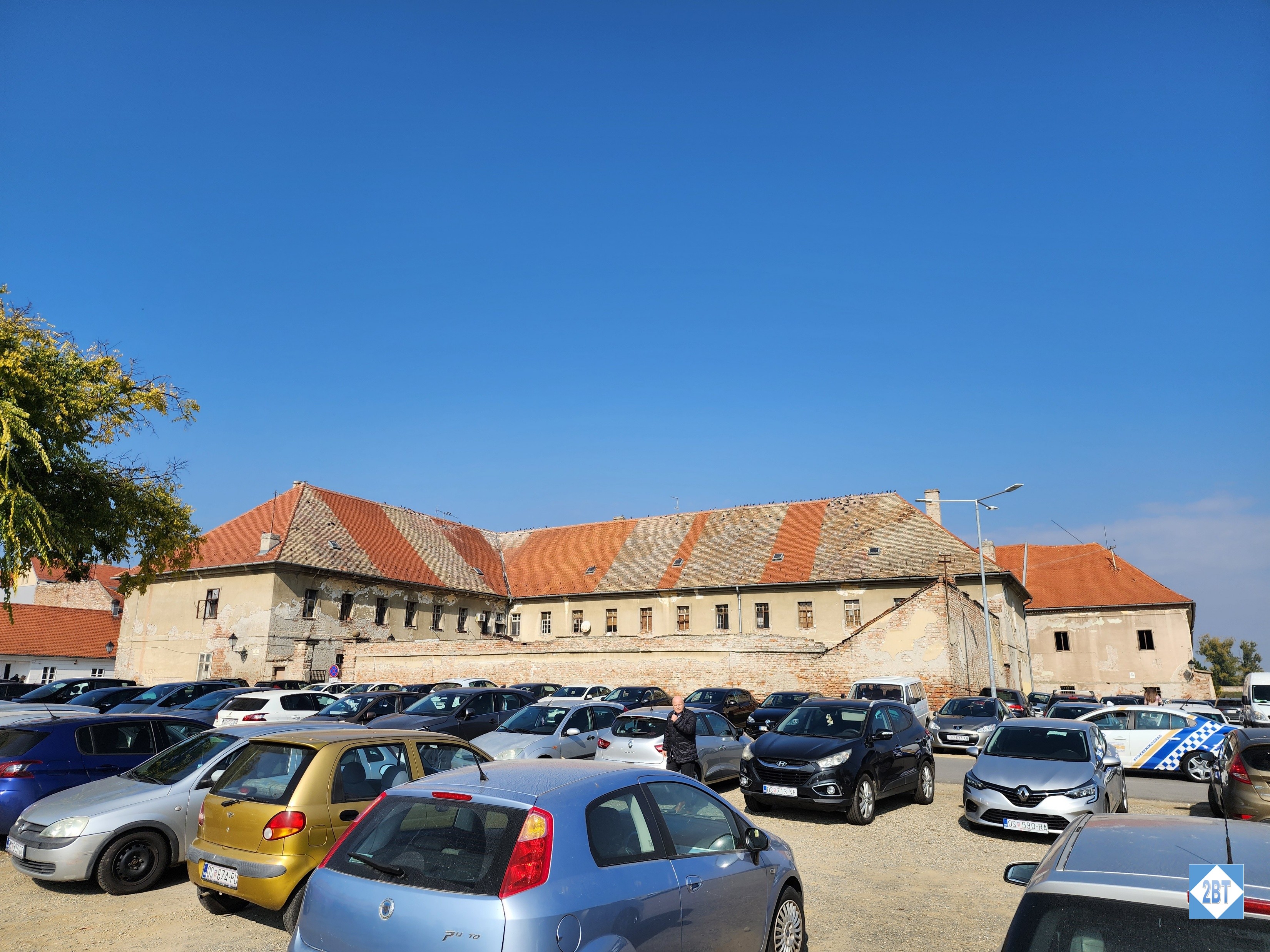
It had four main gates, one on each side, and we passed by one of them.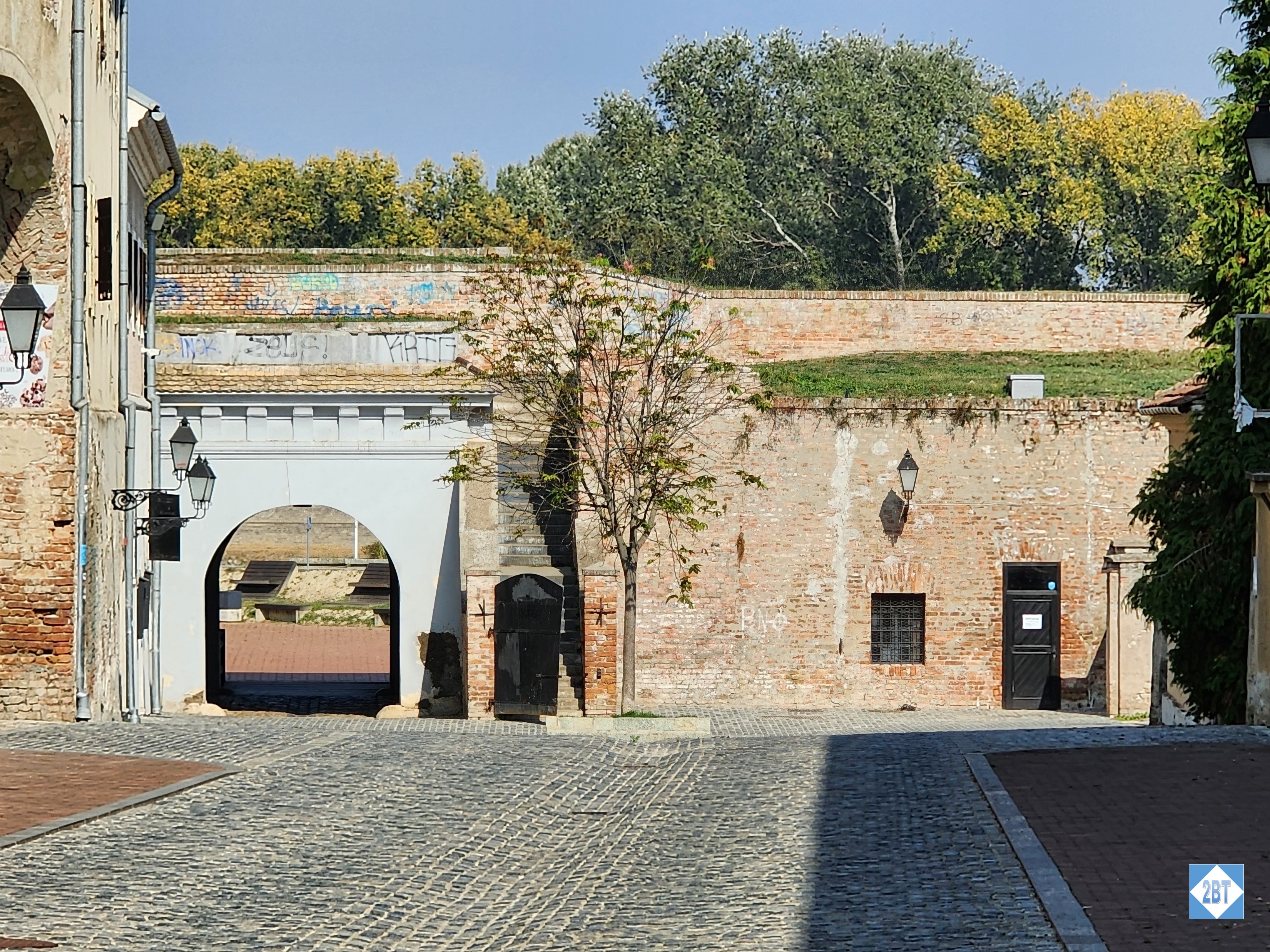
This is the Holy Trinity Statue, also known as the Holy Trinity Plague Column. It was erected in 1729-30 to protect the city from the plague.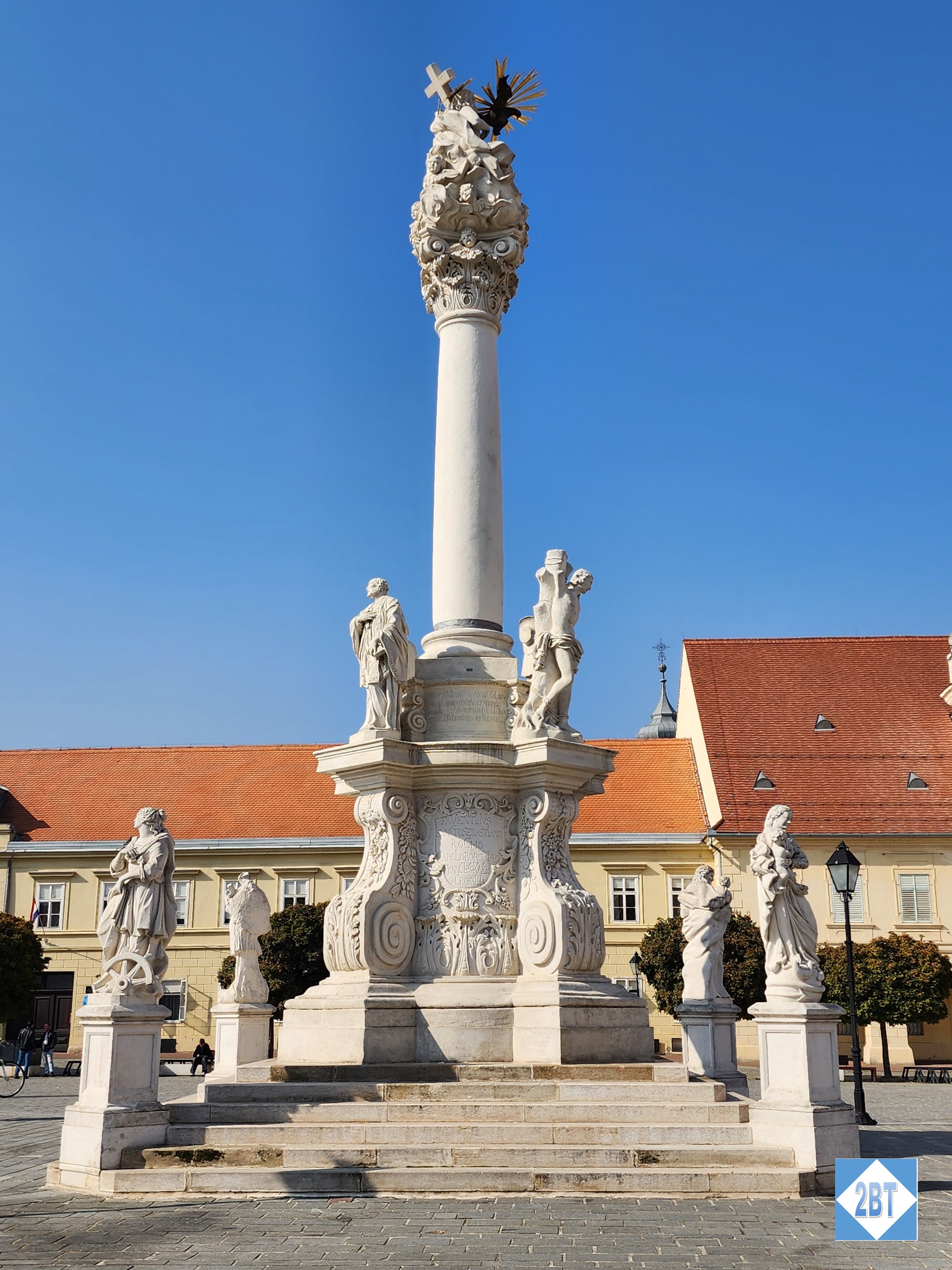
These buildings are part of the citadel and have not been fully repaired on purpose. They still bear damage from the Croatian War of Independence (1991-95) when Croatia broke free from Yugoslavia. We’d learn more about that in the afternoon.


Vukovar
The Memorial Centre of Homeland War Vukovar was our first stop of the afternoon. The Croatian War of Independence is also known locally as the Homeland War and this museum was established to tell its story in 1998, just three years after the war’s end. First we walked around the open-air section where a number of military vehicles are on display. Some still look modern while others look dated. It’s hard to believe the war’s been over for 30 years now. I swear the 1990s were just a few weeks ago! Later we went inside a building that was filled with displays of newspaper clippings covering the war. It was interesting though, of course, we could not read most of what was posted. Another building covered the concentration camps and what went on there. This museum is free and well worth a visit if you’re in the area.


Our next stop was the Ovčara Memorial Hall. It is on the site of the former Ovčara farm. In 1991 as the Yugoslav army (JNA) invaded the area, the Vukovar hospital was evacuated to this farm. The JNA then beat the prisoners for several hours before withdrawing, leaving some 260 people under the care of the Croatian Serb Territorial Defence and some Serbian paramilitary groups. The prisoners were then shot in groups of 10-20 and buried in a mass grave that was discovered by the UN Protection Force in October 1992, nearly a year after the massacre. What was once a farm storage building on the property has been converted into a memorial. The inside is quite dark and on the walls are photographs of the victims along with a bit of detail about them. A handful of the photos is lit at any one time and after a period of time those lights are dimmed and another set of photos is lit. At the center is a display featuring a never-ending spiral of the names of the victims. It is called both the Well of Life and the Spiral of Evil. This memorial is also free and is worth a visit. You can read more about the Vukovar massacre here: https://en.wikipedia.org/wiki/Vukovar_massacre


Our final stop was the Vukovar Water Tower. That may seem a strange place to visit but it has become a symbol for the resiliency of the city. It was completed in 1968 and before the war it contained a restaurant that offered magnificent views of the area. But being a symbol and being tall meant that it was a target during the war, where it was hit over 600 times. Wikipedia has a photo of what it looked like by the end of the war. https://en.wikipedia.org/wiki/Vukovar_water_tower
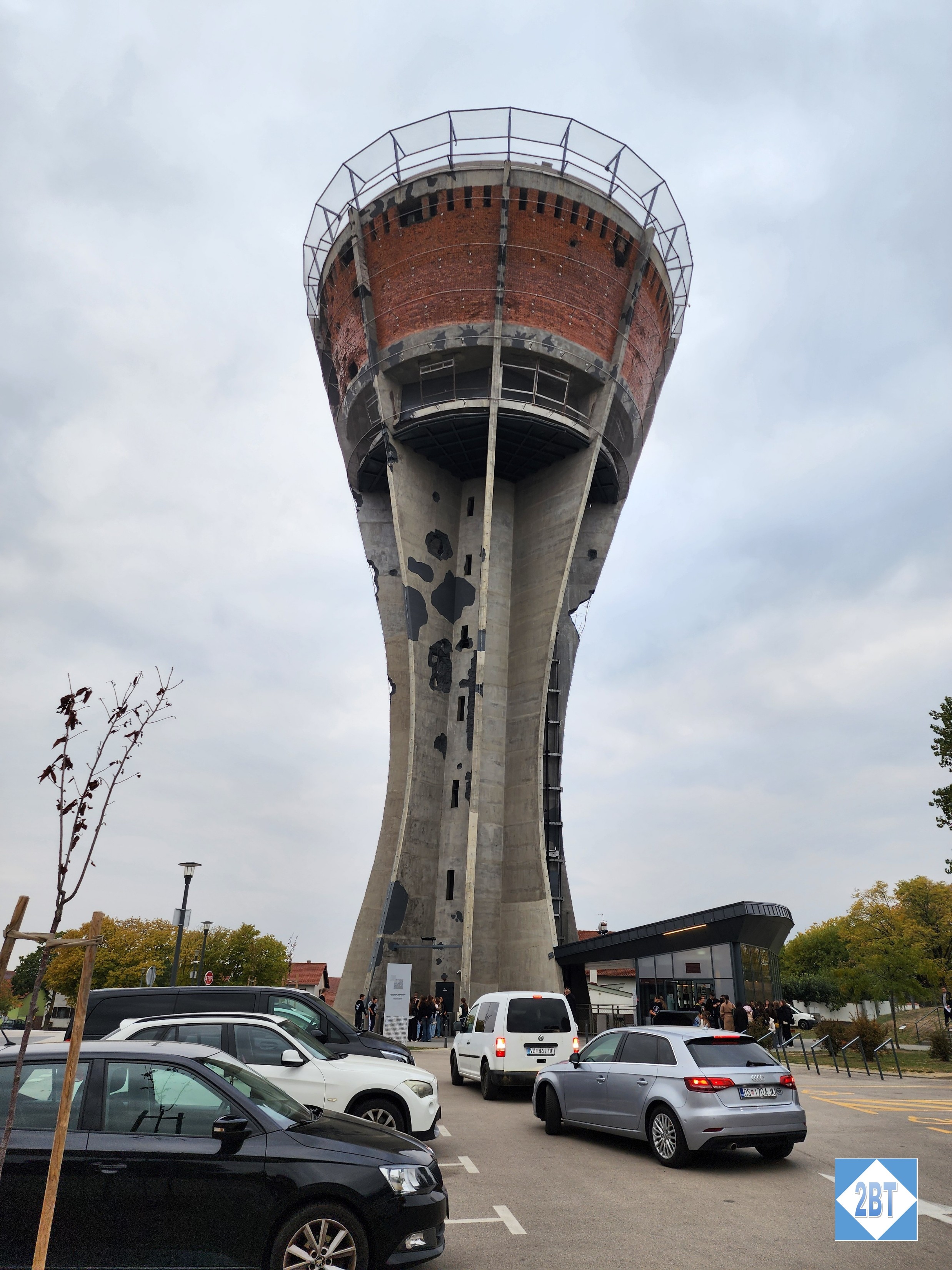 But today it’s been shored up, although not all of the damage has been repaired and that’s intentional. But it’s structurally sound and has a very modern museum up top with lots of interactive displays. And the views are still magnificent. There is an elevator to reach the museum (or you can choose the stairs) and in the museum itself the various levels are reachable by ramps so it should be fine for those who are mobility-challenged. There’s also a cafe at the base with indoor and outdoor seating.
The tower is just over 50m tall (168 feet) and though it looks a little shaky on the outside, it’s quite sound inside. It opened to the public on November 1, 2020. It was stirring to see the Croatian flag flying proudly over it.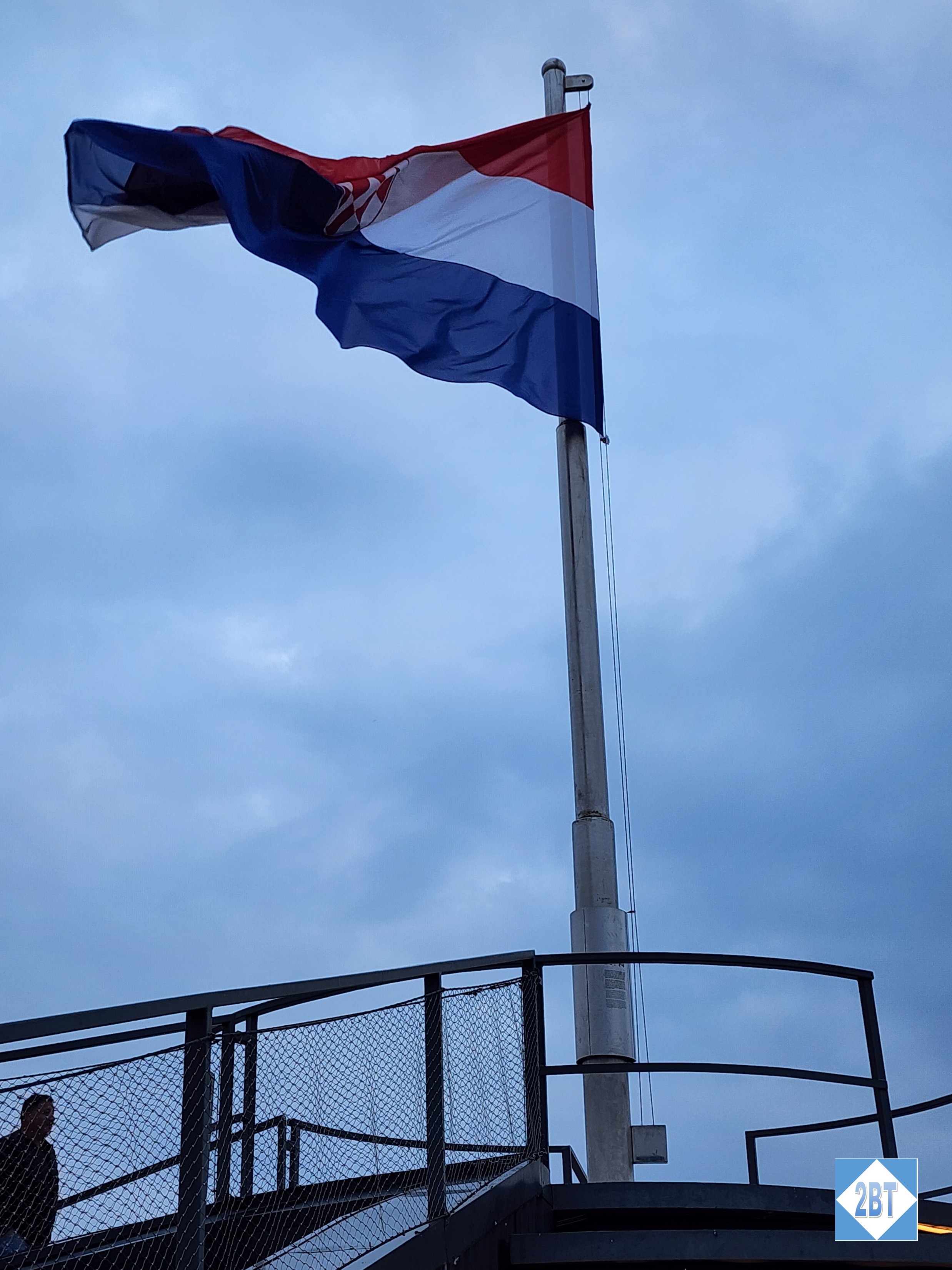
The outside viewing platforms have several levels. As you might imagine, it can get very windy up top but the views are worth it.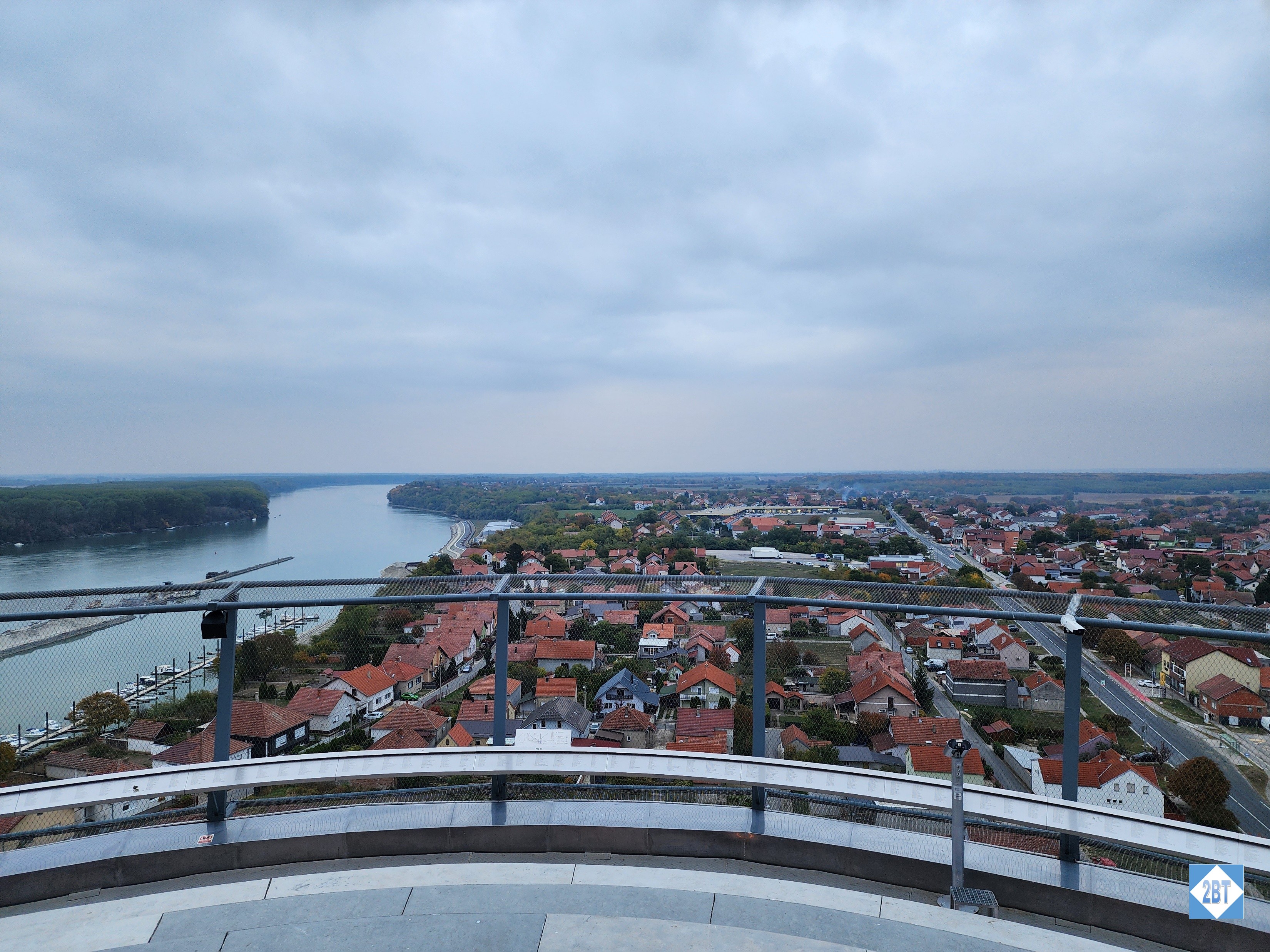
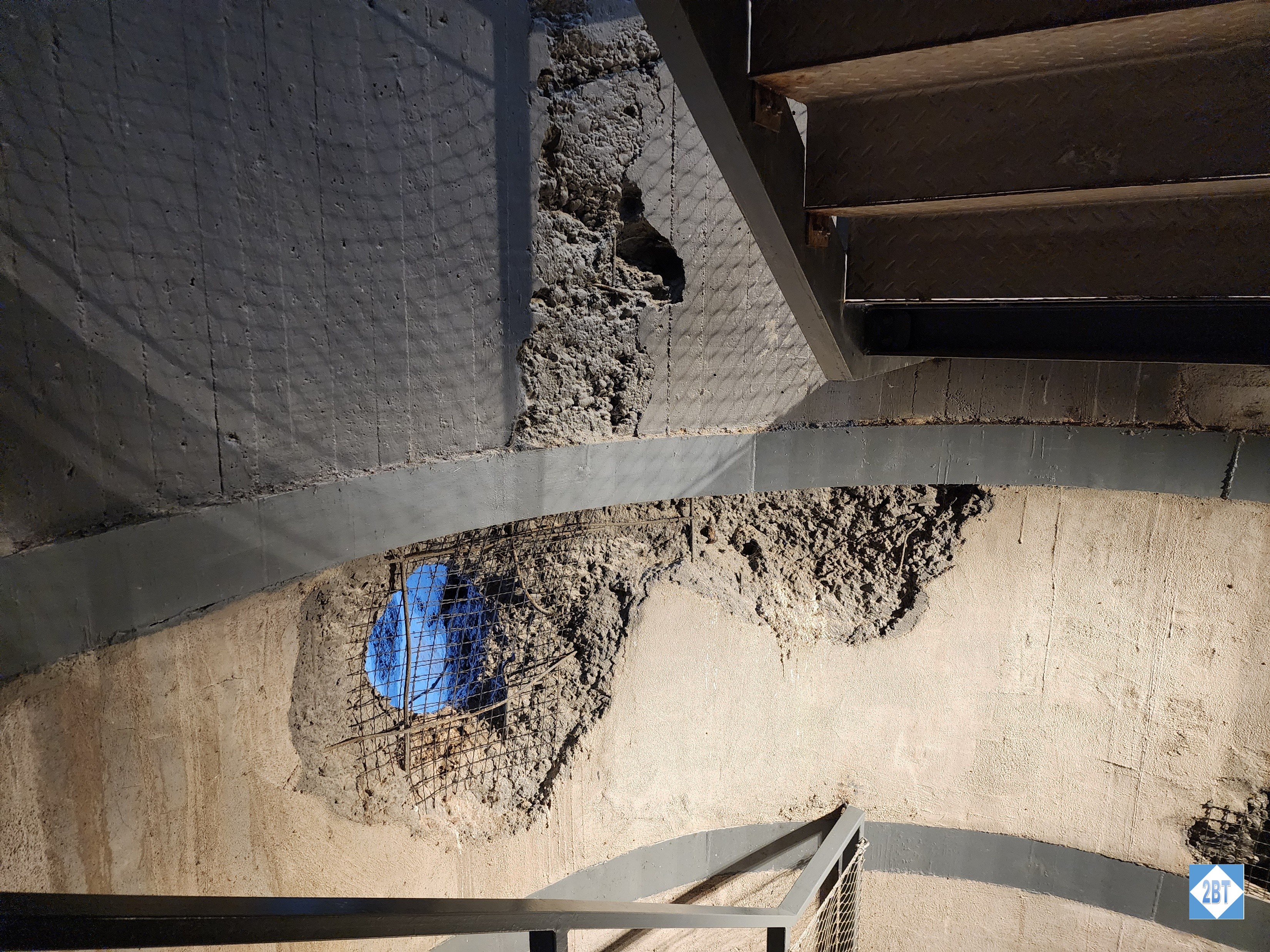
While I took the elevator up, I chose to take the stairs back down. It is in the stairwell that I was able to see some of the damage and patchwork up close.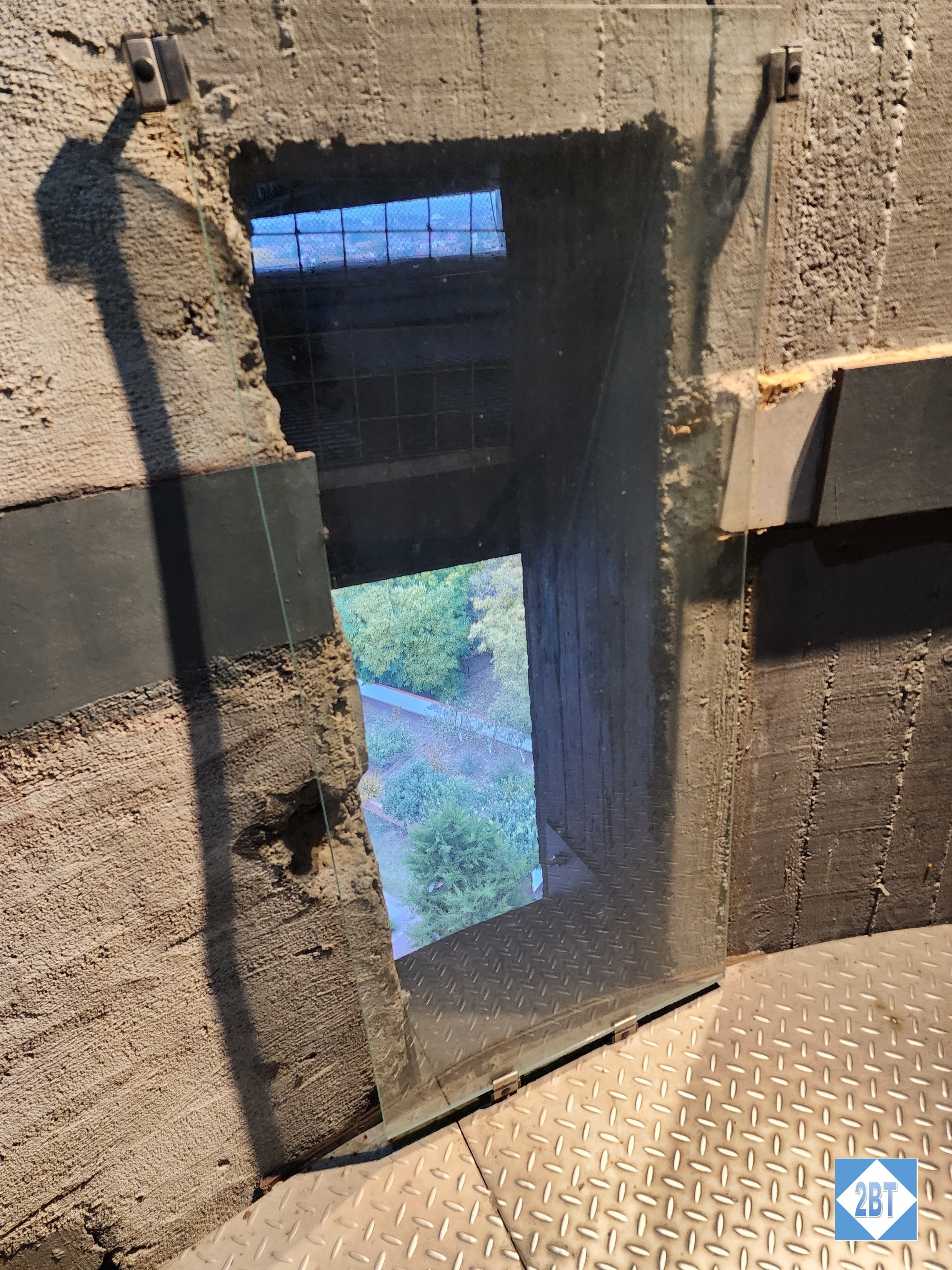
In the end
While I don’t claim to have deep knowledge of the war that tore apart Yugoslavia and left the world with several “new” nations, I do have a better understanding of it now than I did before. The first two sites we visited in the afternoon were free and while there is a charge for the water tower, it’s worth it. I would definitely recommend visiting these sites to broaden your perspective on the area’s history.


Recent Comments